Showing posts with label Andy Serkis. Show all posts

Thursday, May 23, 2019

'Long Shot' (2019) Review

Synopsis: When Fred Flarsky reunites with his childhood crush Charlotte Field, who happens to be one of the most influential women in the world, he charms her with his self-deprecating humor and his memories of her youthful idealism. As she prepares to make a run for the presidency, Charlotte hires Fred as her speechwriter. A fish out of water on Charlotte's elite team, Fred is unprepared for her glamorous lifestyle in the limelight. Sparks fly as their unmistakable chemistry leads to a round-the-world romance and a series of unexpected and dangerous incidents.

Runtime: 125 minutes

MPAA Rating: R (for strong sexual content, language throughout and some drug use)

Who should see it? Adult fans of romantic comedies.
Directed by Jonathan Levine and written by Dan Sterling and Liz HannahLong Shot is a romantic comedy which features the unlikely pairing of Seth Rogan and Charlize Theron. Those who know me or frequently visit my blog are likely aware that I don't often watch or review rom-coms. I tend to gravitate towards the sci-fi, action, musical, or awards-oriented fare. However, I chanced seeing Long Shot based on overwhelmingly positive word of mouth, and I'm glad I did. Long Shot isn't a groundbreaking or revolutionary rom-com by any means, but it's certainly an enjoyable one!
Setting itself apart from other romantic comedies, Long Shot is imbued with sharp political commentary. Refreshingly, the political angle of the story doesn't become too ham-fisted or relentlessly attack one side of the aisle. Screenwriters Dan Sterling and Liz Hannah acknowledge the pervasive problems in contemporary political discourse, scandals, and elections with a balanced perspective and poke fun at the division along the way. If you're legitimately offended by the humor in Long Shot, then you're probably just taking it too seriously. Your political stance shouldn't detract from your enjoyment because Long Shot's about so much more than political squabbling. That's merely the set dressing. 
At its core, Long Shot exemplifies the age-old mantra to "be yourself" and not compromise your integrity for the sake of achievement. Levine, Sterling, and Hannah just so happen to present this theme in a political context. In her ambitions to become president, does Charlotte Field lose herself? It's relevant and applicable to any candidate running for office, regardless of their party. Will they stay true to their word and what lengths are they willing to go to maintain a quality public image? The outcome's predictable since Long Shot abides by the rom-com bylaws to a tee, but the film retains an honest appraisal of the contemporary political landscape along the way. And, of course, it helps that Long Shot is a hysterical affair as well! Not every joke lands, but I laughed at the vast majority of one-liners.
Given Rogan's involvement, I feel it's worth noting that certain gags involve sex/drugs because I'm aware this may repel some viewers, but these rarely degraded the picture and proved to be relatively insignificant. Long Shot also doesn't devolve into a quip-fest, retaining focus on the story at hand rather than constantly exchanging one-liners.
Anchoring the feature, Charlize Theron and Seth Rogan share a delightful rapport. Theron portrays Charlotte Field as a self-serious politician while Rogan's Fred Flarsky is an endearing schmuck. Though the match-up's impractical, the actors play well off one another. Sprinkled in the supporting cast, Bob Odenkirk, Ravi Patel, June Diana Raphael, O'Shea Jackson Jr., Alexander Skarsgård, and an unrecognizable Andy Serkis each shine in their varying roles.
Long Shot may seem like a long shot based on its premise and those involved, but the endearing romance, a pair of likable leads, sharp political commentary, and a cascade of hilarious bits ensure it's a worthwhile venture. 

Film Assessment: B

Friday, February 16, 2018

'Black Panther' Review

Nominated For: Best Picture, Best Costume Design, Best Production Design, Best Sound Editing, Best Sound Mixing, Best Original Song "All The Stars" (written by Sounwave, Kendrick Lamar, Anthony Tiffith, and SZA), and Best Original Score.
Won: Best Costume Design, Best Production Design, and Best Original Score.

After the death of his father in Captain America: Civil War, T'Challa returns home to the secluded and technologically advanced African nation of Wakanda to take his rightful place as king. However, T'Challa's mantle as king and Black Panther is quickly challenged when a powerful enemy suddenly reappears and the young king is drawn into a conflict which puts Wakanda and the entire world at risk. T'Challa must now rally his allies and unleash his full potential as the Black Panther if he's to defeat his foes and secure the safety of his people and the world at large.
Black Panther is the eighteenth addition to the ever-expanding Marvel Cinematic Universe, and while many would suspect that this franchise would have started to show signs of wear and tear by now, the Wakandan King proves otherwise thanks to the assured direction of Ryan Coogler. I'm ecstatic to report that Coogler's hot streak is still going with Black Panther, as Coogler's ushered his highness into fresh, foreign territory for a unique superhero solo story.
It's crazy to believe that this is only Coogler's third feature following Fruitvale Station and Creed, but it makes a lot of sense once you consider the quality of those other two films. One of Coogler's greatest strengths as a storyteller is undoubtedly focusing first and foremost on character, and the screenplay written by Coogler and Joe Robert Cole is only further evidence of this. Black Panther adds plenty to the MCU in terms of intense and invigorating action sequences, but Coogler never loses track of his captivating characters amidst all the hub-bub. For every second of surreal spectacle, there's a scene dedicated to the importance of legacy and the challenges of kingship.
In the department of world-building, Black Panther does not disappoint at all. Wakanda is truly like nothing we've previously seen in the MCU, or film in general for that matter! The environment feels fully fleshed out and is remarkably sophisticated as the advanced vibranium technology utilized by the Wakandans is absolutely otherworldly. Most importantly, the exploration of this fictional African nation is an interesting expansion on the setting depicted in the source material, which stretches the boundaries of the Marvel Universe in fresh, exciting directions. 
It should also be noted that Black Panther is easily one of Marvel's most visually-striking works to date! Every shot captured by recently Academy Award nominated cinematographer, Rachel Morrison, is breathtaking to say the least, and the vibrant visual effects only accentuate her work. On top of that, the production design and elaborate cultural costumes worked wonders in regards to meshing Wakanda's astounding technological achievements with a tribal aesthetic, and I haven't even mentioned Ludwig Göransson's sumptuous score! Göransson's compositions are delightfully diverse and feature an extensive arrangement of instruments including everything from upbeat African drums to a swelling string section. For those hooked on the film's accompanying album assembled by Kendrick Lamar though, you may disappointed to learn that most of the music didn't make it into the film (barring a few exceptions).
As for action, Black Panther's a little light on that front when compared to other MCU-fare, but that doesn't make the engagements any less interesting. In fact, the Korean casino fight and car chase is one prominent sequence that you won't be forgetting anytime soon, the scenes involving T'Challa's ritual combat for the throne were especially suspenseful, and the third act showdown's appropriately epic. My only minuscule complaints would be that I found the beginning to be a little slow and the CGI was noticeable on occasion when characters looked a bit more like video game avatars. However, it was never jarring enough to completely take me out of the viewing experience. 
While I already felt Chadwick Boseman was a perfect casting choice for the role of T'Challa based on his standout stint in Civil WarBlack Panther doubled down and confirmed my suspicions. Boseman wears a calm composure as King, but the challenges that accompany sitting on the throne seem no less burdensome on his shoulders. Boseman projects a regal attitude, yet he imbues T'Challa with enough nuanced uncertainty for you to buy into his internal struggle of accepting the mantle of King. Where Civil War didn't quite allow him to flex his acting muscles, Boseman is able to demonstrate a wide acting range here and I was quite impressed. He's truly fit for the Wakandan throne.
By his side, Lupita Nyong'o and Letitia Wright provide sufficient support as noble spy Nakia and good-hearted, genius teen sister Shuri while standing apart as noteworthy individuals in their own right. Wright, in particular, really stole the show for me as Shuri. She's gifted with the funniest lines of dialogue and her excellent comedic timing made the wisecracking work wonders. On that note, Black Panther's use of humor is relatively subdued in comparison to recent MCU entries, more akin to Captain America: The Winter Soldier than say Thor: Ragnarok. The humor's interwoven sparingly and never compromises dramatic weight for the sake of a quippy one-liner.
As for other prominent Wakandans, Dana Gurira, Daniel Kaluuya, Winston Duke, Forest Whitaker, and Angela Bassett each contribute an influential attribute to their respective roles. Gurira's Okoye is a fierce general of the Dora Milaje, Kaluuya stands tall as a confident confidant W'Kabi, Duke measures M'Baku to be a resilient warrior, Whitaker imbues Zuri with sagely profound wisdom, and Bassett's Ramonda is remarkably regal as T'Challa's mother and Queen.
Meanwhile, Michael B. Jordan KILLS it as one the greatest villains the MCU has ever seen. Across the board, Marvel's really upped their game in that respect, but Jordan's Erik Killmonger kicks it further up a notch. Killmonger's an antagonist who's absolutely menacing and whose point-of-view can be completely understood. When you top this all off with another committed performance from Michael B. Jordan, you have an appropriately awesome antagonist.
Rounding out the cast, Black Panther offers audiences a Hobbit reunion between Martin Freeman and Andy Serkis. This time they're not playing Bilbo or Gollum of course, but rather returning as CIA operative Everett Ross and black market dealer Ulysses Klaue respectively. Freeman plays the agent to be a sardonic presence while Serkis delightfully cackles his head off as the kooky Klaue. Beyond their two characters and a few nods to the events of Age Of Ultron and Civil War though, Black Panther proves to be one of the MCU's more standalone stories. Audiences are still treated with a standard Stan Lee cameo and two post credit scenes, but Black Panther is fairly far removed. Instead, Black Panther devotes its energy to carving out a new niche location for audiences to invest themselves in, and it worked because I'm genuinely concerned what will happen to the nation in Avengers: Infinity War based on trailers.
Bolstered by powerful performances, striking visuals, a spectacular score, and a meaningful story, Black Panther proved to be much more than just another solid solo superhero outing from Marvel. Black Panther must have vibranium coursing through its veins, because it tells a worthy story for the Wakandan king that's nearly indestructible. 

Film Assessment: A

Wednesday, July 19, 2017

'War for the Planet of the Apes' Review

Nominated For: Best Visual Effects.

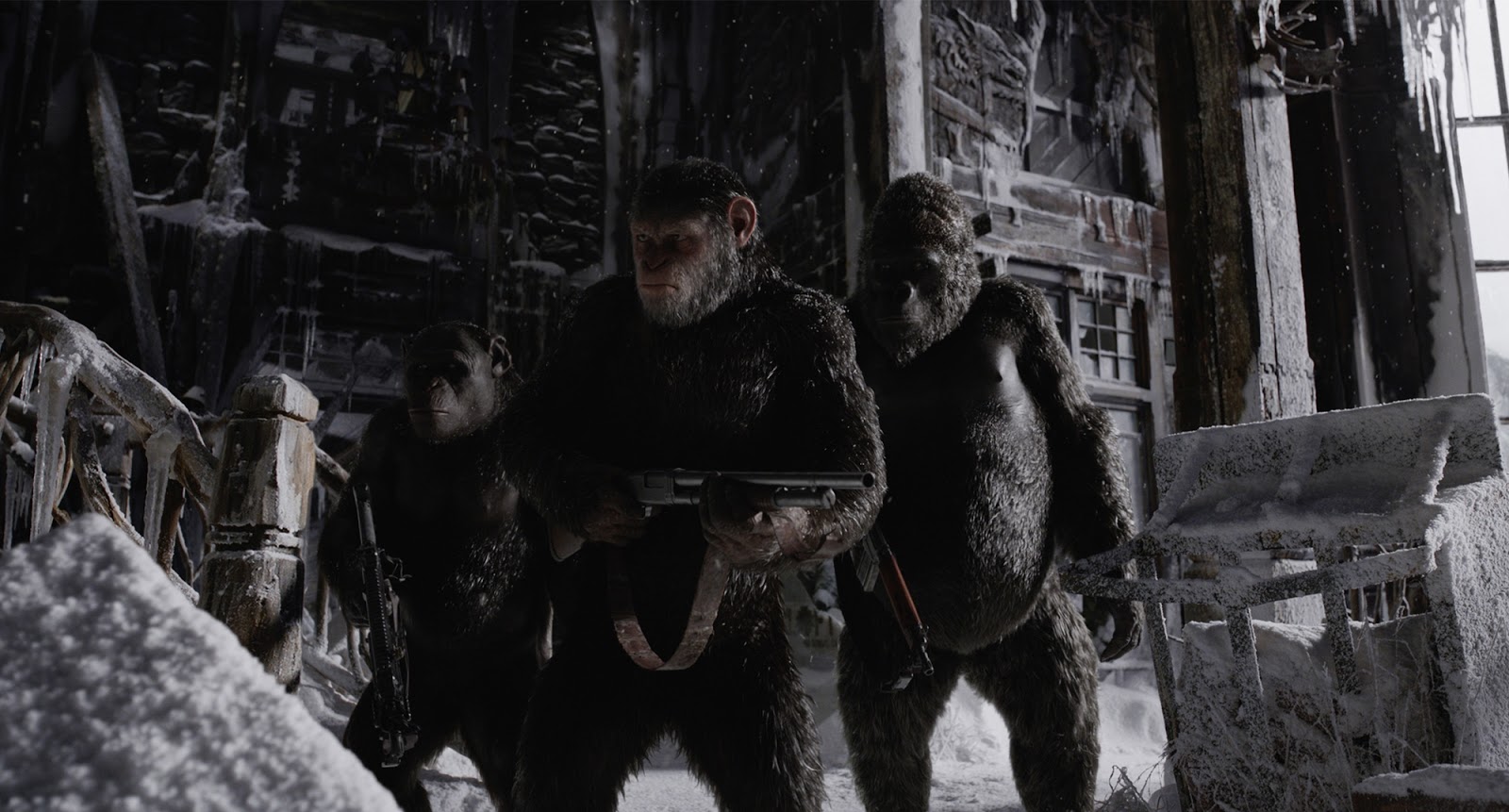
War for the Planet of the Apes picks up two after the events of Dawn of the Planet of the Apes. Caesar and his tribe of apes are now engaged in guerrilla (or gorilla) warfare against the remains of the U.S. military called in at the end of Dawn. The contemptible Colonel leading the heinous humans is relentlessly searching for Caesar's well-hidden encampment to wipe out the ape leader once and for allHowever once an unforgivable act of violence is committed, Caesar sets off on a vengeful quest to end this war and determine the fate of humanity and ape-kind once and for all.
Matt Reeves returns to direct, even taking a hand penning the screenplay alongside veteran franchise writer Matt Bomback, and if one thing is clear from the get-go, it's that Reeves crafted an unabashedly intense work of cinema that will likely subvert viewer expectations. The marketing push promises an all-out war film but War for the Planet of the Apes is a vastly different animal. War for the Planet of the Apes wasn't necessarily what I expected but I'm absolutely okay with that. Instead of relying on the spectacle, Reeves relishes in exploring the characters with a keen focus on the trilogy's thematic undercurrent that war can corrupt virtue. Reeves understands longtime viewers are along to see the end of Caesar's chapter in this saga so he rewards them with a brutal, unforgiving examination of one of cinema's most captivating characters in recent memory. 
The Christ allegories are strong with this ape installment, but they're executed in a tasteful manner. Caesar has to put everything on the line if he's going to commit to the survival of his species and naturally some existential questions are derived from that choice. "How far is Caesar willing to go before he loses his soul?" is one of War for the Planet of the Apes's hair-raising questions and I found the subsequent exploration to be utterly fascinating. Now if only all of today's onscreen storytelling could be so sophisticated!
It's this level of sensational storytelling paired with Reeves' insistence on allowing the camera to linger on the moments of beauty and Michael Giacchino's soulful score that raises the bar for other blockbusters in this day-and-age. I'm a huge fan of Giacchino and his other work but this may very well be his significant collection of compositions yet!
Meanwhile, the tech-wizardry going on over at Weta has gotten out of hand. I'm absolutely certain that every single digital rendering was seamlessly woven into the breath-taking backdrops. I never once questioned the authenticity go anything occurring onscreen because it all looked so lifelike. If War for the Planet of the Apes doesn't pick up the gold statuette for Best Visual Effects this coming awards season, then perhaps humanity deserves to be governed by apes. 
Speaking of awards talk, I think it's about time Andy Serkis received some recognition for his outstanding accomplishments as the most dedicated motion-capture performers around because his performance as Caesar is exceptional. I know it's a highly-contested discussion about how much of a motion-capture performance comes from the visual effects artist and the actor but I don't see why both don't deserve to be awarded. Serkis put in the work and it's his potent performance that demonstrates his radical range as not only a performer, but an actor. It's truly the marriage of ground-breaking vfx and extraordinary acting that allows the character to come together and my, how far Serkis and Caesar have come since Rise of the Planet of the Apes. Oddly enough, I feel the most powerful performances of the year thus far have come from genre-driven film such as LoganGet Out, and Wonder Woman. Of course we haven't made into the thick of awards season yet, but I've got my fingers crossed that these unconventional choices are rewarded come next February.
One of the unsung heroes of these Planet of the Apes prequels I'm not sure I've adequately acknowledged in my last two reviews is Karin Konoval as the unperturbed orangutan Maurice. Maurice has been with Caesar through thick-and-thin and his sagely advice has kept Caesar on-course so I've always had a soft-spot for the tranquil ape for serving the role of the non-verbal voice of reason. Returning primates worth acknowledging include Rocket, Luca, Red Donkey, Blue Eyes, Cornelia, and Cornelius portrayed by Terry Notary, Michael Adamthwaite, Ty Olsson, Max Lloyd-Jones, Judy Greer, and Devyn Dalton respectively. Amiah Miller also deserves a shout-out for delivering a physical performance on-par with the emerging young-talent of late without uttering a single word. The mute Nova is a serene, uplifting presence who shines in Reeves' brighter blemishes.
Another newcomer Steve Zahn served as an unexpected source of comedic relief in the role of Bad Ape that could have felt out-of-place in this brutal blockbuster, but Zahn nails the comedic timing as quite the unusual ape. 
Where I felt the film fell a little short was with the depiction of it's antagonist. The Colonel could have served as a perfect foil to Caesar, and he does to some degree, but Woody Harrelson doesn't have enough time onscreen to really measure up to the menace of Toby Kebbell's Koba. Harrelson projects a callous conduct onto the Colonel and all of his unspeakable actions carry weight so you understand Caesar's drive for revenge, but the Colonel still comes across as a zealot when things are said-and-done. There's one extensive exposition dump in the entire film that explains the Colonel's motivations and makes him somewhat understandable but never on-par with the former threat. Despite all of the constraints lain by the script, Harrelson does manage to evoke the gravitas of being a formidable foe and his ultimate comeuppance is poetic and played out beautifully by Harrelson.
If you have not seen War for the Planet of the Apes yet, I'd highly recommend the trip to the theater so you can bow down and hail, Caesar! War for the Planet of the Apes isn't just a terrific trilogy closer, War for the Planet of the Apes is a compelling conclusion to the Planet of the Apes simian-flu story that cements the series' stance alongside not only other sci-fi epics, but some of the greatest trilogies ever created. 

Film Assessment: A

Monday, July 17, 2017

Recollection Reflection Review: 'Dawn of the Planet of the Apes'

I've reviewed Rise of the Planet of the Apes and am now revisiting Dawn of the Planet of the Apes to coincide with this weekend's release of War for the Planet of the Apes. I'm aware this review's a little late but I've had a busy weekend and only just got around to writing this review. I hope to have my review of War for the Planet of the Apes online ASAP.

'Dawn of the Planet of the Apes' Review


Nominated For: Best Visual Effects.

Recollection- 'Dawn of the Planet of the Apes' Review

Reflection- This section of my review is probably going to be a little boring considering my opinion of Dawn of the Planet of the Apes hasn't changed much in the last three years. I remember thoroughly enjoying Dawn of the Planet of the Apes the first time around and that hasn't really shifted at all.

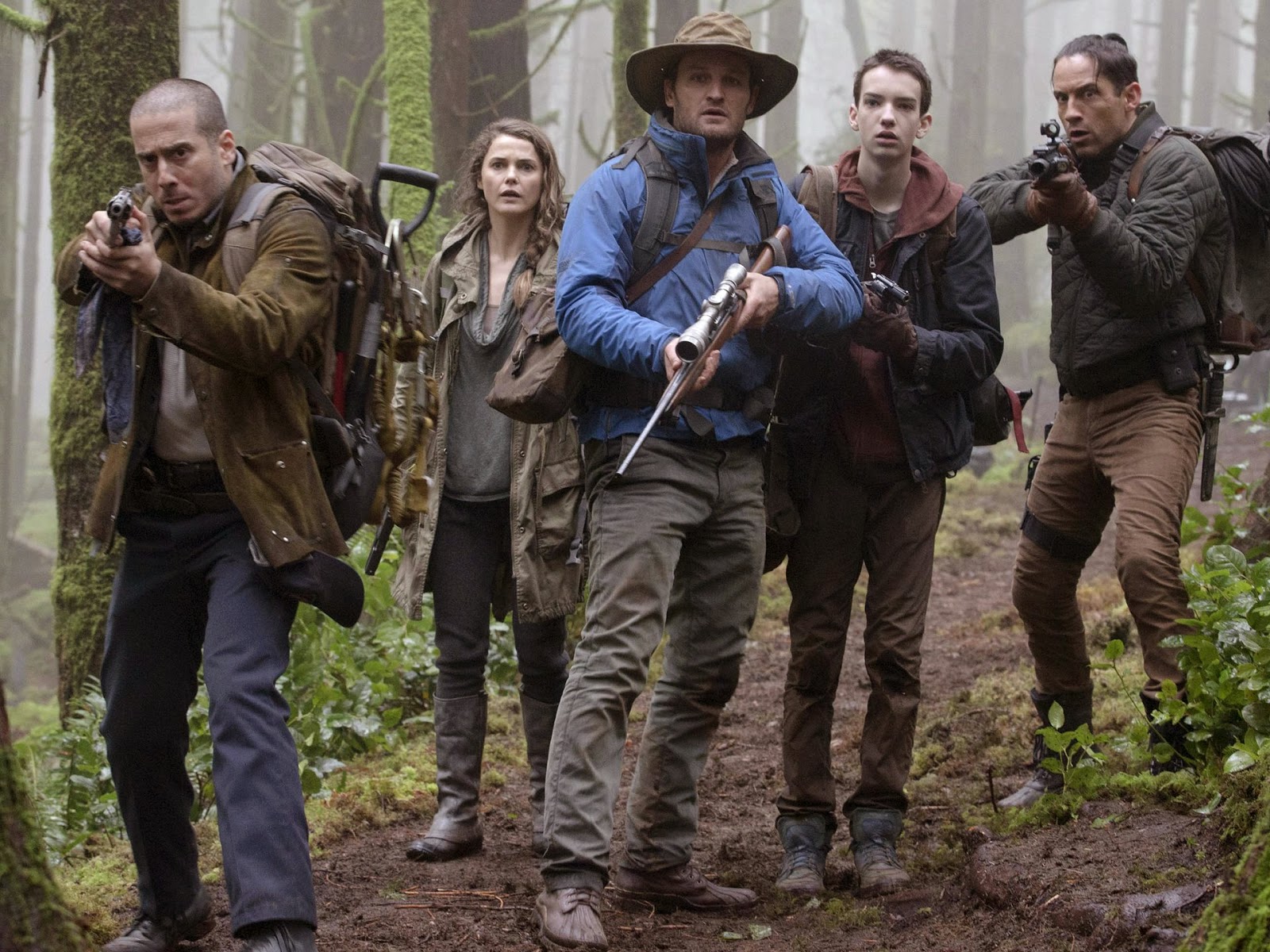
Review- In Dawn of the Planet of the Apes, it's been ten years since the Simian flu outbreak. Mankind has seemingly been wiped out by the disease while Caesar's established a thriving ape colony in the Muir Woods just outside San Fransisco. When a band of human survivors emerge desperate to gain access to hydroelectric dam that can provide power to their encampment, Caesar must grapple with the decision to remain isolated from humanity in order protect his people or work alongside the humans in hopes of co-existing peacefully.
Dawn of the Planet of the Apes saw a change in direction as Rupert Wyatt handed off the blockbuster baton to Matt Reeves. Reeves along with screenwriters Mark Bomba, Rick Jaffa, and Amanda Silver are then afforded the opportunity to thrust the viewer into a post-apocalyptic world that constantly swings the pendulum of being hopeful and hopeless. There are optimistic occasions where it seems ape and man can live alongside one another that are only contrasted by the horrors of warfare between two species.
Reeves and cinematographer Michael Seresin extenuate this disparity by capturing the natural beauty of California's prolific locales in the film's quieter, peaceful moments and shooting intense action sequences primarily in a dingy, disparaged urban environment. It really speaks wonders that Reeves and his technical crew were able to stage something as outrageous as primates wielding machine guns while riding horses and make it seem plausible. 
The Weta vfx artists also significantly stepped up their game as I still am unable to distinguish the motion-capture apes as being digital developments. The visual effects are undoubtedly an incredible achievement for the company that continually pushes the boundaries of technology in film. And I've got to give Michael Giacchino props for another sensational score full of captivating compositions.
In the acting department, Andy Serkis once again delivers a commanding performance via motion capture. Serkis is afforded an opportunity to intrinsically explore Caesar's responsibilities as a leader and father so Serkis imbues Caesar with the confidence, wisdom, and dedication that naturally accompanies said roles. Serkis is even backed by an exceptional primate posse including the likes of  Nick Thurston, Terry Notary, Karin Konoval, Judy Greer, and Larramie Doc Shaw as Blue Eyes, Rocket, Maurice, Cornelia, and Ash respectively. 
However Toby Kebbell challenges Serkis for the position of ruling motion-capture acting as his rampant, rage-induced primate Koba unleashes hell upon the humans and fellow apes. Kebbell gathers enough menace and intellect to portray Koba as a fearsome, undermining antagonist with understandable intentions, however radical those ideologies may be. It's precisely the quarrel between Caesar and Koba that evokes so many feuding philosophies found in history and cinema such as Malcolm X and Martin Luther King Jr. or Mufasa and Scar. 
On the human side of things, Jason Clarke takes up a trusting demeanor as Malcolm and the progression from unease to upmost confidence in Caesar is a fascinating journey. Meanwhile, Gary Oldman's one of the most reliable supporting actors around these days and he makes the most of his time onscreen with grit and gusto. Elsewhere, Keri Russell and Kodi Smitt-McPhee each offer some sufficient impressions for their allotted screen time as Ellie and Alexander.
In conclusion, Dawn of the Planet of the Apes succeeds at something only a scarce number of sequels ever accomplish. It significantly surpasses a fantastic first film and improves upon absolutely every aspect of the predeceasing chapter with an exhibition of technical mastery rarely seen in today's blockbuster franchises.

Film Assessment: A+

Sunday, July 16, 2017

Throwback Thursday Review: 'Rise of the Planet of the Apes'

Sorry for what may seem like a drastic delay on all three of my Planet of the Apes reviews but I wanted to be sure and publish them in the order of Rise, Dawn, and War. Anyways, this week I'm reviewing Rise of the Planet of the Apes and revisiting Dawn of the Planet of the Apes to coincide with this weekend's release of War for the Planet of the Apes. Next week I'll be reviewing Inception as my Throwback Thursday Review and possibly doing a Triple-R over Interstellar to tie in with Nolan's new war film Dunkirk. Reviews you can expect to see for the remainder of the month include a Throwback Thursday Review of Shaun of the Dead in addition to reviews of new releases Valerian and the City of a Thousand PlanetsThe Emoji Movie, and Atomic Blonde.

'Rise of the Planet of the Apes' Review


Nominated For: Best Visual Effects.

Rise of the Planet of the Apes follows Gen-Sys scientist Will Rodman as he develops a drug to cure his father's Alzheimer's disease and enhance brain cells. After a mishap with one of the exemplary ape test subjects "Bright Eyes," Rodman's program is put on the back-burner and all the apes are ordered to be put-down. However, a baby chimpanzee is discovered that inherited Bright Eyes' intelligence that is then given to Rodman. Rodman secretly continues his research, raising the competent chimp he's named Caesar in his own home. As Caesar's intellect increases, Caesar starts to question humanity's hierarchy and an ape insurrection begins. 
Rise of the Planet of the Apes is directed by Rupert Wyatt with a screenplay penned by Rick Jaffa and Amanda Silver. Wyatt had a difficult task ahead of him considering he had to essentially reboot and revitalize a franchise that had previously only spiraled downward into obscurity. So rather than actually try and remake the 1968 sci-fi classic (akin to Tim Burton's effort in 2001), Wyatt and his screenwriters chose to take the riskier route and explain how the ape incursion began. Now genre fans aren't too fond of the term "prequel" since it's most often associated with the maligned Star Wars prequel trilogy but Wyatt succeeded in the vein George Lucas was unable to. 
Wyatt balances quiet character-driven scenes with simian spectacle appropriately so you wind up invested in an army of apes overtaking the Golden Gate Bridge. Where Lucas occasionally went adrift in trying to push the CG-envelope forward, Wyatt ensure the ground-breaking visual effects always elevate the material. Thanks to the talented vfx artists at Weta and marvelous motion-capture equipment, Wyatt is able to draw out powerful performances from Andy Serkis and his ape ensemble. The visual effects are a little spotty in some areas where the apes clearly resemble digital avatars but for the most part Ceasar and his band of primates authentically echo actual apes. 
The film may be titled Rise of the Planet of the Apes, but it more accurately represents Andy Serkis' ascension to becoming a household name in the business of acting via motion-capture. Serkis broke new ground in 2002 with his Middle Earth mo-cap portrayal of Gollum before gallivanting around as a twenty-five foot tall gorilla in King Kong (2005), but the character of Caesar may exhibit all the understated elements of Serkis' range via motion-capture. Serkis demonstrates all the characteristics of a chimpanzee but successfully layers an underlying brilliance and emotional resonance on top of the monkey mannerisms. Serkis and Caesar seem almost inseparable in these Planet of the Apes prequels but the ensemble behind him composed of Karin Konoval, Terry Notary, Richard Ridings, Christopher Gordon, Devyn Dalton, and Jay Caputo each offer an inspired take on various primates. 
One of the things I found myself questioning towards the film's finale was how that many apes managed to come from three locations. Once they escape, the ranks rapidly expand unrealistically. I understand Caesar freed apes from the primate facility, local zoo, and the Gen-Sys laboratory but the army seemed vastly over-exaggerated in comparison to the number of apes shown before the escape.
Oddly enough, the apes are so compellingly created though that they're a hair more humanistic than the actual human characters. James Franco serves the story sufficiently, allowing Will Rodman to be an emotional touchstone of the story while Freida Pinto is relegated to looking pretty on the fringes of the script. Pinto is confined to basically being no more than a love interest who also happens to be a veterinarian. John Lithgow on the other-hand brings forth a tragic take on Alzheimer's which is positioned as the dense emotional arc and Lithgow handles the material well. 
Meanwhile, you thought Tom Felton's Draco Malfoy was despicable? Well Felton proves he can drive the cruelty up a notch as a callous chimp handler and Brian Cox, Jamie Harris, Tyler Labine, and David Oyelowo fill the remaining ranks of the human cast worth mentioning. 
In summary, Rise of the Planet of the Apes holds up thanks to fantastic visual effects that both enhanced the sensational storytelling and exceptional acting on display. The script slouches a tad in its depiction of certain human characters and the visual effects is occasionally aged but Rise of the Planet of the Apes is still able to pound its chest proudly as one of the posh, premier prequels.

Film Assessment: B+

Thursday, March 9, 2017

Throwback Thursday Review: 'King Kong' (2005)

This week I'm reviewing the 2005 Peter Jackson rendition of King Kong to coincide with the release of Kong: Skull Island this weekend, I've already seen and reviewed it so click on the blue hyperlink if you're interested in checking that out. Next week I'll be reviewing Disney's 1991 animated Beauty and the Beast to tie in with the release of the live-action incarnation. Reviews you can expect throughout the remainder of March include Throwback Thursday Reviews over Beauty and the Beast (1991)Pirates of the Caribbean: Dead Man's Chest, and Spider-Man 2 and new releases Kong: Skull Island, Beauty and the Beast (2017)The Belko ExperimentPower RangersLifeThe Boss BabyThe Zookeeper's Wife, and Ghost in the Shell (2017).


'King Kong' (2005) Review


Nominated For: Best Art Direction, Best Visual Effects, Best Sound Editing, and Best Sound Mixing. 
Won: Best Visual Effects, Best Sound Editing, and Best Sound Mixing. 

King Kong tells the story of a film crew venturing to the mysterious Skull Island to shoot a picture, only to have their lead actress apprehended by the natives to be sacrificed a 25 foot gorilla. The primate chooses to take Ann Darrow himself and a bond is formed between the two before the crew capture Kong to showcase as "The Eighth Wonder of the World" back in New York. If you know anything about King Kong then you know how that turns out... He escapes, finds the lady, and scales the Empire State Building. Yes, this is the typical Kong story we've grown accustomed to hearing set in 1930s New York.
Peter Jackson had a hand in writing and directing this 2005 remake, hot off his successful adaptation of The Lord of the Rings trilogy, spanning the 1933 story about the great ape into a (longer than necessary) feature-length epic. The one thing that makes this version quite difficult to sit through is its three hour and seven minute running time. In my mind anything that lasts longer than three hours overstays its welcome unless it's one of The Lord of the Rings and King Kong unfortunately suffers from symptoms of a bloated running time.
Fortunately, the technical aspects of King Kong hold up remarkably well. Jackson captures the spirit of Depression-era New York rather quickly in the film's opening thanks to accentuated '30s costume & production design and James Newton Howard's gorgeous musical accompaniment. Howard's score is all-encompassing of what you would want for a Kong feature; he's got the epic themes for the action, resonant character compositions for the more emotionally-moving sequences, and eery accompaniment for the mysterious moments.
I would be remised to forget the visual effects though, which are awe-inpiring. Kong remains the ever fascinating CG-creation, largely thanks to the animators and Andy Serkis' motion capture performance. Serkis nailed the monkey mannerisms and subtle expressions exhibiting the creature's emotional spectrum, which only added further credence to the beast's authenticity. It's no wonder he's still playing the lead mo-cap primate in The Planet of the Apes franchise and stands as one of the motion capture kings today.
One slight complaint/nitpick that stuck out to me was Jackson's tendency to encourage blurred camera movement from long time collaborators cinematographer Andrew Lesnie and editor Jamie Selkrik in some of the more exhilarating moments. I feel this went in direct opposition to the momentum built up in some action sequences and came across a bit too often for my taste. In the writing department, Jackson reunites the writing braintrust behind adapting The Lord of the Rings trilogy including Fran Walsh, Philippa Boyens, and himself.
It's apt that screenwriter character Jack Driscoll is the hero of the story but by the time the credits are rolling the character doesn't receive his due for his heroics. That's just the nature of filmmaking, general audiences respond to a film and will praise/scorn the director and cast but typically the screenwriter's left in the dust. Thankfully that's not an issue for this version of King Kong. The script does a remarkable job fleshing out its characters (a little too excessively in some cases) but I can't say that I finished the film without any concerns over certain logistics. I wondered such things as how the crew possibly got King Kong on their boat once he was captured, where they put him considering the cages on the boat were all intended for smaller creatures, how the boat made it off Skull Island with Kong onboard. Wouldn't he have significantly weighed the vessel down? These are relatively remote plot-holes to say the least but questions I genuinely pondered over, unable to conjure up any explanations behind any of them.
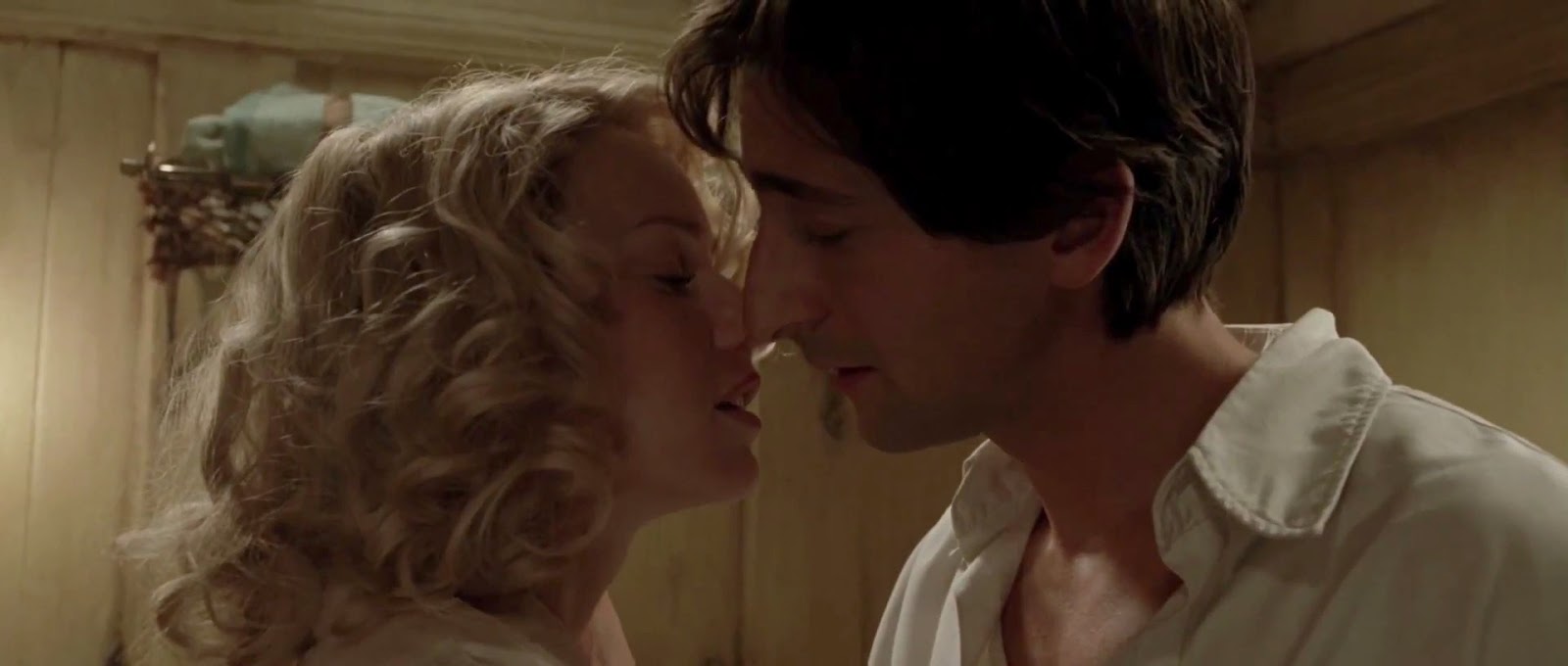
Anyways, the cast amassed for King Kong are quite something. Naomi Watts' Ann Darrow exemplifies beauty in addition to making a sufficient damsel. Watts is in-distress but showcases enough emotional range to more than compensate for her classic role. Adrien Brody's playwright Jack Driscoll makes for a likable protagonist while Jack Black plays the stubborn yet exuberant director Carl Denham that you can't help but feel conflicted over liking. Meanwhile, Kyle Chandler, Thomas Kretschamen, Collin Hanks, Jamie Bell, Andy Serkis (who has a role as the boat's chef along with his Kong duties) each have brief supporting roles worth acknowledging.
In summary, King Kong has almost everything going for it but a tight running time. Had Jackson trimmed the film down, he may have had a masterpiece on his hands.

Film Assessment: B