Showing posts with label Terry Notary. Show all posts

Wednesday, July 19, 2017

'War for the Planet of the Apes' Review

Nominated For: Best Visual Effects.

War for the Planet of the Apes picks up two after the events of Dawn of the Planet of the Apes. Caesar and his tribe of apes are now engaged in guerrilla (or gorilla) warfare against the remains of the U.S. military called in at the end of Dawn. The contemptible Colonel leading the heinous humans is relentlessly searching for Caesar's well-hidden encampment to wipe out the ape leader once and for allHowever once an unforgivable act of violence is committed, Caesar sets off on a vengeful quest to end this war and determine the fate of humanity and ape-kind once and for all.
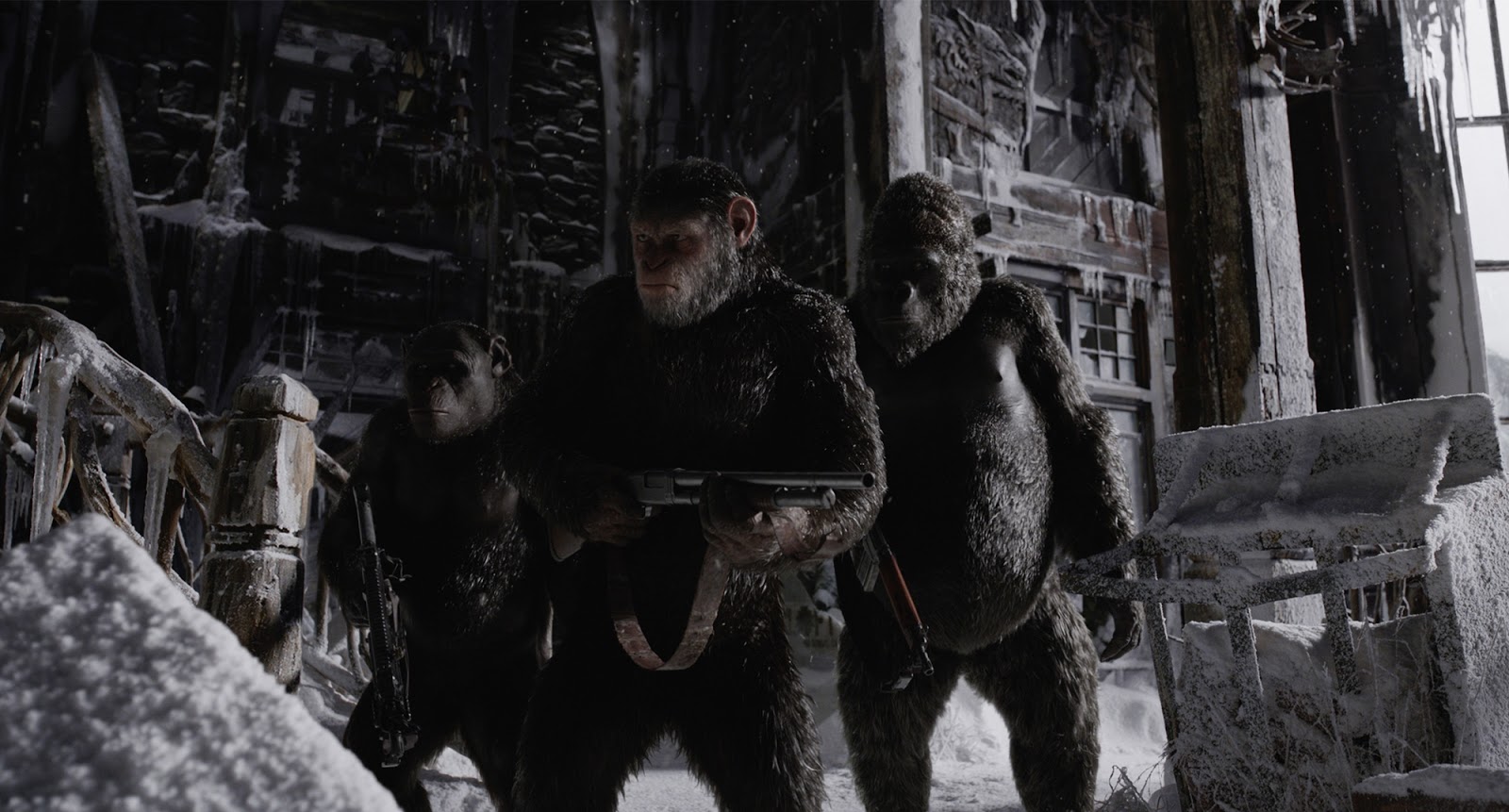
Matt Reeves returns to direct, even taking a hand penning the screenplay alongside veteran franchise writer Matt Bomback, and if one thing is clear from the get-go, it's that Reeves crafted an unabashedly intense work of cinema that will likely subvert viewer expectations. The marketing push promises an all-out war film but War for the Planet of the Apes is a vastly different animal. War for the Planet of the Apes wasn't necessarily what I expected but I'm absolutely okay with that. Instead of relying on the spectacle, Reeves relishes in exploring the characters with a keen focus on the trilogy's thematic undercurrent that war can corrupt virtue. Reeves understands longtime viewers are along to see the end of Caesar's chapter in this saga so he rewards them with a brutal, unforgiving examination of one of cinema's most captivating characters in recent memory. 
The Christ allegories are strong with this ape installment, but they're executed in a tasteful manner. Caesar has to put everything on the line if he's going to commit to the survival of his species and naturally some existential questions are derived from that choice. "How far is Caesar willing to go before he loses his soul?" is one of War for the Planet of the Apes's hair-raising questions and I found the subsequent exploration to be utterly fascinating. Now if only all of today's onscreen storytelling could be so sophisticated!
It's this level of sensational storytelling paired with Reeves' insistence on allowing the camera to linger on the moments of beauty and Michael Giacchino's soulful score that raises the bar for other blockbusters in this day-and-age. I'm a huge fan of Giacchino and his other work but this may very well be his significant collection of compositions yet!
Meanwhile, the tech-wizardry going on over at Weta has gotten out of hand. I'm absolutely certain that every single digital rendering was seamlessly woven into the breath-taking backdrops. I never once questioned the authenticity go anything occurring onscreen because it all looked so lifelike. If War for the Planet of the Apes doesn't pick up the gold statuette for Best Visual Effects this coming awards season, then perhaps humanity deserves to be governed by apes. 
Speaking of awards talk, I think it's about time Andy Serkis received some recognition for his outstanding accomplishments as the most dedicated motion-capture performers around because his performance as Caesar is exceptional. I know it's a highly-contested discussion about how much of a motion-capture performance comes from the visual effects artist and the actor but I don't see why both don't deserve to be awarded. Serkis put in the work and it's his potent performance that demonstrates his radical range as not only a performer, but an actor. It's truly the marriage of ground-breaking vfx and extraordinary acting that allows the character to come together and my, how far Serkis and Caesar have come since Rise of the Planet of the Apes. Oddly enough, I feel the most powerful performances of the year thus far have come from genre-driven film such as LoganGet Out, and Wonder Woman. Of course we haven't made into the thick of awards season yet, but I've got my fingers crossed that these unconventional choices are rewarded come next February.
One of the unsung heroes of these Planet of the Apes prequels I'm not sure I've adequately acknowledged in my last two reviews is Karin Konoval as the unperturbed orangutan Maurice. Maurice has been with Caesar through thick-and-thin and his sagely advice has kept Caesar on-course so I've always had a soft-spot for the tranquil ape for serving the role of the non-verbal voice of reason. Returning primates worth acknowledging include Rocket, Luca, Red Donkey, Blue Eyes, Cornelia, and Cornelius portrayed by Terry Notary, Michael Adamthwaite, Ty Olsson, Max Lloyd-Jones, Judy Greer, and Devyn Dalton respectively. Amiah Miller also deserves a shout-out for delivering a physical performance on-par with the emerging young-talent of late without uttering a single word. The mute Nova is a serene, uplifting presence who shines in Reeves' brighter blemishes.
Another newcomer Steve Zahn served as an unexpected source of comedic relief in the role of Bad Ape that could have felt out-of-place in this brutal blockbuster, but Zahn nails the comedic timing as quite the unusual ape. 
Where I felt the film fell a little short was with the depiction of it's antagonist. The Colonel could have served as a perfect foil to Caesar, and he does to some degree, but Woody Harrelson doesn't have enough time onscreen to really measure up to the menace of Toby Kebbell's Koba. Harrelson projects a callous conduct onto the Colonel and all of his unspeakable actions carry weight so you understand Caesar's drive for revenge, but the Colonel still comes across as a zealot when things are said-and-done. There's one extensive exposition dump in the entire film that explains the Colonel's motivations and makes him somewhat understandable but never on-par with the former threat. Despite all of the constraints lain by the script, Harrelson does manage to evoke the gravitas of being a formidable foe and his ultimate comeuppance is poetic and played out beautifully by Harrelson.
If you have not seen War for the Planet of the Apes yet, I'd highly recommend the trip to the theater so you can bow down and hail, Caesar! War for the Planet of the Apes isn't just a terrific trilogy closer, War for the Planet of the Apes is a compelling conclusion to the Planet of the Apes simian-flu story that cements the series' stance alongside not only other sci-fi epics, but some of the greatest trilogies ever created. 

Film Assessment: A

Monday, July 17, 2017

Recollection Reflection Review: 'Dawn of the Planet of the Apes'

I've reviewed Rise of the Planet of the Apes and am now revisiting Dawn of the Planet of the Apes to coincide with this weekend's release of War for the Planet of the Apes. I'm aware this review's a little late but I've had a busy weekend and only just got around to writing this review. I hope to have my review of War for the Planet of the Apes online ASAP.

'Dawn of the Planet of the Apes' Review


Nominated For: Best Visual Effects.

Recollection- 'Dawn of the Planet of the Apes' Review

Reflection- This section of my review is probably going to be a little boring considering my opinion of Dawn of the Planet of the Apes hasn't changed much in the last three years. I remember thoroughly enjoying Dawn of the Planet of the Apes the first time around and that hasn't really shifted at all.

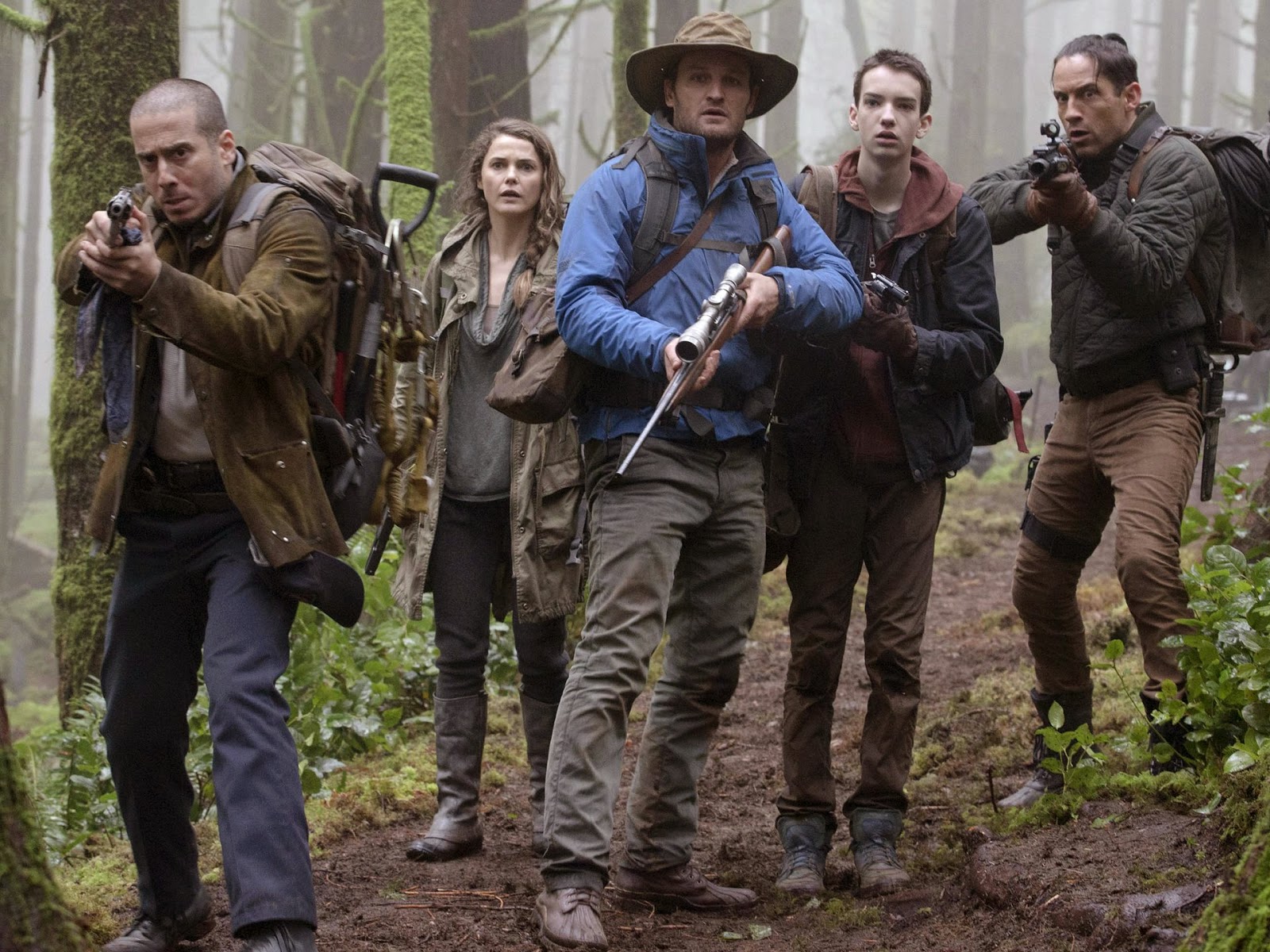
Review- In Dawn of the Planet of the Apes, it's been ten years since the Simian flu outbreak. Mankind has seemingly been wiped out by the disease while Caesar's established a thriving ape colony in the Muir Woods just outside San Fransisco. When a band of human survivors emerge desperate to gain access to hydroelectric dam that can provide power to their encampment, Caesar must grapple with the decision to remain isolated from humanity in order protect his people or work alongside the humans in hopes of co-existing peacefully.
Dawn of the Planet of the Apes saw a change in direction as Rupert Wyatt handed off the blockbuster baton to Matt Reeves. Reeves along with screenwriters Mark Bomba, Rick Jaffa, and Amanda Silver are then afforded the opportunity to thrust the viewer into a post-apocalyptic world that constantly swings the pendulum of being hopeful and hopeless. There are optimistic occasions where it seems ape and man can live alongside one another that are only contrasted by the horrors of warfare between two species.
Reeves and cinematographer Michael Seresin extenuate this disparity by capturing the natural beauty of California's prolific locales in the film's quieter, peaceful moments and shooting intense action sequences primarily in a dingy, disparaged urban environment. It really speaks wonders that Reeves and his technical crew were able to stage something as outrageous as primates wielding machine guns while riding horses and make it seem plausible. 
The Weta vfx artists also significantly stepped up their game as I still am unable to distinguish the motion-capture apes as being digital developments. The visual effects are undoubtedly an incredible achievement for the company that continually pushes the boundaries of technology in film. And I've got to give Michael Giacchino props for another sensational score full of captivating compositions.
In the acting department, Andy Serkis once again delivers a commanding performance via motion capture. Serkis is afforded an opportunity to intrinsically explore Caesar's responsibilities as a leader and father so Serkis imbues Caesar with the confidence, wisdom, and dedication that naturally accompanies said roles. Serkis is even backed by an exceptional primate posse including the likes of  Nick Thurston, Terry Notary, Karin Konoval, Judy Greer, and Larramie Doc Shaw as Blue Eyes, Rocket, Maurice, Cornelia, and Ash respectively. 
However Toby Kebbell challenges Serkis for the position of ruling motion-capture acting as his rampant, rage-induced primate Koba unleashes hell upon the humans and fellow apes. Kebbell gathers enough menace and intellect to portray Koba as a fearsome, undermining antagonist with understandable intentions, however radical those ideologies may be. It's precisely the quarrel between Caesar and Koba that evokes so many feuding philosophies found in history and cinema such as Malcolm X and Martin Luther King Jr. or Mufasa and Scar. 
On the human side of things, Jason Clarke takes up a trusting demeanor as Malcolm and the progression from unease to upmost confidence in Caesar is a fascinating journey. Meanwhile, Gary Oldman's one of the most reliable supporting actors around these days and he makes the most of his time onscreen with grit and gusto. Elsewhere, Keri Russell and Kodi Smitt-McPhee each offer some sufficient impressions for their allotted screen time as Ellie and Alexander.
In conclusion, Dawn of the Planet of the Apes succeeds at something only a scarce number of sequels ever accomplish. It significantly surpasses a fantastic first film and improves upon absolutely every aspect of the predeceasing chapter with an exhibition of technical mastery rarely seen in today's blockbuster franchises.

Film Assessment: A+

Sunday, July 16, 2017

Throwback Thursday Review: 'Rise of the Planet of the Apes'

Sorry for what may seem like a drastic delay on all three of my Planet of the Apes reviews but I wanted to be sure and publish them in the order of Rise, Dawn, and War. Anyways, this week I'm reviewing Rise of the Planet of the Apes and revisiting Dawn of the Planet of the Apes to coincide with this weekend's release of War for the Planet of the Apes. Next week I'll be reviewing Inception as my Throwback Thursday Review and possibly doing a Triple-R over Interstellar to tie in with Nolan's new war film Dunkirk. Reviews you can expect to see for the remainder of the month include a Throwback Thursday Review of Shaun of the Dead in addition to reviews of new releases Valerian and the City of a Thousand PlanetsThe Emoji Movie, and Atomic Blonde.

'Rise of the Planet of the Apes' Review


Nominated For: Best Visual Effects.

Rise of the Planet of the Apes follows Gen-Sys scientist Will Rodman as he develops a drug to cure his father's Alzheimer's disease and enhance brain cells. After a mishap with one of the exemplary ape test subjects "Bright Eyes," Rodman's program is put on the back-burner and all the apes are ordered to be put-down. However, a baby chimpanzee is discovered that inherited Bright Eyes' intelligence that is then given to Rodman. Rodman secretly continues his research, raising the competent chimp he's named Caesar in his own home. As Caesar's intellect increases, Caesar starts to question humanity's hierarchy and an ape insurrection begins. 
Rise of the Planet of the Apes is directed by Rupert Wyatt with a screenplay penned by Rick Jaffa and Amanda Silver. Wyatt had a difficult task ahead of him considering he had to essentially reboot and revitalize a franchise that had previously only spiraled downward into obscurity. So rather than actually try and remake the 1968 sci-fi classic (akin to Tim Burton's effort in 2001), Wyatt and his screenwriters chose to take the riskier route and explain how the ape incursion began. Now genre fans aren't too fond of the term "prequel" since it's most often associated with the maligned Star Wars prequel trilogy but Wyatt succeeded in the vein George Lucas was unable to. 
Wyatt balances quiet character-driven scenes with simian spectacle appropriately so you wind up invested in an army of apes overtaking the Golden Gate Bridge. Where Lucas occasionally went adrift in trying to push the CG-envelope forward, Wyatt ensure the ground-breaking visual effects always elevate the material. Thanks to the talented vfx artists at Weta and marvelous motion-capture equipment, Wyatt is able to draw out powerful performances from Andy Serkis and his ape ensemble. The visual effects are a little spotty in some areas where the apes clearly resemble digital avatars but for the most part Ceasar and his band of primates authentically echo actual apes. 
The film may be titled Rise of the Planet of the Apes, but it more accurately represents Andy Serkis' ascension to becoming a household name in the business of acting via motion-capture. Serkis broke new ground in 2002 with his Middle Earth mo-cap portrayal of Gollum before gallivanting around as a twenty-five foot tall gorilla in King Kong (2005), but the character of Caesar may exhibit all the understated elements of Serkis' range via motion-capture. Serkis demonstrates all the characteristics of a chimpanzee but successfully layers an underlying brilliance and emotional resonance on top of the monkey mannerisms. Serkis and Caesar seem almost inseparable in these Planet of the Apes prequels but the ensemble behind him composed of Karin Konoval, Terry Notary, Richard Ridings, Christopher Gordon, Devyn Dalton, and Jay Caputo each offer an inspired take on various primates. 
One of the things I found myself questioning towards the film's finale was how that many apes managed to come from three locations. Once they escape, the ranks rapidly expand unrealistically. I understand Caesar freed apes from the primate facility, local zoo, and the Gen-Sys laboratory but the army seemed vastly over-exaggerated in comparison to the number of apes shown before the escape.
Oddly enough, the apes are so compellingly created though that they're a hair more humanistic than the actual human characters. James Franco serves the story sufficiently, allowing Will Rodman to be an emotional touchstone of the story while Freida Pinto is relegated to looking pretty on the fringes of the script. Pinto is confined to basically being no more than a love interest who also happens to be a veterinarian. John Lithgow on the other-hand brings forth a tragic take on Alzheimer's which is positioned as the dense emotional arc and Lithgow handles the material well. 
Meanwhile, you thought Tom Felton's Draco Malfoy was despicable? Well Felton proves he can drive the cruelty up a notch as a callous chimp handler and Brian Cox, Jamie Harris, Tyler Labine, and David Oyelowo fill the remaining ranks of the human cast worth mentioning. 
In summary, Rise of the Planet of the Apes holds up thanks to fantastic visual effects that both enhanced the sensational storytelling and exceptional acting on display. The script slouches a tad in its depiction of certain human characters and the visual effects is occasionally aged but Rise of the Planet of the Apes is still able to pound its chest proudly as one of the posh, premier prequels.

Film Assessment: B+