Showing posts with label Keri Russell. Show all posts

Friday, July 13, 2018

Throwback Thursday Review: 'Mission: Impossible III'

Sorry for the slight delay, but this week I'm continuing my reflection on the Mission: Impossible series with my thoughts on Mission: Impossible 3 as the release of Mission: Impossible - Fallout quickly approaches. I suspect my post recapping my best and worst films of the year so far will be ready by the end of the weekend, but it depends on whether I finish watching films I missed out on. For the rest of July, look forward to Throwback Thursday Reviews of The Equalizer and Mamma Mia!, Triple-R Reviews for Mission: Impossible - Ghost Protocol and Mission: Impossible - Rogue Nation, and reviews of new releases Sorry to Bother You, Skyscraper, The Equalizer 2, Mamma Mia! Here We Go Again, Mission: Impossible - Fallout, and Teen Titans Go! To The Movies.

'Mission: Impossible III' Review


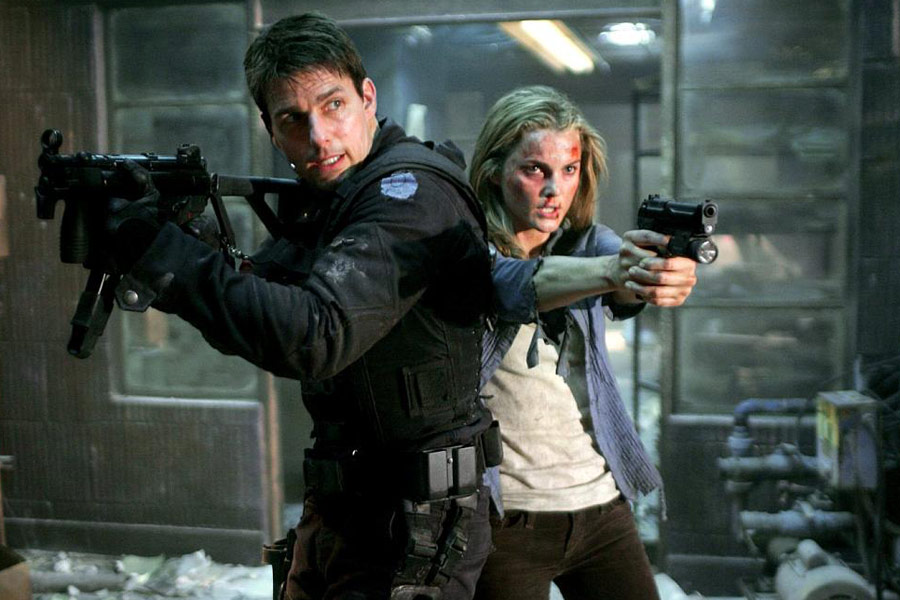
Just as Mission: Impossible III finds IMF Agent Ethan Hunt retired from field work and preparing to settle down with his fiancée Julia, Hunt is forced back into the field when an operative whom he trained is kidnapped and he's brought into conflict with an infamous black market weapons dealer named Owen Davian. However, the odds are soon stacked against Hunt as his fiancée and livelihood are put in harms way. It's then up to Hunt to go rogue and retrieve the elusive, enigmatic "Rabbit's Foot" for Davian in exchange for Julia's life within a forty-eight hour window. 
For the third spy installment, Cruise and Paramount recruited J.J. Abrams to direct with hopes that he could reinvigorate interest in the franchise after a lackluster response from critics and audiences to Mission: Impossible II. Unbeknownst to most audience members, Mission: Impossible III was actually Abrams' feature film directorial debut, so Paramount was taking a huge risk by giving Abrams a shot at helming a blockbuster. Prior to M:I III, Abrams was most well-known for writing, directing, and producing in the realm of television (Felicity, Lost, and Alias were particularly prominent pop-culture hits of his). In the twelve years since 2006, Abrams has been responsible for successfully revitalizing interest in both Star Trek and Star Wars through Star Trek (2009) and Star Wars: The Force Awakens, and I'd like to think that its because of his work on M:I III that he got those gigs in the first place...
In M:I III, Abrams demonstrated that he could bring his own style and sensibilities into a pre-existing franchise without deviating from the series' identity. Abrams understood the basic cornerstones of what made a Mission: Impossible movie, but also acknowledged areas in which the formula was lacking. Therefore, he decided to up the ante by allowing M:I III to actually concern itself with Ethan Hunt's personal life. By extension, the stakes are raised, character motivations are strengthened, and the spectacle actually matters this time around. It's a more personal mission now, and what better way to improve the action than by further fleshing out the characters? Without a foundation in story and an audience investment in the characters, action sequences are a meaningless distraction.
Nine times out of ten, character-driven action sequences will be more likely to have you on the edge of your seat because you actually care about the characters, and the outcome by proxy. While the execution of it all is certainly important, the basis for it lies firmly rooted in the script. In addition to directing, Abrams also contributed to the screenplay alongside Alex Kurtzman and Robert Orci (who both wound up later collaborating with Abrams on his Star Trek films). Together, the three crafted a story that was riveting, subversive, and tested Ethan Hunt like neither of the prior Mission: Impossible films had. Beyond raising the personal stakes, Ethan’s at his most vulnerable here. Due to the time crunch, the lack of support from the IMF, and the intense emotions fueling his actions, Hunt genuinely feels helpless for the first time in the series and is pushed to point of absolute desperation. 
Meanwhile, the technical precision across the board is absolutely spectacular. Everything from the cinematography to the editing to Michael Giachinno's score is coursing with energy from start-to-finish. Watching M:I III is equivalent to injecting yourself with an adrenaline boost which lasts a little longer than two hours. The only way to subdue that feeling is to make it to the end because you're not going to want to take your eyes off the screen once the film takes off.
For those who have been following my Mission: Impossible reviews, you may be wondering what some of the practical stunt centerpieces were for this film. Well, the gif above showcases one of Tom Cruise's tougher stunts. The missile itself was not real of course, but Cruise being propelled straight into that car by an explosion totally is, and the actor wound up cracking a couple ribs in the process. Additionally, Cruise fell off the Vatican wall suspended by a thin cable, performed a stunt in which he fell 30-40 feet in studio against a green screen, and laid underneath a careening truck while it skidded over him. I'm continually amazed at the lengths Cruise goes to for our amusement.
Aside from his extraordinary physical commitment to the role, Cruise turns in another outstanding performance. Bolstered by a stronger script this time around, Cruise delves deeper into Hunt's psyche and lets loose some unhinged emotional outbursts. Opposite Cruise, Michelle Monaghan makes for an ideal love interest. The sparks flying between the two are discernible, and she exudes enough charm for the viewer to understand why Hunt would risk it all. While I'm sure many are quick to call Julia a damsel in distress, the character actually proves herself to be quite capable.
Meanwhile, M:I III was one of the first installments to at least attempt to flesh out the team working alongside Hunt. Ving Rhames' Luther Stickell certainly is given more to work with compared to the previous entires, but newcomers Jonathan Rhys Meyers and Maggie Q still have restrained roles with a focus on their skillset rather than personalities. To their credit though, Meyers and Q made the most of everything the script provided them.
Also, I could hardly forget to mention Simon Pegg's Benji. Though the best of his character comes once he figures into the franchise more prominently, Pegg was a wonderful addition to the cast and welcome source of comedic relief nonetheless. Other noteworthy series recruitments include Keri Russell, Billy Crudup, and Laurence Fishburne who all do an excellent job leaving an impression in their allotted screen time as you'd expect. 
Last, but certainly not least, the late Phillip Seymour Hoffman is an absolutely unrelenting antagonist. Owen Davian is still one of the series' most memorable villains, and for good reason. Hoffman portrays the character as a calloused individual willing to go to great lengths to obtain what he desires. His screen presence alone is quite intimidating, but he's nearly unstoppable in regards to commanding your attention when coupled with some menacing monologues.
After all this time, Mission: Impossible III remains one of the finest films in the franchise as well as Abrams' filmography. In true spy fashion, it's another adventurous outing for Ethan Hunt that moves at a breakneck pace with several intense sequences of sensational spectacle and no signs of slowing down. Ultimately though, the tactic of grounding Mission: Impossible III in Hunt's humanity is what most elevates it above its predecessors. 

Film Assessment: A-

Monday, July 17, 2017

Recollection Reflection Review: 'Dawn of the Planet of the Apes'

I've reviewed Rise of the Planet of the Apes and am now revisiting Dawn of the Planet of the Apes to coincide with this weekend's release of War for the Planet of the Apes. I'm aware this review's a little late but I've had a busy weekend and only just got around to writing this review. I hope to have my review of War for the Planet of the Apes online ASAP.

'Dawn of the Planet of the Apes' Review


Nominated For: Best Visual Effects.

Recollection- 'Dawn of the Planet of the Apes' Review

Reflection- This section of my review is probably going to be a little boring considering my opinion of Dawn of the Planet of the Apes hasn't changed much in the last three years. I remember thoroughly enjoying Dawn of the Planet of the Apes the first time around and that hasn't really shifted at all.

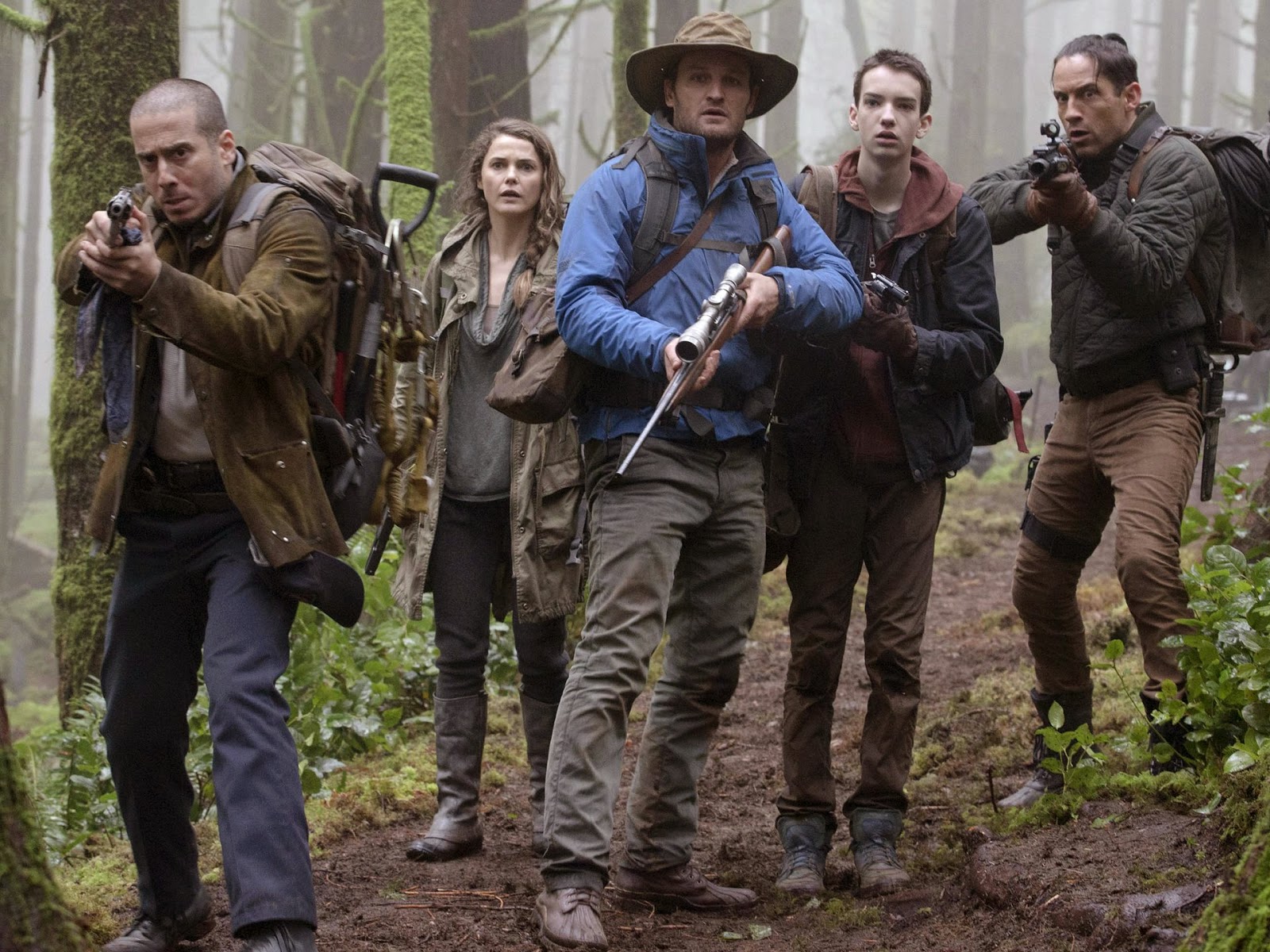
Review- In Dawn of the Planet of the Apes, it's been ten years since the Simian flu outbreak. Mankind has seemingly been wiped out by the disease while Caesar's established a thriving ape colony in the Muir Woods just outside San Fransisco. When a band of human survivors emerge desperate to gain access to hydroelectric dam that can provide power to their encampment, Caesar must grapple with the decision to remain isolated from humanity in order protect his people or work alongside the humans in hopes of co-existing peacefully.
Dawn of the Planet of the Apes saw a change in direction as Rupert Wyatt handed off the blockbuster baton to Matt Reeves. Reeves along with screenwriters Mark Bomba, Rick Jaffa, and Amanda Silver are then afforded the opportunity to thrust the viewer into a post-apocalyptic world that constantly swings the pendulum of being hopeful and hopeless. There are optimistic occasions where it seems ape and man can live alongside one another that are only contrasted by the horrors of warfare between two species.
Reeves and cinematographer Michael Seresin extenuate this disparity by capturing the natural beauty of California's prolific locales in the film's quieter, peaceful moments and shooting intense action sequences primarily in a dingy, disparaged urban environment. It really speaks wonders that Reeves and his technical crew were able to stage something as outrageous as primates wielding machine guns while riding horses and make it seem plausible. 
The Weta vfx artists also significantly stepped up their game as I still am unable to distinguish the motion-capture apes as being digital developments. The visual effects are undoubtedly an incredible achievement for the company that continually pushes the boundaries of technology in film. And I've got to give Michael Giacchino props for another sensational score full of captivating compositions.
In the acting department, Andy Serkis once again delivers a commanding performance via motion capture. Serkis is afforded an opportunity to intrinsically explore Caesar's responsibilities as a leader and father so Serkis imbues Caesar with the confidence, wisdom, and dedication that naturally accompanies said roles. Serkis is even backed by an exceptional primate posse including the likes of  Nick Thurston, Terry Notary, Karin Konoval, Judy Greer, and Larramie Doc Shaw as Blue Eyes, Rocket, Maurice, Cornelia, and Ash respectively. 
However Toby Kebbell challenges Serkis for the position of ruling motion-capture acting as his rampant, rage-induced primate Koba unleashes hell upon the humans and fellow apes. Kebbell gathers enough menace and intellect to portray Koba as a fearsome, undermining antagonist with understandable intentions, however radical those ideologies may be. It's precisely the quarrel between Caesar and Koba that evokes so many feuding philosophies found in history and cinema such as Malcolm X and Martin Luther King Jr. or Mufasa and Scar. 
On the human side of things, Jason Clarke takes up a trusting demeanor as Malcolm and the progression from unease to upmost confidence in Caesar is a fascinating journey. Meanwhile, Gary Oldman's one of the most reliable supporting actors around these days and he makes the most of his time onscreen with grit and gusto. Elsewhere, Keri Russell and Kodi Smitt-McPhee each offer some sufficient impressions for their allotted screen time as Ellie and Alexander.
In conclusion, Dawn of the Planet of the Apes succeeds at something only a scarce number of sequels ever accomplish. It significantly surpasses a fantastic first film and improves upon absolutely every aspect of the predeceasing chapter with an exhibition of technical mastery rarely seen in today's blockbuster franchises.

Film Assessment: A+