Showing posts with label Laurence Fishburne. Show all posts

Sunday, May 19, 2019

'John Wick: Chapter 3 - Parabellum' Review

Synopsis: After gunning down a member of the High Table, legendary hit man John Wick finds himself stripped of the organization's protective services. Now stuck with a $14 million bounty on his head, Wick must fight his way through the streets of New York as he becomes a target of the world's most ruthless killers.

Runtime: 130 minutes

MPAA Rating: R (for pervasive strong violence and some language)

Who should see it? Adult fans of action films and the John Wick franchise.
American action films aren't quite what they used to be... A majority of modern action sequences involve extreme close-ups, visceral shaky camera work, and excessive editing to mask subpar stunt-work or diminish well-choreographed set-pieces. Fortunately, former stuntman Chad Stahelski directed all three entries in the John Wick series (though it's worth noting David Leitch co-directed John Wick). Stahelski and Leitch's extensive stunt background aided them in ensuring the focused intensity of involved stunt-work wouldn't be lost in post-production, and I'm pleased to report that degree of attention and care persisted in each of the two successive installments.
Concerning carnage, John Wick: Chapter 3 - Parabellum is no less impressive than its predecessors. I'd daresay Stahelski successfully upped the ante in his third go-around! In Parabellum, John Wick's on the run without access to the amenities usually provided to the network of underworld assassins, so he's forced to use whatever's in his vicinity to survive. Wick brandishes seemingly innocuous items as his weapons of choice because he has no other choice, similarly to the infamous No. 2 pencil scene from John Wick: Chapter 2. I'd prefer not to disclose these utensils since I'm sure you'd rather be astounded in the theater when John Wick takes a guy out of commission with X, but know this leads to some gloriously gruesome kills. You will surely wince as Wick works his way through his assailants.
Of course, it's the technicality behind it all which should be recognized above all else. The stunt performers never let up amidst nearly non-stop action while the cinematography and production design offered an attractive aesthetic. The film is genuinely visually-arresting from start-to-finish on behalf of the fine work from cinematographer Dan Lausten and production designer Kevin Kavanaugh, so hats off to the two of them in addition to the entire crew.
In regards to the screenplay, series screenwriter Derek Kolstad was joined by Shay Hatten, Chris Collins, and Marc Abrams to further the franchise. Before watching Parabellum, I'd suspected it would provide a definitive resolution to the John Wick trilogy. I now know that's not quite true since the door was clearly left open for a sequel and/or spin-off (both of which are supposedly in development). The four writers constantly challenge Wick to adapt to his surroundings and overcome extenuating circumstances, and I loved that element of the story. Wick's physically more vulnerable than ever before with the added complication of being declared "excommunicado" with a $14 M bounty on his head. However, the story's not as tight as I'd hoped since Kolstad and company chose to pursue narrative threads aside from the matter of Wick's struggle to survive. Things quickly become complicated, but it's all authentically complex and true to the nature of the narrative. Otherwise, I liked how they handled exposition so that the dialogue further fleshed out the world and John Wick's past while retaining the sense of mystery surrounding the network of assassins and Wick.
Front and center, Keanu Reeves commits wholeheartedly to the physicality and personality associated with the role. As a weary action hero desperately grasping to the meager remains of his soul, Reeves strikes a delicate balance in portraying the humanity and ferocity of John Wick. The likes of Laurence Fishburne, Lance Reddick, and Ian McShane join Reeves in reprising their respective roles of the Bowery King and Continental employees Charon and Winston. 
Meanwhile, Halle Berry, Jerome Flynn, Mark Dacascos, and Asia Kate Dillon are prime, potent additions to the series. Berry's character Sofia is a stand-out in particular, largely thanks to her firm resolve and two Malinois dogs.
All in all, Parabellum cements John Wick as a blockbuster pillar of American action cinema alongside the likes of the Mission: Impossible franchise. I sincerely hope Hollywood continues to churn out additional entries for both series as long as Tom Cruise and Keanu Reeves are able and willing, because I'll gladly return to the theater time-and-time again! I know two things for sure, though. John Wick: Chapter 3 - Parabellum hit its mark as a killer third chapter, and I'm eager to see what happens once Stahelski, Kolstad, and Reeves regroup and reload for Chapter 4!

Film Assessment: A

Friday, July 13, 2018

Throwback Thursday Review: 'Mission: Impossible III'

Sorry for the slight delay, but this week I'm continuing my reflection on the Mission: Impossible series with my thoughts on Mission: Impossible 3 as the release of Mission: Impossible - Fallout quickly approaches. I suspect my post recapping my best and worst films of the year so far will be ready by the end of the weekend, but it depends on whether I finish watching films I missed out on. For the rest of July, look forward to Throwback Thursday Reviews of The Equalizer and Mamma Mia!, Triple-R Reviews for Mission: Impossible - Ghost Protocol and Mission: Impossible - Rogue Nation, and reviews of new releases Sorry to Bother YouSkyscraperThe Equalizer 2Mamma Mia! Here We Go AgainMission: Impossible - Fallout, and Teen Titans Go! To The Movies.

'Mission: Impossible III' Review


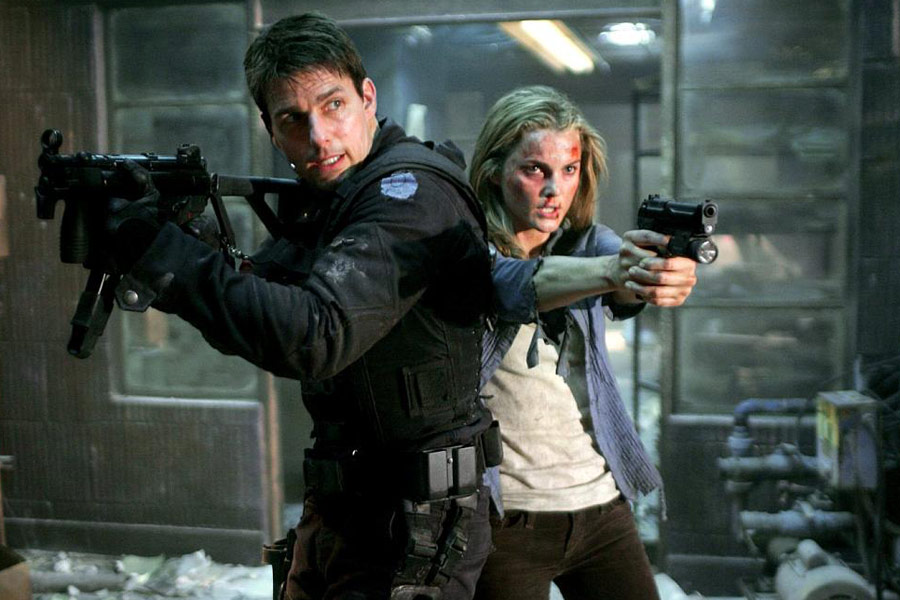
Just as Mission: Impossible III finds IMF Agent Ethan Hunt retired from field work and preparing to settle down with his fiancée Julia, Hunt is forced back into the field when an operative whom he trained is kidnapped and he's brought into conflict with an infamous black market weapons dealer named Owen Davian. However, the odds are soon stacked against Hunt as his fiancée and livelihood are put in harms way. It's then up to Hunt to go rogue and retrieve the elusive, enigmatic "Rabbit's Foot" for Davian in exchange for Julia's life within a forty-eight hour window. 
For the third spy installment, Cruise and Paramount recruited J.J. Abrams to direct with hopes that he could reinvigorate interest in the franchise after a lackluster response from critics and audiences to Mission: Impossible II. Unbeknownst to most audience members, Mission: Impossible III was actually Abrams' feature film directorial debut, so Paramount was taking a huge risk by giving Abrams a shot at helming a blockbuster. Prior to M:I III, Abrams was most well-known for writing, directing, and producing in the realm of television (Felicity, Lost, and Alias were particularly prominent pop-culture hits of his). In the twelve years since 2006, Abrams has been responsible for successfully revitalizing interest in both Star Trek and Star Wars through Star Trek (2009) and Star Wars: The Force Awakens, and I'd like to think that its because of his work on M:I III that he got those gigs in the first place...
In M:I III, Abrams demonstrated that he could bring his own style and sensibilities into a pre-existing franchise without deviating from the series' identity. Abrams understood the basic cornerstones of what made a Mission: Impossible movie, but also acknowledged areas in which the formula was lacking. Therefore, he decided to up the ante by allowing M:I III to actually concern itself with Ethan Hunt's personal life. By extension, the stakes are raised, character motivations are strengthened, and the spectacle actually matters this time around. It's a more personal mission now, and what better way to improve the action than by further fleshing out the characters? Without a foundation in story and an audience investment in the characters, action sequences are a meaningless distraction.
Nine times out of ten, character-driven action sequences will be more likely to have you on the edge of your seat because you actually care about the characters, and the outcome by proxy. While the execution of it all is certainly important, the basis for it lies firmly rooted in the script. In addition to directing, Abrams also contributed to the screenplay alongside Alex Kurtzman and Robert Orci (who both wound up later collaborating with Abrams on his Star Trek films). Together, the three crafted a story that was riveting, subversive, and tested Ethan Hunt like neither of the prior Mission: Impossible films had. Beyond raising the personal stakes, Ethan’s at his most vulnerable here. Due to the time crunch, the lack of support from the IMF, and the intense emotions fueling his actions, Hunt genuinely feels helpless for the first time in the series and is pushed to point of absolute desperation
Meanwhile, the technical precision across the board is absolutely spectacular. Everything from the cinematography to the editing to Michael Giachinno's score is coursing with energy from start-to-finish. Watching M:I III is equivalent to injecting yourself with an adrenaline boost which lasts a little longer than two hours. The only way to subdue that feeling is to make it to the end because you're not going to want to take your eyes off the screen once the film takes off.
For those who have been following my Mission: Impossible reviews, you may be wondering what some of the practical stunt centerpieces were for this film. Well, the gif above showcases one of Tom Cruise's tougher stunts. The missile itself was not real of course, but Cruise being propelled straight into that car by an explosion totally is, and the actor wound up cracking a couple ribs in the process. Additionally, Cruise fell off the Vatican wall suspended by a thin cable, performed a stunt in which he fell 30-40 feet in studio against a green screen, and laid underneath a careening truck while it skidded over him. I'm continually amazed at the lengths Cruise goes to for our amusement.
Aside from his extraordinary physical commitment to the role, Cruise turns in another outstanding performance. Bolstered by a stronger script this time around, Cruise delves deeper into Hunt's psyche and lets loose some unhinged emotional outbursts. Opposite Cruise, Michelle Monaghan makes for an ideal love interest. The sparks flying between the two are discernible, and she exudes enough charm for the viewer to understand why Hunt would risk it all. While I'm sure many are quick to call Julia a damsel in distress, the character actually proves herself to be quite capable.
Meanwhile, M:I III was one of the first installments to at least attempt to flesh out the team working alongside Hunt. Ving Rhames' Luther Stickell certainly is given more to work with compared to the previous entires, but newcomers Jonathan Rhys Meyers and Maggie Q still have restrained roles with a focus on their skillset rather than personalities. To their credit though, Meyers and Q made the most of everything the script provided them.
Also, I could hardly forget to mention Simon Pegg's Benji. Though the best of his character comes once he figures into the franchise more prominently, Pegg was a wonderful addition to the cast and welcome source of comedic relief nonetheless. Other noteworthy series recruitments include Keri Russell, Billy Crudup, and Laurence Fishburne who all do an excellent job leaving an impression in their allotted screen time as you'd expect. 
Last, but certainly not least, the late Phillip Seymour Hoffman is an absolutely unrelenting antagonist. Owen Davian is still one of the series' most memorable villains, and for good reason. Hoffman portrays the character as a calloused individual willing to go to great lengths to obtain what he desires. His screen presence alone is quite intimidating, but he's nearly unstoppable in regards to commanding your attention when coupled with some menacing monologues.
After all this time, Mission: Impossible III remains one of the finest films in the franchise as well as Abrams' filmography. In true spy fashion, it's another adventurous outing for Ethan Hunt that moves at a breakneck pace with several intense sequences of sensational spectacle and no signs of slowing down. Ultimately though, the tactic of grounding Mission: Impossible III in Hunt's humanity is what most elevates it above its predecessors. 

Film Assessment: A-

Friday, July 6, 2018

'Ant-Man and the Wasp' Review

After the events of Captain America: Civil War, Scott Lang must grapple with the consequences of his choices as a superhero and a father by submitting himself to house arrest for two years as punishment for not abiding by the Sokivia Accords. When approached by Hope van Dyne and Dr. Hank Pym towards the end of his sentence, Lang must once again don the Ant-Man suit and fight alongside the Wasp as the dynamic duo journeys to bring back Janet van Dyne from the Quantum Realm. However, the urgent mission soon leads to startling revelations from the past as the duo find themselves backed up against a corner amidst facing a powerful new adversary with dangerous technology.
Ant-Man and the Wasp rounds out Marvel's ten year journey as the twentieth film in the Marvel Cinematic Universe and their third release of the year. Considering that information, you'd probably expect the superhero sequel to be bearing the weight of immense pressure. That's not exactly the case though, as Ant-Man and the Wasp feels light and breezy when compared to the recent dramatic additions in Marvel's filmography. As a smaller self-contained story, it's a refreshing palette cleanser following the severity and weight of Avengers: Infinity War's heavy cliff-hanger. I'm sure many Marvel fans are expecting some semblance of a crossover there, or at least a tease towards the still untitled Avengers 4, and to that I'll simply say you won't be disappointed. An expected Stan Lee cameo is included as well as two post-credits scenes, but you know the drill by now so just be sure and stick around when the credits start rolling. Otherwise, you're just going to look like a chump in the glaring, judgmental eyes of Marvel fanboys all around you.
To get back on track, Peyton Reed flies back in to direct the size-changing duo in their first outing together while the screenplay is credited to star Paul Rudd along with the quartet of Chris McKenna, Erik Sommers, Andrew Barrer, and Gabriel Ferrari. Last time around, Reed didn't have full control of Ant-Man... There was the unfortunate matter and circumstance of creative differences between the studio and Edgar Wright that lead to Reed getting the gig just before filming. However, this time around, you can tell Marvel gave Reed full creative control to do as he pleased. While I wouldn't go as far to saying Ant-Man and the Wasp is an exceptionally well-directed blockbuster, his stamp of a approval on it is clear because the zany wackiness audiences gravitated towards in the first film has now been dialed to an eleven. Whether that will be controversial or not remains to be seen, but I've already seen a substantial split of people's opinion on my Twitter feed. Whatever the case, I'm expecting the audience response to be something akin to the reception towards Iron Man 3 rather than the full-fledged fanboy rage towards Star Wars: The Last Jedi.
Anyways, I apologize for getting caught up in all that chatter, but I felt it was worth mentioning at the very least. As is often the case for sequels, Ant-Man and the Wasp had its eyes set on being another small-scaled, self-contained story with bigger action, heart, and humor. At the end of the day, I'd say it met its goal because it's about on par with the original in my book. While the first film is more focused and grounded in reality, I can't help but slightly prefer the hilarious hijinks present in Ant-Man and the Wasp. I'd actually liken it to Saturday morning cartoon (I say this in a positive light). There's little thematic importance to the journey beyond demonstrating the importance of family and teamwork as we've seen a million times before, but it's still a fun, briskly paced adventure the whole family can enjoy. 
As you'd expect, Reed and crew have found new creative ways to inventively exploit the size-changing gimmick, and it totally works in the film's favor. Now that Giant-Man's on the table thanks to the airport battle in Civil War (which comes up quite often here), there are new toys at Reed's disposal and he can quite literally think bigger in regards to planning out the film's beats of action and humor. On that note, the action sequences are a noticeable improvement over the original and I also found the film to be also much funnier than the first. A win-win for a sequel to an action-comedy. 
I'd also say the sequel's visual effects are among the best I've seen all year. While I wouldn't go as far to saying they beat out Infinity War's grandiose graphics overall, the cinematic de-aging technique that Marvel often exploits is at its very best here and there were no sketchy instances of uncanny video game-esque renderings or poor green screen work which can sometimes be a bane to Marvel (ie. Black Panther and Thor: Ragnarok). The production design inside Pym's new lab is also visually appealing so it definitely deserves a mention as well. 
Like the first, Ant-Man and the Wasp succeeds first and foremost on the merits of its cast. There are quite a few exciting new additions to the ensemble as well as plenty of familiar faces returning from the first film, but Paul Rudd and Evangeline Lily are front and center as the first to co-lead a Marvel feature. Up to this point, everything's been team-based or driven by a solo character with supporting cast, which makes it all the more refreshing to see Scott Lang and Hope van Dyne share title billing. A significant story element from the original was the implication that Hope might be more qualified to wear the Ant-Man suit than Scott, and the sequel certainly pushes that notion even further...
The three year wait to see Lily step up to lead status was well worth it because Wasp is a badass. It was nice to see her steal the show without coming across as an in-your-face feminist. My only insignificant issue with her being such an awesome component of the film is that it often comes at the expense of Scott Lang looking like a total doofus. Granted, I guess that's kind of why Paul Rudd was cast to begin with, but still... I also appreciated that they didn't spin it as if she necessarily needed Lang's help to get things done. Instead, they went for the age-old message that teamwork makes the dream work. She's adept, skillful, and a cunning combatant, but even she can't do it all alone. 
On the flipside, Paul Rudd's winsome charm shines through once again as he provided some of the biggest laughs once more. His chemistry with Lily is even better this time around as the nature of their relationship has significantly evolved, and it continues to change over the course of the film. Through it all, Cassie remains a sweet centerpiece to the whole shebang. Her dynamic with her dad is absolutely adorable and I totally bought into it on the basis of Rudd and Abby Ryder Forston's performances. In terms of supporting characters, she totally stole every scene she was in.
Veteran actor Michael Douglas is also back as Dr. Hank Pym and gets ample opportunity to showcase his character's broken humanity in some of the more intense emotional moments. Opposite Douglas, Janet van Dyne is played by the excellent Michelle Pfeiffer who is essentially the major McGuffin everyone's after. I'd compare her role to Mark Hamill's in Star Wars: The Force Awakens, but the major difference was that Pfeiffer at least had some dialogue. I wouldn't go as far to say Pfeiffer was wasted in this film, but she didn't have a lot to do and that may disappoint some. Another notable actor featured in the film was Laurence Fishburne as Dr. Bill Foster. Fishburne was in it a lot more than I had expected and had an interesting role in the grand scheme of things that I'd rather not spoil. I'll just say what everyone already knows... Fishburne is a highly qualified actor and it didn't feel like he phoned in his performance at all.
Filling out the supporting ensemble, Michael Peña, T.I., David Dastmalchian, Bobby Cannavale, and Judy Greer all do great work with what's provided to them. The trio of Peña, T.I., and Dastmalchian were particularly hilarious in notable sequences. You can tell that Reed and crew took note of people gravitating to Luis in the original though because Peña is in the sequel significantly more than he was last time around. It's not a bad thing because his eccentric character is such a delight, but simply an observation I made about how Reed likely reacted to the response towards the first film. 
Meanwhile, Ant-Man and the Wasp has a very interesting villain situation... There are multiple ANT-agonistic forces, but not really one specific, clear-cut villain so to speak. First up, Ghost turns out to be a compelling character with a sympathetic cause, but is more ANT-agonist than villain. Thanks to Hannah John-Kamen, Ghost has a powerful screen presence and her action scenes are pretty cool, but I ultimately wished she had factored more into the plot. Another character in the stable of ANT-agonists would be Sonny Burch played by Walton Goggins, and I was woefully disappointed by the disposable role he wound up in. Goggins is an immensely talented actor, but his character was honestly wasted here. The other ANT-agonistic force which isn't quite villainous would be the FBI. The head agent checking in on Lang is Jimmy Woo, portrayed by Randall Park, and he was a hilarious addition whenever onscreen.
With a stronger emotional core and bigger action, the tiny dynamic duo's first team-up takes off as a slightly superior sequel, but is unable to fully spread its wings on the basis of being light-hearted popcorn fluff. Marvel fans will surely find it worthwhile for the extra ANT-icipation it brings to Avengers 4, but the adventure may also prove too cartoonish to some. However, I thought it lived up to the buzz and I c-AN'T wait to be stung again. 

Film Assessment: B+

Thursday, February 9, 2017

'John Wick: Chapter 2' Review

John Wick: Chapter 2 picks up relatively soon after the end of John Wick as John Wick seeks to return to his normal life. Of course that's impossible for men of Wick's talents, so he's dragged back into the fold to repay a debt. A bounty is then placed on Wick and he finds himself in the fight of his life. 
2016 put forth many sequels that no-one wanted and no-one liked, with Star Trek Beyond or Captain America: Civil War standing as the only two sequels that worked in last year's desolate blockbuster wasteland to come to mind. Thankfully, John Wick: Chapter 2 is a sequel that's justified on the merits of the excellent underbelly assassin world-building done in John Wick alone. Chad Stahelski, working solo this time, takes full reigns of the franchise and proves he's quite capable of bearing the full weight of an action blockbuster on his own as he ups the scale of the action sequences.
Stahelski goes for bigger and better but doesn't ignore the importance of the refined intimate "gun-fu" fighting style that made the first so popular. Working alongside cinematographer Dan Lausten, the neon glow and subtle nightlight are properly utilized in framing exceptional action. One thing the Wick franchise should definitely be credited for is its persistence not to resort to shaky-cam but rather show long well-handled takes of brutal hand-to-hand combat and gun escapades. This time around the action set pieces include Roman catacombs, public venues, and a labyrinth of mesmerizing mirrors, each set piece featuring a memorable action sequence or two.
John Wick: Chapter 2 could have easily become virtually a rehash of the original but writer Derek Kolstad manages to think of a way to bring Wick back into the mix that works for the purpose of the film but isn't quite as emotionally driven as the first. Kolstad does however recoup for this by fleshing out more of the mercenary lifestyle; throwing tailors, arms dealers, and accountants into the mix. Practically everything beloved regarding the original is deservedly amplified and further explored to the appropriate extent.
The cast includes a mix of returning characters and fresh faces that put full commitment into the bullet bonanza. Keanu Reeves' portrayal of John Wick as a weary action hero compliments the narrative perfectly. Reeves' silence in some scenes almost speaks louder than words and his physical commitment to the role is virtually unchallenged by actors today, excluding perhaps Tom Cruise. Reeves manages to invest audiences in an unequivocal killing machine by gifting Wick a touch of humanity.
Ian McShane returns as Continental Hotel owner Winston, serving as a source of support for Wick, and Laurence Fishburne shows up for a Matrix reunion as the Bowery King, chewing up as much scenery as possible along the way. Common and Ruby Rose provide suitable physical threats, portraying private bodyguard Cassian and mute hit woman Ares respectively, each trading blows in visceral hand-to-hand combat against Wick. Meanwhile, Riccardo Scamarcio's Italian crime lord Santino D'Antonio serves to be a multifaceted antagonist with understandable motivations and clear intentions.
In conclusion, John Wick: Chapter 2 succeeds in an avenue few action sequels ever achieve. It raises both stakes and spectacle without losing sight of the components that made the first one so great. I wouldn't say it's definitively better, but it's at least as good as the first and does succeed in the merits of pulling off bigger action. One can only hope that a third chapter gets off the ground to see if Stahelski, Reeves, and crew can raise the bar any higher.

Film Assessment: A-

Friday, February 3, 2017

Throwback Thursday Review: 'The Matrix Revolutions'

Sorry for the delayed review as I had to leave in the midst of preparing this review if I were going to catch the showing of Patriots Day I planned on attending last evening and I didn't get far along as I had hoped to be writing this review. Anyways, this week I'm concluding my series of reviews over The Matrix trilogy with my thoughts on The Matrix Revolutions and next week I will review John Wick to coincide with the release of its sequel. The reason I decided to review The Matrix trilogy prior to John Wick is that John Wick: Chapter 2 sees a reunion between actors Keanu Reeves and Laurence Fishburne. I'm almost caught up on other reviews as you can find my review of Split at the preceding hyperlink and my review of Patriots Day should be finalized by Saturday. I've yet to watch either The Founder or Gold but I intend to see and review those in addition to two other 2016 releases Jackie and Lion in the near future. What you can look forward to for the remainder of February are Throwback Thursday Reviews for John WickSpider-Man, and Pirates of the Caribbean: The Curse of the Black Pearl and reviews over new releases The LEGO Batman MovieJohn Wick: Chapter 2The Great WallA Cure for Wellness, and Get Out

'The Matrix Revolutions' Review


The Matrix Revolutions draws The Matrix trilogy to a close bringing man and machines together for a final confrontation while Neo must fight against Agent Smith one last time, deciding once and for all whether he's truly the "One." The Matrix Revolutions is considered by many to be a incredibly disappointing close to the franchise and I can understand that sentiment. However, considering that this was my first time to watch the trilogy, aware that neither The Matrix Reloaded or The Matrix Revolutions would compare to The MatrixI wasn't let down. That's not to say Revolutions isn't flawed or isn't a bad movie, merely that it's not the atrocity I was expecting.
Revolutions, like its precursors, was written and directed by the Wachowskis and the duo stuffed Revolutions to the brim with extraneous characters, plot lines, and visuals. The Wachowskis weren't able to rekindle the flame of The Matrix with lackluster action and don't really deliver any memorable action this time around. There are maybe one or two somewhat cool action sequences but none of these are on par with what the Wachowskis had delivered previously. The cinematography from Bill Pope is fairly good and Don Davis' score sounds more cinematic but across the board everything just feels rushed together in comparison to the preceding installments.
One step up from Reloaded is that the Wachowskis were able to better hide the terrible CG, taking advantage of darker lighting and rain effects in some scenes, but again only a few of the effects hold up to today's standards. A slight improvement in the screenplay department was that the stakes were believable because the characters feel vulnerable, you actually believe that any character could die at any moment.
Otherwise, the plot itself is actually incredibly convoluted and a little hard to follow in some instances if you aren't paying keen attention to every detail and line of dialogue. The narrative largely takes place out of the Matrix and the end result is plenty of boring character exchanges. The Wachowskis introduce so many random characters that the story loses focus on the core group of heroes from time to time, there's a good chunk of the movie where Neo's nowhere to be found.
The core cast returns for one final hoo-rah and bow out half-heartedly. Keanu Reeves is disconnected from the audience as Neo, Carrie-Anne Moss and Laurence Fishburne are given almost nothing of consequential importance to do as Trinity and Morpheus respectively, and Hugo Weaving portrays Agent Smith to be a cartoonish robot.
Across the board The Matrix Revolutions actually isn't an atrocious movie, rather a lazily-made one that can't bear the burden of the heavy weight the Wachowskis set out to lift. All departments don't seem to be putting forth full commitment and the end result is a forgettable close to what should have been an awesome action trilogy.

Film Assessment: D+

Saturday, January 28, 2017

Throwback Thursday Review: 'The Matrix Reloaded'

Sorry for the delayed review as I was quite busy this past week and when I was about to pop in The Matrix Reloaded disc Thursday night, I learned it was scratched and wouldn't play. This week I'm continuing my trek through The Matrix trilogy and in the following weeks I will review The Matrix Revolutions to cap it off and John Wick to coincide with John Wick: Chapter 2. The reason I decided to review The Matrix trilogy prior to John Wick is that John Wick: Chapter 2 sees a reunion between actors Keanu Reeves and Laurence Fishburne. Anyways, I'm well aware I've fallen behind in regards to reviewing some of the recent releases but will definitely get around to seeing Patriots Day and Split soon, no promises for The Founder and Gold but I intend to see those as well. Other reviews I haven't mentioned but can all but guarantee will be coming in the next two weeks include The LEGO Batman Movie and John Wick: Chapter 2

'The Matrix Reloaded' Review


The Matrix Reloaded picks up with Neo, Trinity, and Morpheus continuing their efforts to thwart the machines and our heroes must learn the secrets of the Matrix if they hope to save mankind. The Matrix Reloaded was written and directed by the Wachowskis as the duo sought to expand the immersive world they created in The Matrix
The Wachowskis succeed in some avenues but ultimately are unable to find the spark that made the original so great. The Wachowskis' visual plane is much more of a mixed bag than previous efforts with post-apocalyptic production design and streamlined futuristic special effects blended seamlessly together in contrast to the CG-rendered versions of characters, who look like poorly designed avatars from a dated video game, utilized in the more outlandish action sequences. 
The Wachowskis nail the action sequences when they're not trying to break the boundaries of what visual effects are capable of in filmmaking. However, these effects heavy sequences don't hold up to today's standards and that's to be somewhat expected from a fourteen year old movie but these are just awful. The sequences actually shot by cinematographer Bill Pope are a remarkable display of varying fight choreography from visceral hand-to-hand combat to a riveting chase sequence to the thrilling sword fight in the Chateau. These sequences are made even cooler thanks to another digitized soundtrack from Don Davis that's a perfect fit for the world of the Matrix. 
All the action's fairly memorable and there are plenty of cool moments interspersed but there's one thing that nearly undermines it all. There's simply no major stakes. This is largely due to the Wachowskis' script that negates the most crucial element of any action screenplay, vulnerability. It's difficult to truly become invested in the onscreen exploits if the screenwriters can't bridge the gap, leaving none of the threats to seem credible when Neo can simply walk away from everything unscathed. 
Another problem with the Wachowskis' screenplay is that it fails to properly address gaping plot-holes that emerge as a result of bringing back characters simply because they were cool in the original or fail to explain what really happened in-between the previous film and now. The Wachowskis did a fairly good job of laying out the rules and concepts of the Matrix in the predecessor but this time around so much is left unexplained, making it difficult to ascertain why certain events or actions are able to occur. The Wachowskis almost threw the idea of grounding the story (and quite literally characters) completely out the window. 
Most cast members return for the sequel with Keanu Reeves' Neo much more confident in his own abilities and prowess, Carrie-Anne Moss' Trinity given further humanity to explore while serving as the black leather-clad eye candy (the early 2000s were weird...), Laurence Fishburne's Morpheus deepened as the keen believer, and Hugo Weaving's Agent Smith a reckless robotic force to combat. 
To sum it up, The Matrix Reloaded is a serviceable popcorn action flick with enough iconic moments to keep action junkies entertained but fails in almost every regard to live up to its predecessor. It probably sounds like I'm being overly critical of the Wachowskis but it's merely because all the pieces are there, they simply aren't laid out correctly or to their greatest potential.

Film Assessment: C-