Showing posts with label Liam Neeson. Show all posts

Friday, June 14, 2019

'Men in Black: International' Review

Synopsis: The Men in Black have always protected the Earth from the scum of the universe. In this new adventure, they tackle their biggest threat to date: a mole in the Men in Black organization.

Runtime: 114 minutes

MPAA Rating: PG-13 (for sci-fi action, some language and suggestive material)

Who should see it? Passionate fans of the Men in Black franchise.
Directed by F. Gary Gray with a screenplay by Art Marcum and Matt Holloway, Men in Black: International seeks to rejuvenate the series as a globe-trotting spy adventure on the heels of the three Will Smith/Tommy Lee Jones-led Men in Black features. Sony Pictures is a notoriously money-hungry studio, and it's been seven years since MIB 3, so it makes sense that the studio would be keen to prolong the series via a soft-reboot. On paper, you'd even expect that the talent involved would be able to produce something satisfactory. Gray's a successful filmmaker while Thor: Ragnarok co-stars Chris Hemsworth and Tessa Thompson are a promising pair with a pre-existing rapport.
Unfortunately, MIB: International never amounts to being anything more than a cookie-cutter summer blockbuster which was clearly made to cash in on an established franchise. Most sequels and spin-offs are developed with the intent of securing a healthy financial return, and there's nothing wrong with that in-of-itself. However, MIB: International is devoid of style, spirit, and personality. I take no issue with watching something formulaic, so long as it successfully implements said "formula," but MIB: International can't even do that. While MIB: International is inoffensive and competently made, I doubt I'll ever have an urge to rewatch due to its lacking entertainment value. 
The worst thing I can really say about MIB: International is that I deemed it bland and boring, which is blasphemy for a MIB entry. Men in Black isn't a sacred franchise by any means, but something is endearing about how weird and over-the-top those first three films were. Even the worst ones captured the ludicrous nature and nonsensical tone of it all. A universe in which aliens secretly inhabit Earth and are policed by a government agency is one that's ripe for expansion. MIB: International strives to do just that by introducing the London branch and visiting other international locales. These backdrops prove to be very inconsequential though, lending little of interest to the onscreen affairs.
Redeeming qualities are few and far between for MIB: International, but I did appreciate Marcum and Holloway's efforts to differentiate from the previous installments. Most notably, the dynamic between Agents M and H heavily contrasts J and K. M is a headstrong, knowledgable rookie while H is a top agent who lost his mojo. I considered that change-up refreshing, as MIB: International could have easily been a retread of its predecessors. In keeping with their onscreen personas, Thompson and Hemsworth offer their characters a degree of charm and likability. Kumail Nanjiani's Pawny was a pleasant addition while Liam Neeson, Emma Thompson, and Rebecca Ferguson hardly register due to lacking screen-time. Ultimately, the entire ensemble is restricted by a subpar script as characters dilly-dally for two hours.
If interested in seeing Men in Black: International, I'd recommend you break out your neuralyzer and forget that idea. Though well-intentioned and competently made, MIB: International joins this summer's expanding blockbuster roster of studio-mandated mediocrity. Your time and money would be better spent seeing Late Night, the other movie starring Emma Thompson which expands into theaters nationwide this weekend, and I'll soon share a review for it.

Film Assessment: C

Thursday, February 7, 2019

Recollection Reflection Review: 'The LEGO Movie'

It's been a while since I last reviewed a non-recent film release, but I wanted to revisit The LEGO Movie before I discuss The LEGO Movie 2: The Second Part later this week. The reasoning behind this is that the sequel releases this weekend and the first review I ever shared here was for The LEGO Movie almost five years ago (we're days away from that anniversary where I'll share a 5th-year-anniversary post). In other news, I saw The LEGO Movie 2: The Second Part at an advanced screening and hoped to complete and share my review Wednesday, but I may wind up seeing it a second time tonight and just wait till Friday. It really depends on when I finish writing this review.

'The LEGO Movie' Review


Nominated for: Best Original Song "Everything is Awesome."

Recollection- The LEGO Movie Review.

Reflection- I can recall seeing The LEGO Movie with especially low expectations because I figured it would be a feature-length advertisement for LEGOs, but being pleasantly surprised to discover an excellent animated feature brimming with heart, humor, and creativity. My opinion of it honestly hasn't changed much since I first saw it almost five years ago, but I'm excited to share a more in-depth review this time around.

Review-

Synopsis: An ordinary LEGO construction worker, thought to be prophesied as "The Special," is recruited to join a quest to stop an evil tyrant from gluing the LEGO universe into eternal stasis.

Runtime: 100 minutes

MPAA Rating: PG (for mild action and rude humor)

Who should see it? Appropriate for all ages.
Co-written and co-directed by Phil Lord and Chris Miller, The LEGO Movie is the third feature from the writer-director duo and one of the most unique animated films to emerge in recent years. Moving at a breakneck pace, the brick-built flick is a remarkably kinetic, witty, and self-aware feature that encapsulates the core concept of LEGO better than a commercial ever could. However, the film takes on a much deeper meaning when the central conflict is revealed as an allegory for a struggle between father and son. Rewatching it with that perspective actually reveals layers-upon-layers of subtext about conformity vs. expressive individuality. However, it's very encouraging that a movie about toys which include an instruction manual is endorsing kids to be creative, and more importantly, be themselves.
Lord and Miller take the stock out of Chosen One prophecies by revealing no one in the film to be THE special because everyone is special in their own unique way. What makes you you is what makes you special, and sometimes a simple heart-to-heart conversation is all it takes to cultivate change. Everyone has the potential to be great and the capacity to make a difference in their home life, community, or even the world at large. All that's required of them is self-acceptance and initiative. With the proper motivation, anyone can complete a journey of self-discovery that will maximize their potential and ultimately make the world a better place. Cynics can criticize that optimistic perspective all they'd like, but it doesn't make the message any less meaningful because there's no harm in being yourself.
Stepping down from my soapbox, I must applaud the animators for materializing a brick-built world that's true to the brand. I've said it before, but I'll say it again... The animators captured the stilted, restricted movement of LEGOs so authentically that I often forget The LEGO Movie isn't a stop-motion production while watching it. Additionally, it all takes place within the imaginative mind of a child, so I love the little storytelling flourishes like the casual mixture of various IPs, the incorporation of common household products as mythic objects, and all the lasers, blasters, and weaponry going "pew pew" whenever fired. Each of these subtle details foreshadows the big twist in addition to giving that reveal much more credence. They're nice touches which flesh out the world in a fun, idiosyncratic way. 
As for the stacked voice cast, everyone constructs a memorable min-fig from the pieces of Lord and Miller's script. Chris Pratt provides the ideal excess of optimism and naivety required for the role of Emmet while also selling the character's self-doubt. Opposite Pratt, Elizabeth Banks' Wyldstyle (Lucy) is the sidekick who's clearly a more qualified hero. Banks strikes a wonderful balance juxtaposing Lucy's go-getter attitude with her underlying insecurities. Of course, I'll also never pass a chance to hear Morgan Freeman's voice share sagely wisdom through the mini-fig form of Vitruvius. Amongst the ensemble, Alison Brie's bipolar Unikitty, Charlie Day's space-ship obsessed Benny, and Nick Offerman's swashbuckling body-less pirate captain Metal Beard each serve as effective comic relief.
If there's a stand-out of the bunch though, it's undoubtedly Will Arnett's LEGO Batman. Arnett's narcissistic, self-serious take on the Dark Knight is legitimately a stroke of satirical comedic genius. Listening to him brag about his edginess will never cease to make me chuckle. It's no wonder he was the first to get a LEGO Movie spin-off!
Meanwhile, Will Ferrell delightfully chews the scenery as the megalomaniac Lord Business and even explores a more nuanced side to the character towards the film's conclusion. Serving as dual-personality law-enforcement, Liam Neeson quite literally spins his head around between voicing Good Cop and Bad Cop which remains an utter treat.
With plenty of heart, humor, and worthwhile messages to impart, The LEGO Movie proved itself to be much more than an hour and forty-one minutes of product placement. Impeccable animation, a charming voice-cast, distinct direction, and a smart script all worked in tandem to build a solid franchise foundation that likely won't get knocked down any time soon. After all this time, I'm happy to report that everything in The LEGO Movie is still awesome!!!

Film Assessment: A

Tuesday, November 20, 2018

'Widows' Review

A police shootout leaves four thieves dead during an explosive armed robbery attempt in Chicago. Their widows have nothing in common except a debt left behind by their spouses' criminal activities. Hoping to forge a future not their own terms, Veronica joins forces with the other three women to pull off a heist that her husband was planning.
Based on an '80s TV miniseries of the same name, Widows is director Steve McQueen's follow-up to the Academy Award-winning film 12 Years a Slave. In addition to helming the crime drama, Mc-Queen co-wrote the screenplay alongside Gone Girl and Sharp Objects scribe Gillian Flynn. The prestige names circling the picture don't stop there though, as the ensemble is stacked with all-star acting talent I'll discuss momentarily, and acclaimed film composer Hans Zimmer even scores the intricate heist flick. Whether Widows will be a prominent player in the awards race remains to be seen, but I believe it's rightfully earned its spot in the conversation for some coveted Oscars.
From the get-go, McQueen captivates audiences with an intense getaway intercut by glimpses of the tranquil domestic life shared by the four thieves and their spouses. Throughout the film, false reflections are employed as a reoccurring symbol which is not only beautifully photographed by cinematographer Sean Bobbitt, but indicative of the struggle of grieving a loved one as Veronica is often haunted by an image of her deceased husband Harry when she looks out the window. It's also worth mentioning that Widows contains the most unique camera placement I've seen all year, as a one-take conversation inside the back seat of a car is shot from the front passenger side exterior to highlight the change in locale from a poverty-stricken neighborhood to a wealthy one (there's deeper meaning to it, I promise).
On that note, Widows is loaded with commentary related to race, gender, socioeconomic status, political corruption, police brutality, and violence to name the topics most prominent in the narrative. However, the film never feels overburdened by the abundance of subject matter. In fact, everything eventually coalesces in an incredibly satisfying manner within a tense, enthralling thriller. Though it should be mentioned that Widows is not an action-heavy heist movie as it's being marketed. Action is present and incredible in execution, but not abundant. McQueen and Flynn are much more concerned with exploring the ensuing character drama, and Widows is all the better for it.
As I alluded to earlier, Widows has a star-studded cast, and everyone brings their A-game. Viola Davis is sensational in the lead role, demonstrating extensive range that should garner her another Oscar nomination at the very least, while Elizabeth Debicki and Michelle Rodriguez each turn in career-best performances. Cynthia Erivo, who was recently a highlight of Bad Times at the El Royale, continues to show a knack for acting as she matches her experienced costars at every opportunity while Liam Neeson, Jacki Weaver, and Carrie Coon are relegated to small but vital roles.
Brian Tyree Henry and Daniel Kaluuya portray Manning brothers Jamal and Jatemme respectively, lending a sense of gravitas to their characters which makes their screen presence all the more intimidating and impressionable. Kaluuya is only onscreen for about ten minutes, but he really makes the most of it by exhibiting a razor-sharp intensity and collected composure which will surely place him among the year's best supporting performances and most intimidating antagonists. Meanwhile, Colin Farrell and Robert Duvall juxtapose them as a father-son duo of scheming politicians.
I still need to watch American Animals, but for now, Widows easily curb-stomped Ocean's Eight and snatched its crown as the year's best heist film. Unlike the year's other diverse female-lead heist, Widows rejuvenates the genre with stylish filmmaking techniques and a sense of purpose. McQueen's got plenty to say and a lot of ground to cover but somehow gets away executing a complex smash-and-grab without ever sacrificing quality or entertainment value.

Film Assessment: A+

Sunday, January 14, 2018

'The Commuter' Review

The Commuter rides alongside an insurance salesman and former cop, Michael MacCauley, as he's approached by a stranger and forced to uncover the identity of a mysterious train passenger on his daily commute home. To make matters worse, the lives of his family and fellow passengers are on the line should he fail his task. 
The Commuter stars Liam Neeson and is directed by Jaume Collet-Serra, marking their fourth collaboration together in addition to supposedly being Neeson's last action flick before he retires from the genre. Even though the trailers weren't particularly compelling, I knew I had to see The Commuter at some point when I considered the possibility it may truly be Liam Neeson's final action outing. At the very least, I thought it'd enable me to turn my brain off for a leisurely use of an hour and forty-four minutes, which it actually did to a degree... 
Collet-Serra is well aware of exactly what kind of film he's making, so The Commuter never takes itself too seriously. If you've ever commuted on any type of metro service, you'll quickly realize how inauthentic Collet-Serra's portrayal of the commuting experience is in comparison to the real deal. Passengers constantly wander around while the train is in motion and the conductor paces the cars to punch holes in tickets that happen to reveal exactly which stop that passenger will be getting off at. The Commuter heavily relies on plenty of plot contrivances, as can be evidenced by the undistinguished screenplay from writers Byron Willinger, Phillip de Blasi, and Ryan Engle.
Things obviously happen for the purposes of being looped in later on, but Collet-Serra doesn't simply leave it at that... Almost every-time an event is referenced from earlier, the audience is shown that same thing again, because clearly Collet-Serra thinks the audience's IQ is equivalent to that of a mindless popcorn flick and they need the visual reminder. That's not to mention that many of these elements seem to come completely out of nowhere, so it's especially apparent they're being incorporated for a twist later down the line. On that note, I felt like I was always a stop or two ahead of The Commuter because the twists and turns were so predictable. Maybe it was just me, because I heard others audibly gasp a couple times, but I felt like the pieces fell into place a little too easily. 
 
With that being said, there's some fun to be had with this lazy locomotive. Sure, the editing's occasionally incoherent, there were plenty of unnecessary cuts, and the camera moved around a bit too much for my liking... but the cheesy dialogue and periodic exhilarating action sequences made it bearable. Admittedly, most of the film is Liam Neeson wandering back and forth onboard a train... so that can get a bit boring, but the occasional action scene kept me interested. Is The Commuter a genre game-changer? Heck no! It's at least an above-average January release though.
In spite of his commonplace surroundings, Liam Neeson is quite good in the lead role. Neeson has starred in an overabundance of similar action-thrillers, so it's easy to buy into his character because Neeson's already nailed the necessary character traits. You care about the situation as an audience member because it's apparent Neeson does as well. Otherwise, the cast of The Commuter don't have much to offer. Vera Farmiga, Patrick Wilson, and Sam Neill all show up in stock supporting capacity, but have little more to do than deliver a few lines as two-dimentional individuals.
At the end of the day, The Commuter is a leisurely (if not slightly boring) ride for a good portion of its time on the tracks before it literally and figuratively pulls all the stops and derails in the third act. Perhaps, you may want to wait till The Commuter makes a stop on the home media market to rent the film or catch it on cable. 

Film Assessment: C+

Thursday, January 12, 2017

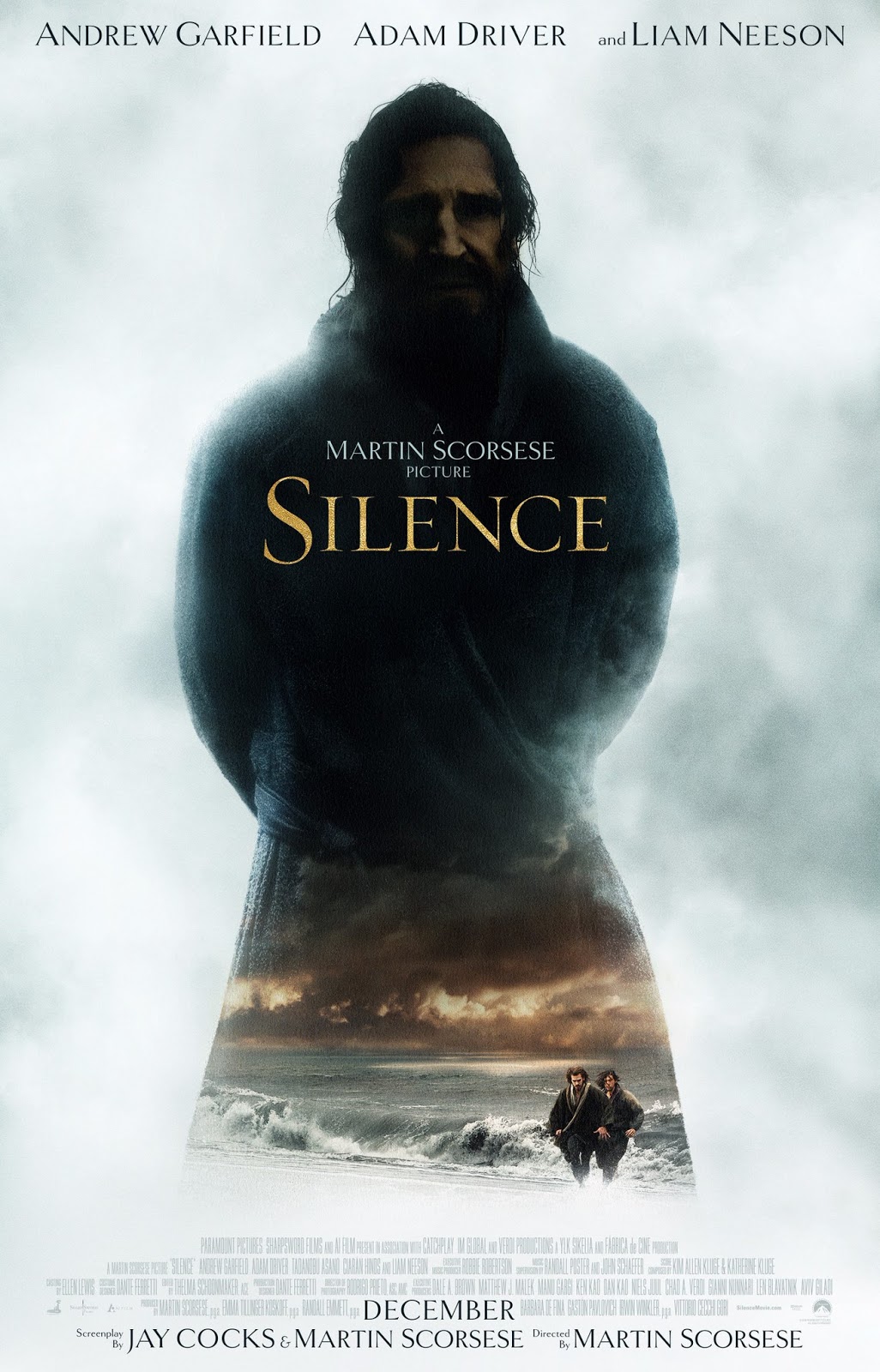
'Silence' Review

Nominated For: Best Cinematography.

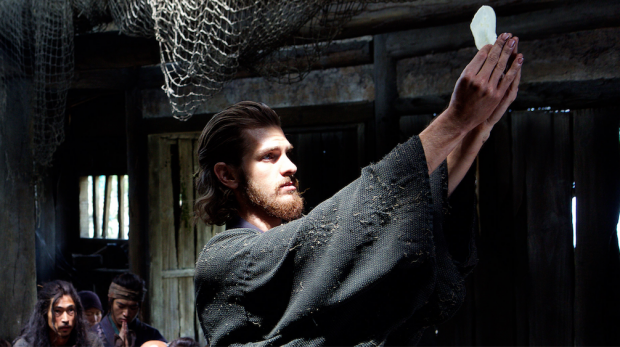
In Silence, a number of Catholics endure persecution in feudal Japan for their beliefs and attempts to spread Christianity. A Portuguese church hears wind of this from one of the high priest Father Ferreira's letters and two priests are sent to Japan to not only retrieve Father Ferreira but spread their beliefs, unknowingly to face the ultimate test of their faith. 
Silence is Martin Scorsese's passion project, he's been trying to adapt Shûsaku Endô's novel for over twenty five years and constantly claimed he wasn't quite ready to tackle the source material and I think he was wise to wait. Scorsese masterfully directs the feature length faith epic with gorgeous visual allegories captured by Rodrigo Prieto that are impeccably weaved and cut together by editor Thelma Schoonmaker. Scorsese's 74 years old yet his films are no less poignant. There are a number of interesting creative choices made by Scorsese in regards to the overarching sound design. 
For one, Silence was appropriately silent. There's little-to-no score throughout, with occasional hushed instrumentals in the film's more pivotal moments, and even the dialogue was softly spoken, almost like a prayer (literally a prayer in some cases). The only background noise to be heard is nature itself, perhaps to be interpreted at face value as silence but to be God's voice by others. This obviously ties into the thematic messages explored about response to prayer. Scorsese and Jay Cocks adapted Endô's novel into a screenplay that is riveting as a character study, exploring the progression of three different belief systems; the devout believer, the doubtful follower, and the silent Christian. 
Another undeniable strength of Silence is it's committed cast. Andrew Garfield may have lost the Spider-Man gig after Sony botched The Amazing Spider-Man franchise but 2016 has shown he's more than capable of sticking the landing and getting back to his feet with his remarkable portrayals in Hacksaw Ridge and Silence. Both Desmond Doss and Father Rodrigues have similar character arcs in that they faced trials of faith, but the characters couldn't be any more distinct and both roles demonstrate Garfield's incredible range and acting ability. 
Issei Ogata plays our antagonist as Inoue or The Inquisitor, the driving force determined to wipe out all Christianity in Japan. The Inquisitor is a man of high regard with clear and understandable philosophies and motivations. Oddly enough, I believe this elderly Asian man may have been the greatest antagonistic force present throughout cinema in 2016. 
However, Yôsuke Kubozuka's Kichijiro is probably the most interesting character in the narrative, a tortured human soul with a tragic backstory. Kichijiro is a broken man because he avoids earthly retribution through apostatizing regardless of what it may mean for those around him but he seeks to stand right with God and amend for his sins. Kichijiro is representative of humanity in that we all fall prey to sin and want compassion from higher powers, seeking forgiveness. 
As for other supporting players, Adam Driver is a subdued presence playing the calm devoted servant and Liam Neeson offers another crippled character for the medium. 
Silence isn't exactly the type of film you will come out of the theater gushing about, rather Silence is a self-reflecting spiritual journey. Scorsese succeeds in his telling of the faith epic as technical prowess is top notch, the formidable cast put-forth dedicated portrayal, and the film's messages are delivered in a way that doesn't come across as preachy or noncommittal. It probably requires multiple viewings to fully wrap your mind around everything Scorsese has to offer but you won't exactly be enticed to revisit the exhausting three hour journey.

Film Assessment: A

Friday, January 6, 2017

'A Monster Calls' Review

In A Monster Calls single mother Lizzie O'Malley is diagnosed with a terminal illness and her son Conor must deal with this amidst being bullied at school, tolerating his indifferent mournful grandmother, and trying to forge a stronger connection with his absentee father. One evening Conor is approached by an unexpected ally, The Monster, who will guide him on learning the importance of courage, belief, and truth through the telling of three terrific tales.
A Monster Calls adapts the novel of the same name written by Patrick Ness, who also penned the screenplay, based on an original idea by Siobhan Dowd and while I haven't read the source material, I found the story to be incredibly heartfelt. J.A. Bayona directs the fantastical tearjerker and in collaboration with writer Patrick Ness maintains a nice balance of maturity and creativity communicating the narrative through a child's eyes.
By framing everything from Conor's perspective, Bayona is simultaneously able to explore the imaginative and keep things emotionally grounded by showing what's meaningful to Conor, making the film's final moments all the more impactful. A Monster Calls features a wide range of inventive imagery from the visual effects department with resplendent water color vignettes imagining the Monster's stories similar to the Deathly Hallows sequence in Harry Potter and the Deathly Hallows: Part 1 and a remarkably realistic looking CGI Monster that will undoubtedly be compared to Groot from Guardians of the Galaxywhile the real world visuals are exceptionally well-shot by cinematographer Oscar Faura.
One of the script's greatest strengths however is that Patrick Ness has a devout understanding of Conor as a character, providing a transparent window into his profound connection with his mother. Ness' wise choice to engage the viewer from Conor's eyes keep things focused on what's important to Conor and the story, never compromising the character arc by leaving the answers to some story threads up to the viewers' interpretation such as the origin of The Monster.
These unanswered questions may vex some viewers but I think it's a bold choice that doubles down and proves Conor to be a crucial centerpiece of the narrative. While the film's ending is in sight for a majority of the running time, I promise that you won't be prepared for the film's heartbreaking conclusion (bring tissues) and that's just another testament to Ness' strength as a writer and the outstanding performances showcased. It's incredible how fleshed out the world and characters are despite being presented from the viewpoint of a child, a rare occurrence in Hollywood.
I've attested to the sincere performances delivered by the gifted ensemble but perhaps the brightest standout is Lewis MacDougall's Conor. MacDougall puts forth one of the most sentimental and tender child-performances I've seen in recent memory and deservingly joins the ever-growing list of rising stars. MacDougall imbues Conor with a vast emotional range that's exceedingly authentic for how a child of that age would react to personal trauma and continues to amaze by making a 30 foot Monster seem real through everything from simple facial reactions to casual conversationalist dialogue. The Monster itself is something to be applauded as Liam Neeson's gravelly vocals and the stunning animation work hand-in-hand to bring yet another talking tree to cinemas. And one can't forget the talented supporting ensemble of Felicity Jones, Sigourney Weaver, and Toby Kebbell as Conor's Mum, Dad, and Grandma respectively, each making the most of every moment onscreen.
A Monster Calls doesn't just pluck the heart strings, it stretches them out over the course of the first two acts before unmercifully ripping them apart in the film's concluding thirty minutes. That's not to say that A Monster Calls is emotionally manipulative but rather speaks for the passionate and poignant strength of the writing, direction, and performances on display.

Film Assessment: A-

Friday, February 19, 2016

Throwback Thursday Review: 'Batman Begins'

Sorry for the delayed review but this week I'm beginning my series of Throwback Thursday Reviews of the Dark Knight Trilogy. I'm spreading these reviews throughout the year given the release of some new DC Comic Films of both Batman v Superman: Dawn of Justice and Suicide Squad. My main Throwback Thursday Review that will come the week Batman V. Superman: Dawn Of Justice is released will be Man Of Steel, since it's both a Superman origin and the only film in DC's current cinematic universe. However I wanted to do both a Batman origin film as well as review the Dark Knight Trilogy this year so I figured Batman Begins was a great compromise. The reason this review is coming this week as opposed to closer to Batman V. Superman: Dawn Of Justice's release is that from this week onward my schedule is booked for Throwback Thursday Reviews till August.

'Batman Begins' Review


Nominated For: Best Cinematography.

Batman Begins is the foundation for Christopher Nolan's brilliant Dark Knight Trilogy, and a rather solid foundation if ever there was one. Nolan broke ground for superhero films by being the first to take one completely seriously with a very realistic, grounded take on the Caped Crusader's origin story.
Christopher Nolan takes up the duties of director in addition to penning the script alongside  David Goyer, deciding to focus on character and story rather than spectacle going to the roots of the Batman and it's a wise decision. Nolan also makes the choice to utilize practical effects rather than CGI that leads to more authentic action sequences.
This practicality also oozes over in regards to Batman's arsenal gadgets and this version of the bat mobile, the Tumbler, that's more along the lines of a tank. I feel that the practical gadgets make perfect sense and love the explanation behind each trinket that Batman carries along with him. I also liked their use and purpose in various action sequences and felt that they certainly service the film.
One notable action sequence features the Tumbler abandoning the roads and resorting to jumping over rooftops as Batman is being frantically pursued by the authorities, and it was incredible.
Now, with that being said, this film does indeed have a few hiccups with a bit of lackluster action at times, but the film makes up for all with a phenomenal character-focused narrative. Another key piece to Nolan's larger puzzle are the performances being showcased.
Front and center we have Christian Bale as Bruce Wayne and I felt he is certainly serviceable in the duality of the role, bringing both a suave Wayne and an edgy Batman. Now, many critics are a little harsh on Bale's "Batman voice," which sounds like more of a growl, but it makes logical sense to me that Wayne would need to disguise his voice to avoid being recognize in his escapades.
Also, the film makes a point to establish that this version of Wayne uses the playboy persona as more of a mask rather than the cowl itself, and I liked that concept and how it's developed across the course of the Trilogy.
The film's supporting cast are where the performances are just exceptional. Michael Caine brings new depths to Alfred showing that Wayne's butler is not only concerned with Bruce's safety but protecting the Wayne legacy as well. Caine is exceptional in the role as a phenomenal casting choice.
Morgan Freeman portrays Lucius Fox and his character is given more prominence than ever before in any adaptation, where it's explained Fox supplies the gadgets to Wayne and Freeman is phenomenal as per usual.
Now, Gary Oldman was the perfect match for Jim Gordon as he not only shared a physical resemblance to the cop, but also the emotional core of the character.
Katie Holmes plays the main love interest for Wayne as Rachel Dawes, and sadly is of little use to the story, only to serve at the damsel of distress in some of the darkest moments. Holmes is decent in the role, but you'll see she's easily replaced for the sequel.
In regards to villains, the film holds an ace up it's sleeve with Liam Neeson by hiding his true importance for most of the film, but the reveal of who he's playing is quite satisfying. Neeson acts as a great mentor and opposition to Wayne that's integral to the film and later brings the narrative full circle in the closing act of the Dark Knight Trilogy.
Cillian Murphy brings the first live action version of the Scarecrow to the screen, and oh, boy is he terrifying. Murphy plays second fiddle to the main antagonist but is terrific when utilized.
Christopher Nolan's interpretation of the Caped Crusader is really one of the greatest superhero origin stories to be told, that serviced the source material while making it accessible to the mainstream public.

Film Assessment: A-