Thursday, September 29, 2016

Throwback Thursday Review: 'Harry Potter and the Goblet of Fire'

This week I'm continuing my series of Harry Potter reviews leading up to Fantastic Beasts and Where to Find Them with my review of Harry Potter and the Goblet of Fire. Next week I will be reviewing Gone Girl to tie in with The Girl on the Train since they have similar plot points. Within the next two weeks or so you can expect reviews on Miss Peregrine's Home for Peculiar ChildrenDeepwater HorizonThe Girl on The Train, and The Birth of a Nation. The following week I will continue onward with a Throwback Thursday review of Harry Potter and the Order of the Phoenix.

'Harry Potter and the Goblet of Fire' Review


Nominated For: Best Art Direction.

Harry Potter and the Goblet of Fire is the adaptation of the fourth novel in the Harry Potter series which brings us back to the enchanting world of magic for Harry's fourth year at Hogwarts. This year however is a very special year at Hogwarts considering the Ministry of Magic is reintroducing the Triwizard Tournament, a competition in which three of the wizarding schools' representative champions compete against one another for the Triwizard Cup, with the twist being that Harry Potter is strangely selected as the fourth champion and the only underage competitor. Harry then must compete in the deadly tournament consisting of three monumental tasks including getting past an immense dragon, rescuing students from frightening mermaids, and to navigate a dense maze filled with  mystical obstacles. 
Goblet of Fire, like Prisoner of Azkaban before it, stands out as a transitional point for the series in that the protagonists are maturing and the surrounding Wizarding World is only growing darker. The Hogwarts students are no longer hearing about evil and nefarious deeds, they are actually witnessing it as Harry confronts a fully formed, all powerful Lord Voldemort.  
Goblet of Fire is helmed by yet another fresh director as Mike Newell takes the lead and it's clear Newell is concentrated on the character's newfound teenage angst and all that accompanies puberty. Newell handles this nicely as he plays up these moments for humor and through this maintains the lightheartedness of the series amidst the darkening overtones. I think it should almost go without saying that I'm a huge Harry Potter fan and I'm sure this is an unpopular opinion but quite frankly I find Goblet of Fire to be one of the worse adaptations in the series. 
Do take this as a grain of salt though because I'm not saying Goblet of Fire is by any stretch of the word bad, in fact it's quite entertaining but it just doesn't compare to the actual novel seeing as the 734 page source material had to be condensed into just a two and a half hour film. This is in large part to the screenplay penned by returning series screenwriter Steve Kloves. In the previous installments it was easier to pick and choose small moments to take out without altering the story significantly but considering the Goblet of Fire was a whopping 734 pages Kloves had a difficult task selecting crucial story arcs and pivotal moments that needed to maintained and crammed into two and a half hours. 
This issue rears it's ugly head in the film's opening as Kloves rushes through the proceedings leaving the audiences just as confused as Harry seems to be filling what would have otherwise been a huge plot hole with small bits of dialogue unsuccessfully. The beginning is so fast paced that it's unable to properly set the stage for coming events and the changes made to the source material do more to help trim the runtime rather than enhance the story. I will say that the second two-thirds of the film are wildly enjoyable and I believe that's because that portion was almost untouched in comparison. 
Another issue I found was in the film's editing and partially the script as some scenes just felt incomplete and lacked the finality necessary before an effective transition, a small gripe but it grew cumbersome after awhile. Goblet of Fire's visuals are also uneven, the cinematographer Roger Pratt frames some goregous shots and production designer Stuart Craig creates an incredible set but the effects are mismatched in comparison. Some visual effects such as physical transformations looked like very early poorly-rendered CGI while creatures like the Hungarian Horntail dragon and magical objects such as the Pensieve and Triwizard Cup were stunning to see onscreen. 
Goblet of Fire also includes some riveting action sequences like the three tasks and Harry's brief soiree with Voldemort. Another behind the scenes change was that Goblet of Fire was the first Harry Potter film to not feature a John Williams score and I'll say his lack of involvement was sorely missed considering Patrick Doyle was unable to conjure up one truly memorable composition. 
The performances are once again a highlight of the feature as franchise mainstays return and new additions are made to the cast. Daniel Radcliffe, Rupert Grint, and Emma Watson are all back as Harry Potter, Ron Weasley, and Hermione Granger perfectly embody their respective roles as we all now at this point  but this time actually are able to interject new character dynamics, as we see friction between Ron and Harry for the first time and the results of their pubescence. One thing I felt Radcliffe nailed in particular was how affected Harry seemed to be after witnessing not only a murder, but the return of Lord Voldemort, Radcliffe carried this sense of shock and foreboding complex emotion expertly. 
The returning Hogwarts staff and students consisting of Michael Gambon's sagely headmaster Albus Dumbledore, Alan Rickman's sneaky Severus Snape, Maggie Smith's kindhearted Minerva McGonagall, Robbie Coltrane's sensitive Hagrid, Matthew Lewis' awkward Neville Longbottom, and Tom Felton's dastardly Draco Malfoy. Other returning characters include the Weasleys, Shirley Henderson's obnoxious Moaning Myrtle, Robert Hardy's stately Minister of Magic Cornelius Fudge, a brief appearance from Gary Oldman's kindred Sirius Black, Jason Issac's dreadful Lucius Malfoy, and Timothy Spall's dodgy Wormtail. 
Significant franchise rookies for this chapter encompass the three champions Victor Krum, Fleur Delacour, and Cedric Diggory portrayed by Stanislav IanevskiClémence Poésy, and Robert Pattinson respectively, Jeff Rawle's Amos Diggory, Katie Leung's shy Cho Chang, Miranda Richardson's meddler Rita Skeeter, Brendan Gleeson's mysterious new Defense Against the Dark Arts teacher Alastor "MadEye" Moody, and David Tennant's wicked Barty Crouch Jr. One new addition that I feel deserves a separate mention is Ralph Fiennes' portrayal of Lord Voldemort,  a malignant force to be reckoned with and true contention for Harry Potter. 
Goblet of Fire may not quite be the best foray into the wizarding world as the script, score, visuals and direction are missing the magical luster and consistency of it's predecessors, it is a valiant effort thanks to exceptional performances from a truly remarkable cast along with commendable effects and excellent production design.

Film Assessment: B-

'Storks' Review

In Storks, delivering babies is a thing of the past as the storks have moved on to cornerstone.com, an Amazon-esque corporate delivery system that delivers just about every type of package imaginable. One day, things go awry as a baby order arrives and we follow the shenanigans that ensure the child is delivered.
Storks is the second animated feature to come from the Warner Animation Group, the new animated subdivision of Warner Bros. responsible for The LEGO Movie, written and directed by Nicholas Stoller, director of the Neighbors films, and co-directed by Doug Sweetland, an animator on various Pixar films including the first two Toy Story's, Monsters Inc.Finding Nemo, and The Incredibles, so naturally my expectations were high and I must say that Storks delivered.
Stoller's script is remarkably funny and the humor is actually quite intelligent as Stoller never stoops to the lows of blatantly crude adult humor that will fly over children's heads like The Angry Birds Movie or childish fart jokes commonly found in Minions and the other Despicable Me films. Stollar strikes the sweet spot right in the middle excellently satirizing workplace environments, big conglomerates, and new parents while also maintaining some deeper themes involving troubled family dynamics and  whether striving for promotion is what we really desire or not.
The animation in Storks is fairly good, nothing incredible but at the same time it doesn't feel like it was done haphazardly to make a quick buck. The animators took the time to ensure every bouncing baby looks adorable and that the character design of the creatures seems fresh rather than derivative of other animation.
The talented voice cast assembled for the project are no slouch either bringing genuine personality into their respective characters. Andy Samberg's Junior makes for a compelling and relatable protagonist, simultaneously delivering some of the film's funniest moments poking fun at birds, and Katie Crown injects exuberance, determination, and heart into Tulip. Crown and Samberg make for a great pair onscreen bouncing dialogue off one another.
The B-storyline and characters revolve around Nate Gardner, the boy who asks for the younger sibling in his letter to the storks kicking off the entire plot, and his family and I am glad that Stoller felt the need to give them a compelling arc instead of just focusing on the storks. The Gardner family is composed of Ty Burrell's Henry, Jennifer Aniston's Sarah, and their son Nate voiced by Anton Starkman and I can say they were all great in the capacity used serving as the emotional lynch-pin of the piece.
Supporting characters that serve as nice bit parts include Kelsey Grammer's uptight Hunter, Stephen Kramer Glickman's odd Pigeon Toady, and Danny Trejo's Jasper. Keegan Micheal Key and Jordan Peele's Alpha and Beta wolves, along with their wolf pack, have some of the best gags in the film and overtime they were onscreen promised insane hijinks and at least a few laughs.
In conclusion, Storks is highly entertaining animated feature the entire family can enjoy thanks to an original premise, plenty of laughs, and a talented voice ensemble.

Film Assessment: B

Friday, September 23, 2016

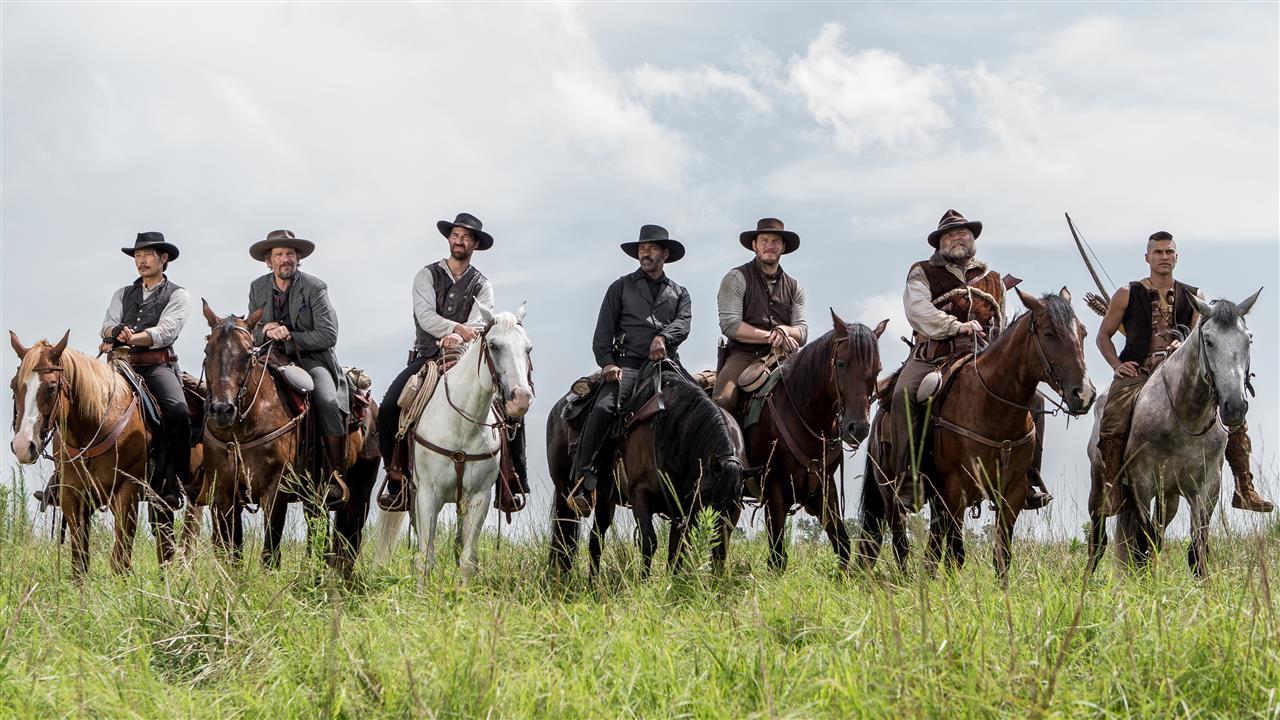
'The Magnificent Seven' (2016) Review

This 2016 take on The Magnificent Seven is a remake of The Magnificent Seven (1960), which is actually a remake of Seven Samurai in a western setting, and tells a familiar story of seven gunslingers tasked with defending an Old Western town from a gold digger and his army of cutthroat henchmen.
Antoine Fuqua steps up to the task of telling the story one more time as director and I feel Fuqua maintained a nice balance between paying homage to crucial moments from the 1960's adaptation and daring to modernize the film with a more representative diverse cast and blockbuster style action. Fuqua and his cinematographer Mauro Fiore frame some gorgeous shots of the devoid western landscape against the harsh sun that evoked classic western imagery.
The visual effects, stunt crew, and production design team all collaborated to set up some truly awesome and memorable action set pieces that will no doubt give you something to smile about. My one nitpick with these sequences is very minuscule in that these gun men can't seem to miss a single shot. They shoot, reload, shoot, and so on never failing to miss their mark, it's something that's evocative of most modern blockbusters, but in this case seemed a little too unrealistic. Where The Magnificent Seven falls a tad short of the 1960's version is in it's script.
The screenplay devised by Richard Wenk and Nic Pizzolatto does a great job of making the seven more unique likable characters, fleshing out their backstory, and interjecting some undercurrent symbolic Christ allegories to make the proceedings more interesting but some dialogue comes across as forced humor. I really must commend them on their creative character names because they all perfectly encompass the grit of the Old West. The duo keep a lot of their writing at surface level never quite fully exploring the bountiful areas to explore that a Western provides.

The Magnificent Seven also features the final compositions from James Horner, a brilliant film composer who only recently died in a plane crash. While Horner didn't get to complete the scoring, his longtime friend and collaborator Simon Franglen helped ensure Horner's works made it into the final cut and with the help of his music department  who finished out the score to be as James Horner-esque as possible. In addition, the music team don't ignore the Elmer Bernstein's classic themes, incorporating them into the film's final moments. The end result though was truly exceptional and brought to mind everything that should accompany a classic western; solemn tragedy, high riding adventure, and bristling energy.
The incredible cast assembled inject even more fun to the proceedings as it's clear the chemistry on set was genuine and that these actors were genuinely having a great time. Denzel Washington, Chris Pratt, Vincent D'Onofrio, Ethan Hawke, Byung-Hun Lee, Manuel Garcia-Rulfo, and Martin Sensmeir make up the seven and though some cast members were more developed than others, everyone has their moment in the limelight.
Haley Bennett was a surprising standout playing a capable female character in Emma Cullen, a step up from her damsel-in-distress role earlier this year in Hardcore Henry
Peter Sarsgaard plays the greedy gold digger Bartholomew and comes across as the typical villain that wants to profit off others' misfortunes by stealing land to mine for gold. I feel it's worth noting that I saw The Magnificent Seven in IMAX and felt the enhanced sound and immense screen size made the viewing experience all the better so if you're willing to pay for the premium viewing experience you will get your money's worth.
While The Magnificent Seven doesn't venture out of the traditional Western sandbox, it succeeds on being a fun shoot 'em up that's definitely worth a watch. The Magnificent Seven is exactly what it's marketed to be, a wildly entertaining popcorn western with strong direction, a terrific cast having the time of their lives, and a legendary film composer's final rousing score.

Film Assessment: B+

Thursday, September 22, 2016

Throwback Thursday Review: 'The Magnificent Seven' (1960)

This week I'm reviewing The Magnificent Seven (1960) to tie in with the release of it's reboot The Magnificent Seven (2016). Next week I will continue my series of Harry Potter reviews leading up to Fantastic Beasts and Where to Find Them with my review of Harry Potter and the Goblet of Fire. In the meantime look forward to reviews of The Magnificent Seven (2016)Storks, Miss Peregrine's Home for Peculiar Children, and Deepwater Horizon all within the next two weeks.

'The Magnificent Seven' (1960) Review


Nominated For: Best Original Score.

The 1960 version of The Magnificent Seven is actually a remake of Seven Samurai but translated into the Western genre, which will actually be getting a remake itself this weekend. The Magnificent Seven is about seven guns for hire that are tasked with defending a Mexican village from some bandits.
John Sturges directed the shoot 'em up and he did a wonderful job in mapping out and executing his vision for action sequences along with the stunt department at his disposal. In particular the horse stunts were quite impressive and for the most part the film's action held up remarkably well if you excuse the painfully fake and cheesy death scenes where you hear a sound effect and the actors clench their chest and fall over, I can't deny that those moments weren't guilty pleasures though.
Another high mark of The Magnificent Seven is the screenplay penned by William Roberts as the script prioritizes character. While a few of the seven are underdeveloped, I found that it worked well for the narrative considering the characters are so mysterious and why it was such a delight to learn more about each character in small moments or loud actions. Every moment of the film is deeply rooted in the characters onscreen and I find that to be a triumph. The score composed by Elmer Bernstein was a delight with a wide variety of compositions and I noticed a few chords that could have possibly inspired John Williams' Star Wars score. 

The main cast doesn't slouch either as Yul Brynner, Steve McQueen, Charles Bronson, Robert Vaughn, Brad Dexter, Horst Buchholz and James Coburn each bring interesting personas to the members of the Magnificent Seven. Eli Wallach's Calvera is a bandit that's bad for the sake of being bad with some motivation but not enough to come across as a truly compelling antagonist. 

The Magnificent Seven held up surprisingly well thanks to terrific writing, an incredible score, some great stunt work, and a charming cast.

Film Assessment: B+

'Queen Of Katwe' Review

I had the opportunity to attend an early screening of Queen of Katwe this Wednesday, it will be released September 30th, and must say it makes a nice addition to Disney's growing number of sports dramas. Queen of Katwe tells the true story of Uganda's first chess champion, a young girl named Phiona Mutesi.
The film is directed by Mira Nair and she doesn't really contribute much of her own unique vision into the fold, but her editor certainly did. One of my issues with the film is that in the first act, many scenes are cut too short before the audience has been given a chance to respond to what they just saw, much like The Angry Birds Movie I maligned earlier this year. The film is very fast paced and strangely some of the supporting character's story arcs take precedent over Phiona's, leaving her arc to have less weight than deserved. Screenwriter William Wheeler only has so much to work with considering he's adapting a true story, ESPN article, and book but does a wonderful job interjecting humor into the proceedings through the young cast and whips up an inspiring message. 
Madina Nalwanga makes her acting debut as Phiona and does a fairly good job for a first time child actress, especially considering she's working opposite an Academy Award winner and Golden Globe nominee. The film features quite a few children actors portraying the village children, but the one who stood out to me was Ethan Nazario Lubega who played Benjamin, mustering up some hilarious comedic relief. 
Lupita Nyong'o and David Oyelowo are both fantastic in their respective mentor roles as Phiona's mother Nakku and Phiona's chess coach Robert. I also really must commend the casting director for finding black talent who so strongly resembled the actual characters, the end credits show the actors side by side the real people.
Queen of Katwe both succeeds and fails in striving to be a sports film. It has all the genre tropes that come with inspiring true stories about athletes and that's just it, in the long run Queen of Katwe is a tried and true "rags to riches" story we've come to know and are quite familiar with. Queen of Katwe is without a doubt an uplifting inspirational story with strong performances, grounded realism, and spouts of lighthearted humor but in the end comes across as a generic sports drama.

Film Assessment: C

'Snowden' Review

Snowden is a dramatic biopic detailing Edward Snowden's decision to leak classified government intelligence that revealed the National Security Administration's illegal surveillance methods and his journey towards that choice.
Oliver Stone directs the film adding another political drama to his filmography about controversial figures in history, dramatizing the real life events quite effectively. The film's best moments were the transitional scenes narrated by Joseph Gordon Levitt's monotone Snowden that championed interesting visualization of website data, media clips, and NSA data collection in order to express what the CIA and NSA were up to at those points in time.
Unfortunately, the screenplay written by Stone and cowriter Kieran Fitzgerald leaned heavily towards Snowden's viewpoint failing to show the other side of that coin and restricting the viewer insight into the real controversial bits of the narrative. Snowden breezes through substantial chunks of Edward Snowden's life in the service and has some odd pacing for the first two-thirds and the non-chronological storytelling adds to the somewhat jarring viewing experience as the film will occasionally jump back to the present day. The screenplay also tosses around some relationship drama between Snowden and his girlfriend which are imperative for the purposes of understanding Snowden and also manage to clout the film, as though there's two different types of narratives within Snowden; a romance and a triller.
Joseph Gordon Levitt provides a very strong lead performance as Edward Snowden and helps the viewer maintain focus in the film's dull moments. Levitt not only looks like Snowden but he manages to mimic his voice quite effectively while expertly portraying Snowden conflicted nature.
Shailene Woodley gives one of her best performances to date as Snowden's girlfriend Lindsay Mills and exemplified great chemistry opposite Levitt. Snowden also features name talent in supporting roles of varying sizes including Rhys Ifans, Nicolas Cage, Tom Wilkinson, Scott Eastwood, and Zachary Quinto who are all great in the capacity used.
In conclusion, Snowden is an insightful and informative look at government surveillance that's both well directed and well performed, but it's one-sided stance cripples the effectiveness of it's message.

Film Assessment: C+

Friday, September 16, 2016

'Sully' Review

Nominated For: Best Sound Mixing.

Sully tells the story and surrounding events of "The Miracle on the Hudson", the January 15, 2009 emergency forced water landing of US Airways Flight 1549 onto the Hudson River by Captain Chesley 'Sully' Sullenburger. 
Clint Eastwood handles the controversy of Sully's actions with poise by interjecting multiple perspectives, eyewitness accounts, and the media backlash. Eastwood's proven he's capable of directing biopics about American heroes with American Sniper, but in this film he knowingly brings up the possibility Sullenburger endangering the passenger's lives instead of simply glorifying Sully's decision. Eastwood maintains an effective balance between the two opposing views of Sullenburger throughout the film's running time and the political controversy makes for an entertaining watch. 
Eastwood ensures every thing feels real: the stakes, the crash, the rescue, and the surrounding circumstances. The water-landing sequence expertly crafted suspense that had me on the edge of the seat despite the fact I knew the outcome. The flight attendants yelling instructions to the passengers to brace for impact gave me chills every time I heard it. One strange creative choice however was the interspersed use of flashbacks to shed light on Sullenberger's previous aviation experience, as these scenes didn't enhance the narrative in any way and thus seemed irrelevant. 
Todd Komarnnicki's screenplay does a great job keeping the story in shades of gray with no clear high moral ground or clear cut solution to National Transportation Safety Board's investigation of the events. I would have liked for Komarnnicki to delve more into Sullenberger's psyche and personal life but the attempts to do so are certainly commendable as scenes of Sullenberger's nightmares are understandably tense. 
Tom Hanks' portrayal of Captain Sullenburger is one of the film's highlights as it's a subdued performance with inner complexities. Aaron Eckhart and Laura Linney are both solid supporting players as copilot Jeff Skiles and Sully's wife Loraine respectively, although I would have liked to see more of Linney and her interaction between her and Hanks.
 Overall, Sully serves as an interesting portrayal of American heroism thanks to Eastwood's direction, a fantastic performance from Hanks, and a solid supporting cast. I'd recommend it to those interested in the events or fans of Hank's work, otherwise you could probably skip out on Sully in favor of waiting for more worthy Oscar bait. 

Film Assessment: B