Showing posts with label Stephen King. Show all posts

Monday, November 11, 2019

'Doctor Sleep' Review

Apologies for the long hiatus. In October, my free time was consumed by either a trip to the cinema or anxious viewings of postseason Astros games. In fact, I've found myself often facing a similar dilemma throughout the year. There are a total of 29 2019 releases I've seen and neglected to review. Therefore, it was daunting for me to approach returning to write about them all. However, I developed an idea that will enable me to catch up efficiently.

I've decided to start summarizing what I watch every month in a new post format. I will continue writing reviews for major releases which I feel warrant thorough analysis. I'll relay my thoughts on the remainder in approximately a paragraph via a Reel Recap. The first few Reel Recaps will be divided into April-August, September, October, and November. Beginning with November, they'll be posted once-a-month at the end of each month or the beginning of the following month. As I start my career, I view this as the best way for me to maintain the blog going forward. To my readers, I appreciate your patience and hope you continue to follow along. Let's move on to the review now, shall we?

'Doctor Sleep' Review


Synopsis: Struggling with alcoholism, Dan Torrance remains traumatized by the sinister events that occurred at the Overlook Hotel when he was a child. His hope for a peaceful existence soon becomes shattered when he meets Abra, a teen who shares his extrasensory gift of the "shine." Together, they form an unlikely alliance to battle the True Knot, a cult whose members try to feed off the shine of innocents to extend their lifespan and become immortal.

Runtime: 151 minutes

MPAA Rating: R (for disturbing and violent content, some bloody images, language, nudity and drug use)

Who should see it? Adult fans of Stephen King and The Shining.
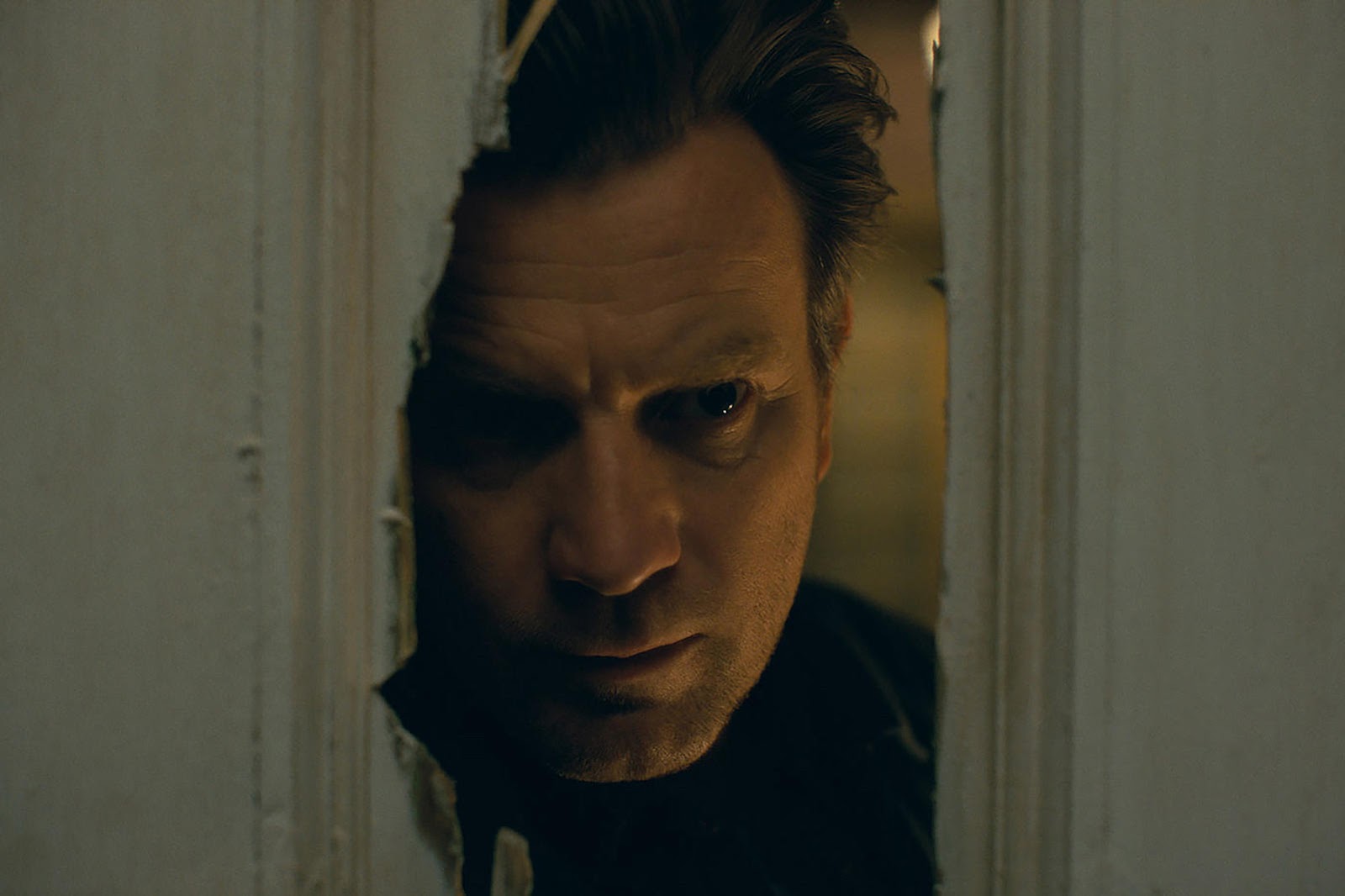
Written and directed by Mike Flanagan, Doctor Sleep joins the recent resurgence of feature-length Stephen King adaptations and legacy sequels by furthering the story of The Shining. Though The Shining is widely considered the most celebrated horror ever made, King infamously hated Stanley Kubrick's iteration, leaving Flanagan in a precarious position. How could he possibly follow up such an influential classic in a way that would satisfy fans of Kubrick's film and King's respective novels? It's a tall order, but Doctor Sleep bridges the gap between King and Kubrick.
Tonally and thematically, Doctor Sleep aligns with the world established by Kubrick. However, Flanagan differentiates from his predecessor by emphasizing the story's supernatural elements. The "shine" is explored in greater detail, but Flanagan also keeps a veil of mystery over these abilities while expanding the universe. He carefully treads along a fine line but leaves enough ambiguity to satisfy the audience's imagination. Thankfully, this approach is applied to The Shining's other cryptic details as well, so you needn't worry about unnecessary answers to 39-year-old questions. 
Some questions are best left unanswered, and I'm appreciative Flanagan recognized that. Of the lingering storylines, the predominant thread Flanagan tugs on is the manifestation of Dan Torrence's trauma. In his adult years, substance abuse helped Dan cope with that distressing experience. Now a recovering alcoholic, Dan must struggle to resist his father's trajectory as demons from his past resurface. Dan's journey is undoubtedly the film's most compelling narrative. Despite tempered expectations, I felt mixed about certain aspects. Much like It Chapter Two, the two-and-a-half-hour runtime is too long for the story being told. In that time, Doctor Sleep juggles plenty of plot and occasionally drags.
Though my primary qualm is that I wish Doctor Sleep were more standalone. In a drawn-out third act, Flanagan is over-reliant on homages to The Shining. They contribute to a cathartic resolution of Dan Torrence's arc but felt ham-fisted in select moments. A dialogue must exist between the two, but the conversation was too one-sided in the original's favor. It seems as though Flanagan was so indebted to The Shining's legacy, that he was reluctant to step out of its shadow. The iconic scene recreations are executed very well, and the production designers did a phenomenal job recreating pristine and rundown versions of the Overlook Hotel. Otherwise, the visual effects looked cheap and unrefined at times while The Newton Brothers' score encapsulated an eery atmospheric sound befitting of this sequel.
That said, Ewan McGregor turns in his best work in years exploring the tortured soul of Dan Torrence. McGregor's in the midst of a renewed career path, and I'm keen to see what he brings to an older Obi-Wan Kenobi in the upcoming untitled Obi-Wan Kenobi series on Disney+. On the flip side, Kyliegh Curran joins the ranks of young talent to keep an eye on. Curran portrays Abra with an assuredness well beyond her years, but also quickly reverts to the fear-stricken teen when the character's outmatched. The role's quite demanding, and she wholeheartedly steps up to the task.
As Rose The Hat (yes, her actual name), Rebecca Ferguson commands attention from the moment she arrives onscreen. The supernatural cult-leader makes for an alluring antagonist about as evil as the Overlook. It's a hypnotic performance, and her band of devotees is as creepy as they come. Concerning other cast, I'd rather not spoil anything. However, a renowned child actor's cameo caught me off guard and registered strongly with minimal screen time.
Fear not Shining fans, the original's legacy has not been "[de-]redrum." Between the gripping performances and quality filmmaking on display, Doctor Sleep proves itself more than worthy of carrying on that legacy. This sequel shines alright, but it could shine even brighter if it were whittled down in the editing room and less reliant on Shining imagery.

Film Assessment: B

Friday, September 6, 2019

'It Chapter Two' Review

Synopsis: In the sleepy town of Derry, the evil clown Pennywise returns 27 years later to torment the grown-up members of the Losers' Club, who have long since drifted apart from one another.

Runtime: 169 minutes

MPAA Rating: R (for disturbing violent content and bloody images throughout, pervasive language, and some crude sexual material)

Who should see it? Adult fans of Stephen King and It (2017).
Directed by Andy Muschietti and penned by Gary Dauberman, It Chapter 2 adapts the remainder of Stephen King's beloved best-selling novel. Often, book fans are disheartened to discover specific scenes lost in the transition to the big screen. Well, fans of the source material will surely be delighted to learn It Chapter 2 is two hours and forty-nine minutes long. Though I haven't read the novel myself, I imagine It Chapter 2 is a faithful adaptation by virtue of its lengthy runtime. Not to mention, the added benefit of splitting the book into two movies. However, a film's running time can feasibly make-or-break the storytelling on display. In this case, It Chapter 2 felt drawn out and overstuffed.
Burdened by an over-reliance on flashbacks, It Chapter 2 must contend with advancing the present-day plot while "The Losers Club" confront their past trauma. The flashbacks are necessary to fill in gaps from its predecessor and inform the adult Losers' emotional response to their surroundings, but they derail the story's pace substantially. I suppose the filmmakers were reluctant to trim out the glut and hone in on a more focused narrative, but several scenes could have been abbreviated. Muschietti and company seem interested in delivering the most faithful adaptation possible, and though the ambition is admirable, a more economical use of screen time was achievable. On a brighter note, transitions between past and present were quite impressive, so hats off to editor Jason Ballantine for a job well done.
To take a detour from drawbacks, I appreciate the well-intentioned efforts of all involved. The cinematography, production design, and score effectively blend to establish a creepy atmosphere that the film scarcely abandons. Like the first, there are some cheap jump scares and I'd be reluctant to classify the onscreen events as "scary" (though horror's subjective). And also akin to its predecessor, It Chapter 2 is at its best when focused on "The Losers Club."
The teen and adult incarnations of "The Losers" are portrayed well by their respective casts. Depicting the middle-aged "Losers," Jessica Chastain, James McAvoy, Bill Hader, Isaiah Mustafa, Jay Ryan, James Ransone, and Andy Bean channel their striking characteristics to great effect. They're so well-cast that you conceivably envision the younger "Losers" maturing into them. Chastain, McAvoy, and Hader are notable stand-outs while the lesser-known cast members also demonstrate solid acting chops. Mustafa and Bean noticeably have less screen time as Mike and Stanley (a recurring issue from Chapter One), but their narrative significance somewhat compensates for that.
Jaeden Lieberher, Jeremy Ray Taylor, Sophia Lillis, Finn Wolfhard, Chosen Jacobs, Jack Dylan Grazer, and Wyatt Oleff each reprise their roles for flashbacks via the CG de-aging technique frequently showcased in Marvel movies as of late. However, the effectiveness of this technology varies drastically. Some of the children genuinely resembled their younger selves while the others had what I'd describe as unnaturally rubber faces. Given that most of these actors underwent puberty in-between installments, their voices are also altered in post-production, which was also quite noticeable. In an ideal world, this footage would have been shot during production of the first chapter, but I understand budgetary restraints, scheduling, and an incomplete script likely prohibited that from happening. In spite of these technological flukes outside their control, the young actors lend ample nuance to these characters once more. 
Returning as Pennywise, Bill Skarsgård plays the deranged clown quite well. However, as an antagonist, Pennywise put up a lousy effort attempting to stop the Losers where he'd often come and go as the plot dictated. While the Loser's mindset (realizing it's not real) occasionally resisted him, that wasn't always a factor in his sudden disappearances. 
Despite its flaws, fans of Stephen King needn't fear for the second chapter's buoyancy. Ambition, top-rate production value, and a skillful ensemble are enough to keep this sequel afloat, but It Chapter 2 is a bloated and uneven follow-up.

Film Assessment: B-

Tuesday, December 19, 2017

'It' (2017) Review

Since this review is being published well after It has completed its theatrical run, I am including slight spoilers to accentuate my arguments. There will be clear spoiler warnings to warn those who've yet to watch It

[This review was originally written in September 2017 and is now being published to coincide with the digital home media release. For an explanation of this, visit my Fall 2017 Important Update post.] 

It floats audiences into the small town of Derry, Maine, circa 1989. Children have begun to mysteriously go missing and a group of adolescent outcasts, dubbed "The Losers Club," soon discover the culprit responsible is a force of ancient evil with an unquenchable thirst for violence and the ability to manifest itself as one's worst fear. It appears in Derry every 27 years intent on causing maximum mayhem and favors the guise of the sadistic, dancing clown Pennywise. With merely their wits and determination, "The Losers Club" band together to find the kidnapped children and defeat the killer clown, putting an end to the kidnappings once-and-for-all.
It adapts approximately half of Stephen King's beloved best-selling novel, focusing on the portion of the story set in the past (relocating the past time period from the '50s to the '80s so the modern day portion can take place closer to the present day). While I haven't actually read the novel, and am not aware exactly what was changed in translation, I can attest director Andy Muschietti convincingly captured the aesthetic and tone often associated with King's work. The screenplay and the actors flourish with the portrayal of "The Losers Club" as a convincing crew of '80s kids similar to those found in Stranger ThingsE.T. The Extra-Terrestrial, or even another King adaptation Stand By Me
Typically, I agree with general audiences regarding the vast majority of wide releases. Everyone seemed to love the heck out of It opening weekend, but I found myself disappointed leaving the theater. It is not bad by any stretch of the imagination, but the film didn't quite meet my expectations considering I'd seen it heralded as "this generation's Jaws." I also felt many of It's shortcomings were being completely overlooked as the bandwagon went rolling on. 
For one, the script written by Chase Palmer, Cary Fukunaga, and Gary Dauberman seemed to give way to tired horror clichés. For example, most horror flicks have absurdly idiotic protagonists whose choices rarely follow a logical train of thought. While I wouldn't go as far to calling "The Losers Club" stupid, I'd stand by the fact they made some dumb decisions in dealing with Pennywise.

**Spoiler Warning**

The first time the kids confront Pennywise and enter the abandoned house, they go in completely unarmed. I understand these are children and weapons aren't readily available to them, but they couldn't have at least snuck some garden tools or a stick or SOMETHING? I mean ANYTHING would be better than nothing. 

To me, entering an abandoned house where you suspect a supernatural entity resides with nothing but your bare hands to fight him off seemed really ridiculous. At this point in the film, pretty much the entire group had experienced Pennywise's machinations in some shape-or-form. Yet, they still entered the house unarmed? I understand that probably seems like a minuscule nitpick, but it legitimately bothered me that the kids didn't think to arm themselves at all. At least they had the common sense to do so the next time they confronted Pennywise. 

Again, I haven't read the novel so I'm not sure if this was merely a precise reflection of King's work or an inaccurate interpretation of that story point. Either way though, that's something that could have easily been tweaked. I highly doubt hardcore Stephen King fans would take up arms for a detail so razor-thin, especially since it's a logical alteration to the story. I understand the characters are children, so obviously they won't have the best judgement, but I don't think that excuses a sloppy story point like this. 

**End of spoilers**

Another problem I found with the screenplay was that certain members of "The Losers Club," such as Mike and Stanley, received surface level development since there were so many characters the script had to balance. I'm not sure how much these characters figured into the novel, but I wish I would have gotten more out of them than the thin sketches offered. In addition, I thought there was some unnecessary ambiguity and the film was tonally inconsistent. 

**Spoiler Warning**

understood Pennywise relied on fear as a source of power, hence why he kept the kids floating. However, I didn't really understand why he ate/killed Georgie. Wouldn't keeping more children alive be ideal to strengthening his power? It seemed contradictory in my opinion. On top of that, it was rather vague if the characters you knew were kidnapped earlier in the movie survived or not. 

**End of spoilers**

Even if you've only watched one of the trailers for It, you'll have noticed the trend I'm about to point out. Pennywise has a habit of running chaotically towards the children when he's trying to seize them (as shown in the gif above). When this happens, the score is subito fortissimo (For those unfamiliar with music terminology; this means the music's dynamic level is suddenly very loud). Naturally, this sudden change in volume paired with a shaky-cam shot of a deranged clown can be deemed quite alarming. Is it effective? Yes. Is it a cheap thrill? Also yes. While the technique is certifiably creepy, it's not exactly terrifying in its own right. A sudden loud noise will startle just about anyone, while Pennywise just looked sort of ridiculous in these moments.
It was rarely "scary" at all for that matter. There was one jump scare that got me, but that was about it. Pennywise came across as creepy and unsettling, but he never fully frightened me. One contributing aspect to this was some wonky visual effects work utilized to distort Pennywise anytime he changed form. I really don't think these effects will stand the test of time, because I already view them as faulty. Either the technology just wasn't quite where it needed to be to convincingly create this or It's budget constraints handicapped the vfx team. 
Now that I've picked over all my problems, I'll briefly move onto the things you've probably heard a million times in just about every other It review out there. Firstly, Andy Muschietti offers a steady hand to guide his technical crew in delivering in all departments. The cinematography and editing fit together extraordinarily, the sound design is chilling, and Benjamin Wallfisch's score strikes a swell balance between delivering uplifting melodies and downtrodden, scary sounds. Merely listening to the score while writing this review was enough to get my heart racing! If there's one element to this movie that blew me away though, it would certainly be the up-and-coming cast members. 
Jaeden Lieberher, Jeremy Ray Taylor, Sophia Lillis, Finn Wolfhard, Chosen Jacobs, Jack Dylan Grazer, and Wyatt Oleff each deliver the breakout performance of their careers thus far, injecting the adequate intricacies to the varied personalities of the reluctant leader Bill, benevolent new-kid-on-the block Ben, misconstrued missy Beverly, unchecked wise-cracker Richie, the lionhearted Mike, germaphobic Eddie, and squeamish Stanley. The young cast members make the most of the material given to them and step up to the plate with a camaraderie reminiscent of the crew from Stranger Things (Something that's made even more clear by Wolfhard's dual-involvement as Mike in Stranger Things & Richie in It, despite the fact his characters are completely unlike one-another). 
In spite of the strong showing from his young costars, Bill Skarsgård holds his ground as Pennywise. Skarsgård really found a sweet spot in providing a petrifying physical performance (enhanced by his menacing makeup and creepy costume) and daunting dialogue delivery. Skarsgård restrains himself from going too over-the-top, but at the same time gives just enough to bestow a villainous horror antagonist like no other. 
Another shining star I failed to mention earlier was Jackson Robert Scott, who imbues Georgie with a youthful innocence that later completely contrasts the perturbing personality presented when the character starts spouting the disturbing dialogue "You'll float too!" over and over again. Scott's acting range is utilized to the fullest in a manner that's rarely seen of actors his age, yet that point seems to be evident among the entire young ensemble. 
It remains buoyant on the merits of a gifted director and its capable cast and crew, but loses a little air thanks to some slight slack in the script. It floats alright, but the film doesn't soar as high as the masses would have you believe.

Film Assessment: B+

Thursday, August 3, 2017

'The Dark Tower' Review

In The Dark Tower, opening text informs the viewer that a Dark Tower exists at the center of our universe, holding everything together and shielding all worlds from persisting, external dark forces. The viewer is also told that it's believed the mind of child is powerful enough to bring the tower down. Walter O' Dim, the Man in Black, seeks to destroy the tower and unleash evil upon the universe, while the Gunslingers, an order of warriors brandishing .45 revolvers, are pledged to defend the tower with their dying breaths. Unfortunately the Gunslingers are mostly gone, so the lone surviving Gunslinger, Roland Deschain, remains locked in an eternal struggle with the Man in Black in hopes he can prevent Walter from demolishing the Dark Tower. 
All the while, the Man in Black has been kidnapping children to power a super-weapon he hopes can topple the Dark Tower, but none of the children's minds are powerful enough. However, Jake Chambers begins seeing glimpses of the Tower, the Gunslinger, and the Man in Black in his dreams, so the Man in Black sends his cronies after Jake in hopes he could be the one to decimate the Dark Tower. Jake, intent on learning the truth behind his visions, journeys to Roland's world and the two team up to take down the Man in Black once and for all. 
That may be the longest plot synopsis I've ever devised, because the mythology and world-building Stephen King's novel simply can't be condensed. Unfortunately, the director and team of screenwriters behind this movie never got that memo. For those who didn't know, The Dark Tower adapts a series Stephen King's novels. Yes, I said SERIES. The Dark Tower draws inspiration from not one, but EIGHT different books. While I have not had the pleasure of reading any of these, the friend who I brought to the screening had at least read The Gunslinger and he said the movie was VERY different from the book. Therefore, I feel this film will be quite divisive and receive plenty of hatred from fans of the source material, and you only have to look at the Rotten Tomatoes score for an indication of it (currently at 18%).
However, I'll come to this movie's aid and say I didn't think The Dark Tower was THAT bad (yet another example of the unjust implications of the Tomato-meter). Director Nikolaj Arcel and his stunt coordinators were at least able to put together some entertaining action sequences showcasing the Gunslinger's impeccable accuracy, and while the visual effects aren't the greatest, they're forgivable when you see the meager budget the filmmakers had at their disposal. Even though the Dark Tower supposedly holds the universe together, the film itself doesn't have a solid foundation. 
There's some serious pacing problems as it took awhile to get things going and the script was rather weak. Arcel had a hand in the screenplay alongside Akiva Goldsoman, Jeff Pinkner, and Anders Thomas Jensen, but the story concocted can't help but feel underdeveloped. The worlds in The Dark Tower are supposed to feel epic and expansive, but the lacking explanation will leave non-readers a bit confused. We understand who's good, who's bad, and their basic motivations, but beyond that the audience never gets to really know any of the characters. The points that are actually established end up biting the bullet, because they're comfortably conventional.
It's also worth noting that The Dark Tower is yet another attempt to get a franchise off the ground. Just yesterday, news surfaced that The Dark Tower television series had set Glenn Mazzara as the series showrunner and the film's advertising has also relied heavily on teasing the possibilities of a shared Stephen King cinematic universe. I'm not necessarily against these ideas, but am simply curious if Sony's invested the time in properly planning it all out before seemingly jumping headfirst into the franchise field. Studios no longer wait to judge a movie's critical reception before investing heavily in them. Instead, they go ahead and announce all the inevitable details. There's rarely much thought put into franchise filmmaking these days and I personally find that a tad disheartening. 
Despite The Dark Tower's story shortcomings, the lead actors consistently managed to elevate the proceedings. Tom Taylor proved to be a perfectly adequate child actor, considering he displays an exceptional emotional range. Taylor's not exactly in the league of the young talent to emerge of late, but he's never overshadowed by his experienced costars either. Idris Elba, on the other hand, can really do no wrong as he deftly wields western weaponry with the aim of John Wick. Elba carries the attitude of an outlaw haunted by the horrors of his past, trudging through the thick of everything. Once Jake and Roland return to New York, there's a fish-out-of-water element that gets some mileage from their onscreen chemistry.
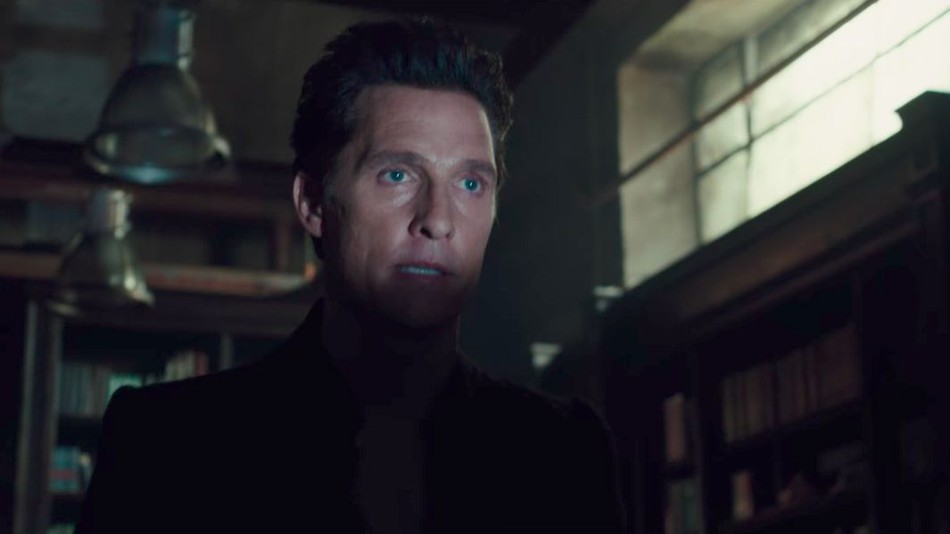
On the flip side, Matthew McConaughey summons enough gusto to grant the Man in Black a dastardly demeanor. McConaughey's calm, collected speech comes across as really creepy in the manner utilized and he confidently comes across as the intimidating, unstoppable force the movie's trying to sell you on. I can guarantee those Lincoln commercials won't come to mind while he graces the screen. Sadly, the other actors don't leave much of an impression since they mostly embody stock characters that are given much to say-or-do. 
While I'd love to say The Dark Tower stood strong amidst adversity, I can't quite offer that vote of confidence. The foundation's sloppy and it's only help up by the terrific trio of leads and a some select, rousing action scenes. The Dark Tower would be an adequate experience at the theater, but it doesn't demand to be seen in theaters. There are so many better alternatives still out there such as Baby Driver, The Big SickSpider-Man: Homecoming, War for the Planet of the Apes, and Dunkirk. If you're really gung-ho on seeing The Dark Tower, go ahead and check it out at a matinee showing. Otherwise, I'd wait it out to rent or catch on cable. 

Film Assessment: C+