Showing posts with label Bong Joon Ho. Show all posts

Wednesday, December 11, 2019

'Parasite' Review

Nominated For: Best Picture, Best International Feature Film, Best Director; Bong Joon-Ho, Best Original Screenplay, Best Film Editing, and Best Production Design.
Won: Best Picture, Best International Feature Film, Best Director; Bong Joon-Ho, and Best Original Screenplay.

Synopsis: All unemployed, Ki-taek's family takes a peculiar interest in the wealthy and glamorous Park family for their livelihood until they get entangled in an unexpected incident.

Runtime: 132 minutes

MPAA Rating: R (for language, some violence, and sexual content)

Who should see it? Adults who don't mind reading subtitles since all of the dialogue is spoken in Korean.
Parasite is the latest offering from South Korean filmmaker Bong Joon Ho. You may have heard rumblings about Parasite considering it won the Palm D'Or (grand prize) at the Canne's Film Festival, remains one of the year's best-reviewed films, and also finds itself primed to be a major awards contender in the coming months. There's been a lot of chatter and buzz surrounding Parasite, but the less you know beforehand, the better your experience will be. To aid in preserving the mystery, I've provided a streamlined synopsis and will carefully avoid discussing the plot in too much detail. Though I first watched the film over a month ago, I've patiently bided my time before writing this review because I wanted to do Parasite justice with my analysis. And the flurry of significant November releases caused me to postpone time and time again, which lent me the benefit of a second viewing and plenty of time for reflection.
Co-written by Jin Won Han and director Bong Joon Ho, Parasite comments on classism in which the disparity between social classes is emphasized by differences in attitude and elevation. The filmmaking and storytelling are deceptively simple, but there's an abundance of subtext to savor with successive viewings. If you see it again, the stark contrast between the rich and poor families becomes increasingly apparent as you catch onto more parallels distinguishing the two. Otherwise, the narrative's quite engrossing as shocking plot-twists will secure every audience member's undivided attention in addition to drastically altering their perception of the onscreen events. Once you're comfortable yielding to the story's rhythm and feel confident in predicting the outcome, Bong pulls the rug right out from under you.
Recently, it's become trendy to belittle clever twists as an act of "subverting expectations" for the sake of surprise. However, these twists aren't implemented for the contrived purpose of shock-value. Bong Joon Ho stealthily lays the groundwork, but it's easy to overlook seemingly insignificant details on first viewing, provided nothing's been spoiled. Since all of the dialogue in Parasite is spoken in Korean, I suspect a subset of potential viewers may deter from watching. With that in mind, it's worth noting that Parasite is very accessible. Reading subtitles will quickly become a subconscious act as you're drawn in by a story that's equal parts funny, suspenseful, dramatic, and insightful.
Concerning craftsmanship, the Park family home created by production designer Lee Ha Jun is particularly impressive. The set is immaculately detailed, to the degree that the Canne's jury of directors was also duped by their illusion. Bong and Lee considered several factors into planning the layout, including blocking and a minimalist approach. Once Bong establishes the geography, he stages elaborate sequences that are heightened by the viewer's familiarity with this space. Meanwhile, the cinematography, editing, and score work in tandem to further supplement Bong's vision.
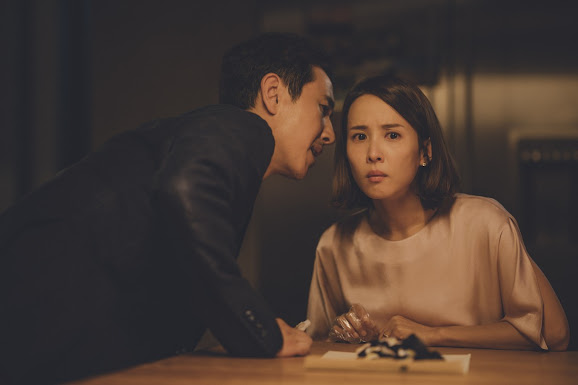
At its core, Parasite is bolstered by a sublime ensemble. Across the board, the cast is expressive, employing universal mannerisms, and wonderfully communicate the emotion of the scene in spite of a language barrier. Their performances never verge on overacting though, teetering between subtle and articulate. The Kim family portrayed by Song Kang Ho, Chang Hyae Jin, Choi Woo Shik, and Park So Dam evoke the genuine chemistry of a tight-knit unit. On the flip-side, the Park family is distant and aloof, as depicted by Lee Sun Kyun, Cho Yeo Jeong, Jung Ziso, and Hyun-jun Jung. The contrasting family dynamics lend additional weight to Bong's class commentary. Lee Jung Eun also deserves recognition for her humorous stint as the Park's housekeeper, a role that differs significantly with subsequent viewings. 
Aptly, Parasite is one of the few films which successfully infiltrated my mind this year. In the time since I've seen it, my thoughts often dwelled on the intriguing narrative threads that were meticulously unraveled by ace filmmaker Bong Joon Ho. If it wasn't clear already, I echo the sentiments of surely everyone who has seen it... See Parasite ASAP!

Film Assessment: A+

Wednesday, January 17, 2018

'Okja' Review

The year is 2007 and Lucy Mirando has overtaken her family's large livestock company known as the Mirando Corporation. Lucy desires to restore the corporation's image in the wake of the disreputable one put forth by her father and twin sister, so she announces the implementation of a Super Pig project as a means of revolutionizing the food industry. Essentially, the Miranda Corporation has "naturally bred" a special super pig and distributed twenty six super piglets to be raised by farmers all across the world for a competition. Ten years later, Okja accompanies Mija, a young South Korean girl who lives with her grandfather in the mountainous rainforest area as a committed caretaker and steadfast companion to one of the super pigs she's affectionately named Okja. When the Miranda Corporation takes Okja away, Mija embarks on an insane adventure to rescue her best friend by any means necessary. 
Okja is an original Netflix production written and directed by South Korean filmmaker Bong Joon-ho. The film made a substantial debut at last year's Cannes Film Festival and was later released that summer in select theaters as well as the esteemed streaming service to widespread critical acclaim. I've heard a lot online about Netflix's marvelous motion pigture since its late June debut, but only got around to watching it earlier today due to Houston's icy roads and school closures. As a massive fan of Joon-ho's work on Snowpiercer, I was quite excited to see what he'd do with Okja
Thankfully, Joon-ho delivers by telling a sweet story about a young girl and her genetically engineered super pig. Everyday stuff, right? Not quite what you'd see on a regular basis in your day-to-day life, but fascinating nonetheless. Despite some unnecessary poo jokes, I did find Okja to be a quirky, enjoyable watch. I think parents should be forewarned that despite the kid-friendly look of Okja, the film's a little liberal with the F-bomb and other curse words. So just know when perusing through Netflix that this probably isn't the best thing for your kid to be watching. While the script penned by Joon-ho and Jon Ronson revolves around an unconventional friendship, there are relatable subtexts to be found regarding corporate greed, animal cruelty, the ethics behind food production, and public relations. 
Although Okja's themes held the potential to compromise the narrative in favor of presenting a PETA  PSA, Joon-ho and Ronson point to the extremes of each ideology and suggests neither side of this disputed topic is morally resolute (even though the the film's clearly against animal cruelty and processed food). Mija has no agenda in the story beyond an overwhelming urge to save her friend, and I think that's precisely why Okja functions so well as social commentary on corporate ethics. If Mija was firmly against corporations from the start rather than standing in as an unbiased lens to tell this story through, the messages would have come across as heavy-handed and overbearing. 
Joon-ho and Ronson wisely gravitated towards Mija's purity as a protagonist to fairly communicate their ideas, and I was quite appreciative of that since it made the film more enjoyable to watch. The film's also bristling with beautiful imagery from cinematographer Darius Khondji and Jaeil Jung's musical score was especially pleasant to hear as an illustrious accompaniment to the film's outrageous ongoing events. Okja also partakes in the one of the most peculiar film trends from 2017 by prominently featuring a song from John Denver. From what I've seen, the list currently includes Free FireAlien: CovenantLogan LuckyKingsman: The Golden Circle, and now Okja.
At the center of it all is the benevolent friendship between Mija and Okja. Just on the cusp of looking believable, the visual effects used to create Okja are immensely impressive. I say so with a bit of apprehension because Okja didn't fully function as an authentic animal for me the ENTIRE time I was watching. That's not to say that the vfx are shabby at all because I truly thought they were terrific, but I do think Okja does appear to be a distinct digital creation in certain moments. It goes without saying though that Okja would not have worked as a visual effect if it weren't for an actress who could convincingly act alongside a CG-rendered creature, which Okja has with An Seo Hyun. 
Hyun skillfully captures Mija's innocence while conveying an underlying tenacity and fierce determination in her pursuit of Okja. Hyun has primarily worked in the space of Korean film and television, but I think her impressive acting in Okja may enable her to find success in other markets. Although she scarcely spoke English, I can picture American audiences warming up to her for whatever reason. Random, I know, but somewhat relevant to the review I suppose.
In regards to the remaining cast, Okja brought together a wealth of well-regarded acting talent who are all deserving of a mention. Paul Dano, Steven Yeun, Lily Collins, Daniel Henshall, and Devon Bostick stand in as respective members of the Animal Liberation Front Jay, K, Red, Blond, and Silver. Of the bunch, Dano and Yeun are provided the most material to work with and both actors leave a favorable impression when all is said-and-done.
As for more recognizable A-list talent, Jake Gyllenhaal and Tilda Swinton each provide an interesting offering of zany personalities to add to the mix. Gyllenhaal's at his quirkiest in the role of an eccentric  zoologist and formerly beloved TV personality, and it's certainly a drastic departure from his normal array of characters that I wasn't expecting.
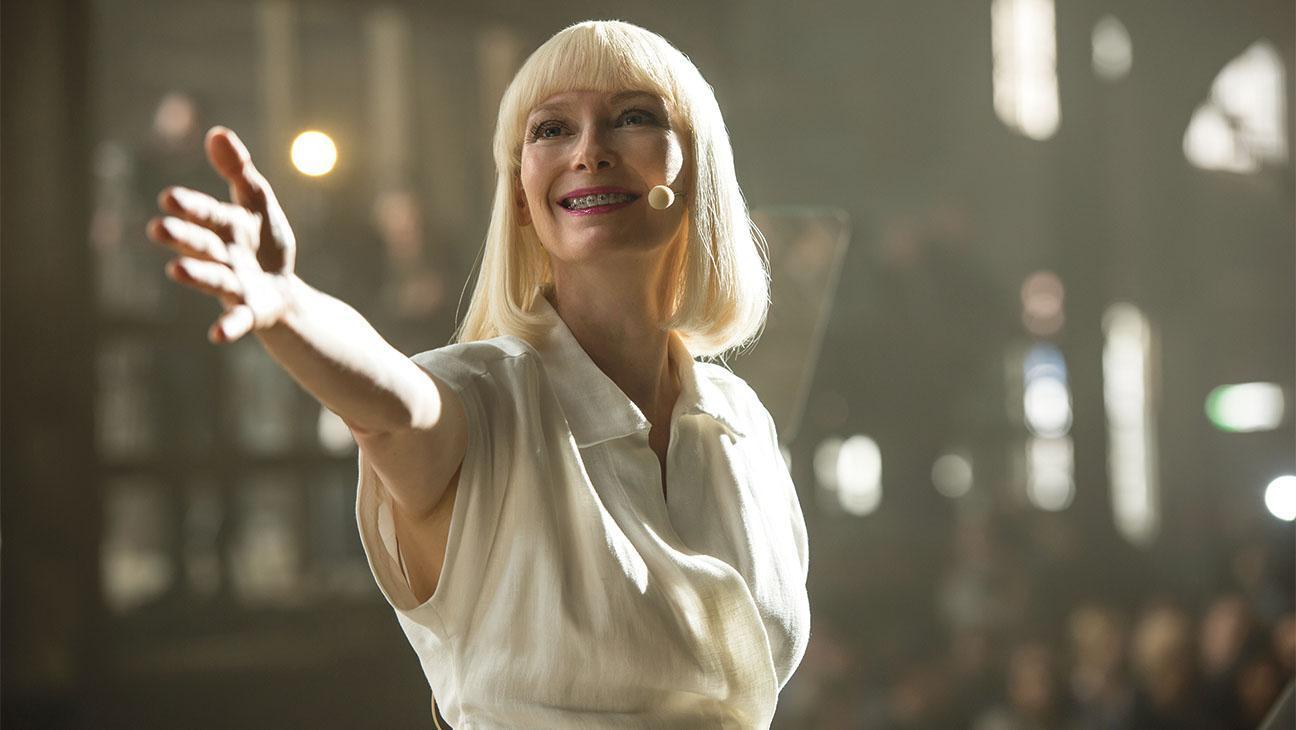
Joon-ho must have watched Hail, Caesar! and felt particularly inspired afterwards because Tilda Swinton is once again portraying a pair of twin sisters. This time, it's Lucy and Nancy Mirando, and the two couldn't be more different. Lucy's glowing with optimism and a peppy personality while Nancy's comes across to be... a negative Nancy... Anyways, Swinton proves once again to be a chameleon by adding these two roles to her longwinded, impressive acting resume.
Despite focusing around a genetically modified super pig, Okja is not a prime example of cinematic swine. Okja instead exemplifies the value of focusing a story on character and sentiment rather than piggybacking an obvious agenda. 

Film Assessment: B+