Saturday, July 27, 2019

'Once Upon A Time... In Hollywood' Review

Nominated For: Best Picture, Best Director; Quentin Tarantino, Best Actor; Leonardo DiCaprioBest Supporting Actor; Brad Pitt, Best Original Screenplay, Best Cinematography, Best Costume Design, Best Production Design, Best Sound Editing, and Best Sound Mixing.
Won: Best Supporting Actor; Brad Pitt and Best Production Design.

Synopsis: A faded television actor and his stunt double strive to achieve fame and success in the film industry during the final years of Hollywood's Golden Age in 1969 Los Angeles.

Runtime: 161 minutes

MPAA Rating: R (for language throughout, some strong graphic violence, drug use, and sexual references)

Who should see it? Adult fans of Tarantino's filmography.
Once Upon A Time... In Hollywood is the ninth film to be written and directed by Quentin Tarantino. Tarantino's been vocal about calling it quits after his tenth, so Once Upon A Time In Hollywood may perhaps be his penultimate feature. Regardless, Once Upon A Time In Hollywood is a unique entry in his robust filmography. Though distinctly Tarantino on account of extended dialogue and peculiar, prominent emphasis on feet, Once Upon A Time In Hollywood differs considerably from the rest of his work. Morally ambiguous protagonists are absent while brutality is reserved for choice moments. Instead, Tarantino reminisces on a bygone era of Hollywood with a lighthearted, sentimental love letter.
Contrary to most contemporary releases, Once Upon A Time In Hollywood takes the time to immerse the audience in a pseudo-1969 Hollywood and the routine lives of its fictional and factual subjects. Tarantino's careful approach will risk being labeled as tedious and inconsequential by many viewers. Patient audience members will no doubt be rewarded as lunacy ensues in the form of a gloriously insane third act. However, the meticulous journey is meant to expand our understanding of these characters and establish the geography and atmosphere of Los Angeles fifty years ago. There's painstaking attention to detail in Los Angeles' significant '60s landmark recreations as well as the ensemble's wardrobe and hairstyling. Not to mention, everything is magnificently captured by Tarantino's frequent cinematographer Robert Richardson, and the film features a groovy soundtrack of curated '60s hits. Nobody makes movies quite like Tarantino.
Though Tarantino's body of work is often tinged with dark humor, Once Upon A Time In Hollywood is the closest Tarantino's come to making a full-blown comedy... And it's hysterical, but also profound. The auteur remains wholeheartedly committed to crafting elaborate scenes depicting DiCaprio's Rick Dalton acting in television serials solely dedicated to underscoring a punch-line or emotional beat. As viewers are treated to a taste of Dalton's waning fictional film and television career, they also get a glimpse of real-life actress Sharon Tate on the rise. A bittersweet notion considering her actual fate, and one that lingers over the proceedings as audiences wonder whether Tarantino will rewrite history where the Manson Family is concerned ala Inglorious Basterds. A question I dare not answer here.
Leading Tarantino's star-studded cast, Leonardo DiCaprio and Brad Pitt share sacred chemistry that will surely go down as one of the best all-time onscreen bromances. In his first performance following his long-deserved Oscar win for The Revenant, DiCaprio lends a multifaceted portrayal of an insecure actor struggling with the bumpy road of stardom. This vulnerability is a side of DiCaprio audiences have hardly seen before, and he's tremendous in the role of course. On the other hand, Pitt exudes a cool bravado as Dalton's laidback stuntman, driver, and best friend, Cliff Booth. A pantheon of movie stars, crew members, and free-spirited hippies are brought to life by the likes of Al Pacino, Kurt Russell, Bruce Dern, Mike Moh, Timothy Olyphant, Margaret Qualley, Dakota Fanning, and Austin Butler. 
As Sharon Tate, Margot Robbie secured prominent billing in the marketing. However, the character's ultimately unrelated to the primary plot. Robbie imbues Tate with warmth, kindness, and a jubilant spirit that was a joy to watch, but she had less screen time and dialogue than I expected. When the film premiered at the Cannes Film Festival, a journalist asked Robbie and Tarantino why Robbie didn't have more speaking lines. Though I understand the intent behind the question, I think the question was a bit inappropriate and presumptuous considering the story's not really about Sharon Tate and additional dialogue wasn't really necessary. It was evident to me that Tarantino was interested in honoring the lesser-known qualities of Sharon Tate that are overshadowed by the tragic circumstances of her death.
Unexpected scene-stealers included Cliff Booth's pit bull and the young Julia Butters. Portraying a precocious method actor (the character deems the word "actress" restrictive) named Trudi, Butters held her own sharing the screen with DiCaprio. A commendable feat in-of-itself and Butters' mature demeanor made the scene all the more amusing.
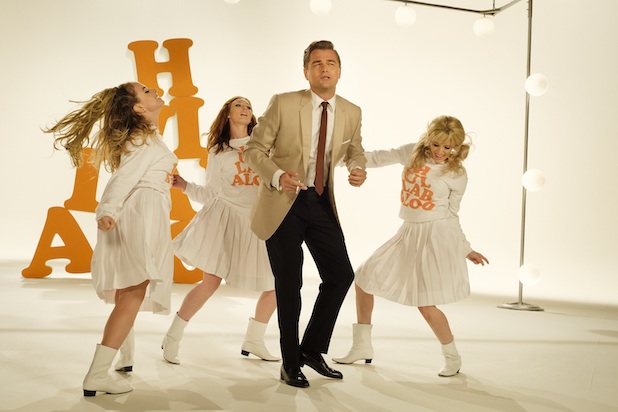
If the marquee names associated with Tarantino's latest flick weren't enough to tell you Once Upon A Time... In Hollywood is a must-see motion-picture, I'll happily oblige in further supporting that notion. It's entertaining, original, remarkably well-crafted, and harkens back to simpler times. How often does a film like that come around?

Film Assessment: A

Saturday, July 20, 2019

'The Lion King' (2019) Review

Nominated For: Best Visual Effects.

Synopsis: In the African savanna, a future king is born. Simba idolizes his father and takes his royal destiny to heart. But not everyone in the kingdom celebrates the new cub's arrival. Scar, former heir to the throne, has plans of his own. The battle for Pride Rock is soon ravaged with betrayal, tragedy, and drama, ultimately resulting in Simba's exile. With help from a curious pair of newfound friends, Simba must mature and take back what is rightfully his.

Runtime: 118 minutes

MPAA Rating: PG (for sequences of violence and peril, and some thematic elements)

Who should see it? Families and fans of Disney's live-action remakes.
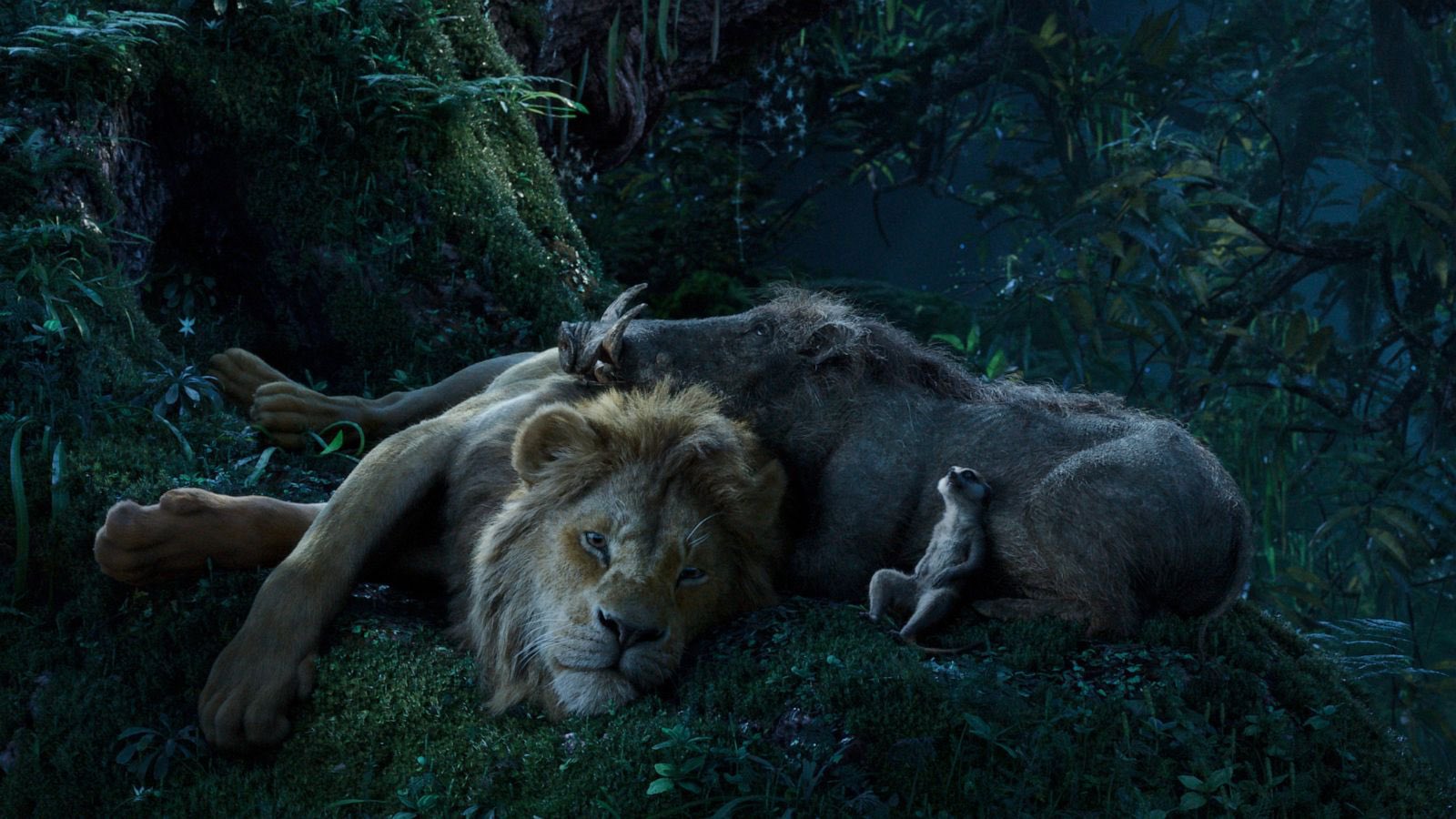
Adapted from the iconic 1994 animated incarnationThe Lion King is directed by Jon Favreau as Disney's latest "live-action" retelling. Considering the 2019 version was rendered from scratch, it's challenging to categorize The Lion King as animated or live-action since it's the first of its kind. Favreau and Disney classified this uncharted territory as "live-action filmmaking techniques with photorealistic computer-generated-imagery" which is essentially jargon for a CG-production. Utilizing the groundbreaking technology that was employed in the making of Avatar and The Jungle Book (2016), animators meticulously recreated much of the original film's classic iconography to appear alarmingly photorealistic. Though certainly a remarkable technical achievement, this innovation comes at a steep cost. 
The Lion King is undeniably an impressive two-hour visual effects demonstration, but it sorely lacks the personality and energy of the original. This is largely because Favreau set parameters for his team of animators and vfx artists, which only allowed the animals to express emotion as they would in real life. As a result, the disembodied voices of an A-list ensemble are solely responsible for conveying their characters' emotional responses. Yet, vocal performances from veteran actors also fell flat. I'm unsure if this stemmed from Favreau's direction or the acting talent themselves, but the voice-over was mostly monotonous delivery of familiar dialogue. Jeff Nathanson adapted Irene Mecchi, Jonathan Roberts, and Linda Woolverton's screenplay while Brenda Chapman received story credit as the animated film's story supervisor. However, none of the other twenty-five writers or credited crew involved with the first film were recognized. I'm aware that Timon and Pumbaa's trademark motto "Hakuna Matata" means "no worries," but I have several.
For a remake so beholden to the original, I'm baffled to learn this is the case on account of semantics concerning protections and residuals from Writer's Guild and the Animation Guild. Credit logistics aside, The Lion King retains approximately 80-85% of the first film's dialogue and replicates almost the entirety of its predecessor's visuals. A few additional scenes serve as supplemental story material to overtly explain the story's subtleties, which didn't really need to be shown. Otherwise, it's basically a shot-for-shot recreation with minor tweaks. Worst among these changes is the replacement of Hans Zimmer's score with BeyoncĂ©'s original song "Spirit" in the scene where Simba decides to return to Pride Rock. The scene, which is supposed to be a profound moment with an epic accompaniment, is instantly cheapened by a typical BeyoncĂ© song that is hysterically out-of-place. Not to mention, Mufasa reappears to Simba as a generic cloud that only resembles a lion during instantaneous flashes of lighting. Favreau's insistence on grounding this tale in realism increasingly grew more and more absurd when I realized singing animals were part of the equation.
Chief among my complaints, The Lion King's larger-than-life musical numbers were staged in literally the least exciting way imaginable. The photorealistic approach naturally confined Favreau's creativity in this regard, but animals simply walked or ran around their environment while singing. It was rather dull to watch, and the lyric annunciation and syncopated rhythms of the songs are changed to better suit the actors I suppose. Without the heightened exaggeration and vibrant colors front-and-center in the 1994 animation, these songs are hardly any fun. The cast's singing ability is there for the most part, though there are some glaring exceptions such as Seth Rogan's Pumbaa. It's mercifully brief, but nobody involved bother trying to mask it via auto-tuning as Disney did earlier this year in Aladdin (2019).
Maybe, I'm being a bit harsh in actively comparing this reimagining to the first film. However, it's nearly impossible to avoid doing so since it borrows so much and is a downgrade in almost every respect. I've attested to the emotional disconnect intentionally inserted by Jon Favreau, and that decision alone seems to have stifled the possibilities that accompany bringing this story to life. Even standing entirely on its own, this iteration lacks the emotional vitality necessary to tell this story. The effects are incredible, but everything is a soulless rendering. Young Simba is admittedly a cute cub, but he's hardly capable of emoting. When Mufasa was trampled by a stampede of wildebeests (spoiler alert?), Simba's vacant expressions matched my own. Otherwise, Hans Zimmer probably earned the easiest paycheck of his life as his score is virtually identical aside from a couple new refrains and slight occasional re-arrangements.
I briefly addressed the ensemble, but I was amazed to see such high-profile talent lend performances devoid of personality when they seemed like ideal casting choices. JD McCrary, Shahadi Wright, Donald Glover, and BeyoncĂ© portray Simba and Nala respectively at varying stages of life. The quartet's voices shine in the musical numbers but are otherwise serviceable. The legendary James Earl Jones reprises the role of Mufasa, and even he failed to spark life into a character which he'd already made iconic. Perhaps, it's due to his age, but that doesn't explain the other's inconspicuous contributions. Amongst the supporting cast, John Oliver's Zazu and John Kani's Rafiki are unusually restrained when compared to their animated counterparts while Afre Woodard's Sarabi practically serves as set decor. 
Not all is lost, though. Billy Eichner and Seth Rogan were sure-fire stand-outs as Timon and Pumbaa and the sole source of successful comic relief. The rapport between Eichner and Rogan is unique, but true to the spirit of Nathan Lane and Ernie Sabella's dynamic from the original. The duo breaks the fourth wall in fun and exciting new ways, but it occurred a little too often and risked veering towards being Deadpool-esque at times. However, I will admit to breaking out in a fit of laughter at the subversive and abrupt ending to their amusing remix of "The Lion Sleeps Tonight."
Chiwetel Ejiofor's Scar speaks with a hushed intensity that sets him in the shadow of Jeremy Irons' eccentric take. The cunning and manipulative tendencies remain, but the larger-than-life malevolence is stripped away. Florence Kasumba, Keegan-Michael Key, and Eric André portray the prominent trio of hyenas and are equally subdued.
Given the enormous success of Disney's other live-action re-imaginings, a remake of The Lion King was inevitable. After seeing The Jungle Book, I'll admit that I was also interested in seeing Jon Favreau take a stab at it. I now deeply regret that request as in the theater I often sang to myself, "Oh, I just can't wait for this to be over."

Film Assessment: D+

Friday, July 19, 2019

'Stuber' Review

Synopsis: A detective recruits his Uber driver into an unexpected night of adventure.

Runtime: 93 minutes

MPAA Rating: R (for violence and language throughout, some sexual references and brief graphic nudity)

Who should see it? Adult fans of buddy cop action-comedies.
Directed by Michael Dowse and written by Tripper Clancy, Stuber is one of this summer's few original offerings. In a movie-going season dominated by franchise fare, Stuber and Crawl graced cinemas nationwide last weekend as two unique alternatives Hollywood's offered as of late. Though certainly inspired by previous buddy-cop outings, pairing a hyper-masculine detective and a timid Uber driver is undeniably distinctive. With that being said, you'll quickly figure out this ride share's destination point as Dowse and Clancy detour onto narrative roads frequently traveled. 
Instead, I was surprised by the action's intensity. Though glimpsed through shaky-cam and frenetic quick-cuts, grisly shoot-outs quickly earn the film its R-rating. Stuber is just as much of an action movie as it is a comedy. While the action often lacked clarity, the humor was also hit-or-miss as Stuber coasts on the charm of its lead stars.
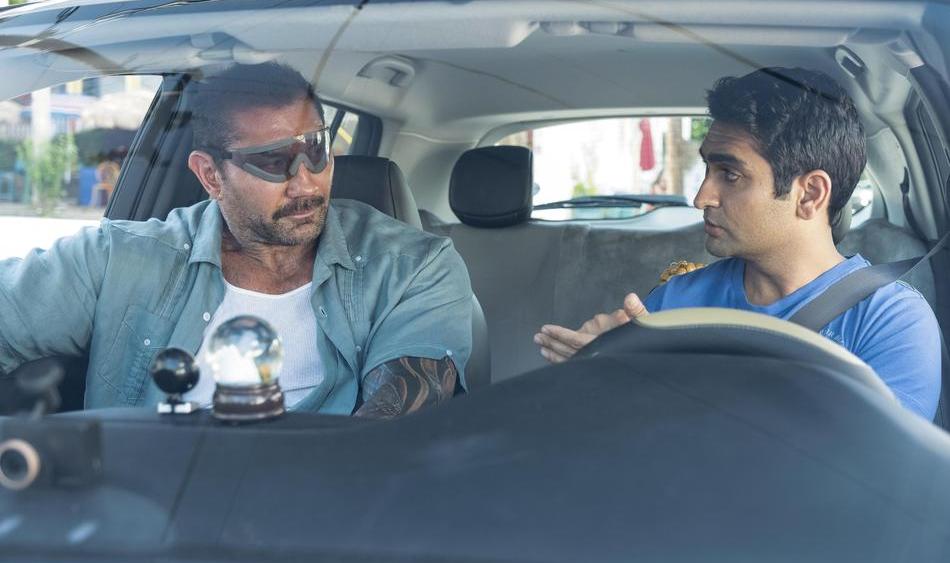
Dowse gets a lot of mileage from the unique partnership of Kumail Nanjiani and Dave Bautista. The two possess a captivating rapport as they bounce jokes off one another with ease. Nanjiani's especially hysterical as he finds himself thrust into preposterous scenarios while Bautista's positioned as the self-serious, macho investigator. Spread through the supporting cast, Iko Uwais, Mira Sorvino, Betty Gilpin, Natalie Morales, and Karen Gillan are sufficient when onscreen. Unfortunately, they each barely register when all is said-and-done due to lacking screen time.
Looking in the rear-view mirror, Stuber is a moderately entertaining ride, but not one I'd bother leaving the house to experience. Wait to watch it when it inevitably crashes onto cable or a streaming service, and just Uber elsewhere.

Film Assessment: B-

Thursday, July 18, 2019

'Crawl' (2019) Review

Synopsis: A young woman, while attempting to save her father from a Category 5 hurricane, finds herself trapped in a flooding house and must fight for her life against alligators.

Runtime: 87 minutes

MPAA Rating: R (for bloody creature violence and brief language)

Who should see it? Adult fans of intense thrillers.
Directed by Alexandre Aja and featuring a screenplay from Michael and Shawn Rasmussen, Crawl is this summer's original creature-feature. It's effectively Sharknado but taken seriously with the plausible Floridian combination of hurricanes and alligators. The situational pairing of these ferocious beasts and unforgiving weather conditions is terrifying in-of-itself. However, Aja elevates that intensity by trapping his protagonists in a claustrophobic crawl space. As the father and daughter nearly escape one predicament, another obstacle emerges in their path. Rinse-and-repeat. Yet these circumstances remain tense and gripping throughout the film in spite of their seemingly repetitive function. 
Viewers will witness these characters narrowly cheat death on numerous occasions, which some audience members may call into question, but their survival never feels guaranteed. The odds are stacked against the family as they endure harsh hardships amidst the storm. An atmospheric paranoia pervades due to the troublesome surroundings. Fantastic effects work regarding weather and gators further accentuate this feeling of unease in addition to Max Aruj and Steffen Thum's heart-pounding score. However, I'd say Crawl's greatest strengths are its simplicity and efficiency.
Many of this summer's movies became bogged down in attempting to accomplish too much. Crawl had one goal in mind, pit humans against nature, and show them struggle to survive. Aja delivers just that in a well-paced sequence of escalating events. Tension is ever-present and continuously building, as the obstacles are more insurmountable by the second. The water's rising and the gators are hungry, so time is of the essence and a sense of urgency lingers throughout the film's 87-minute runtime. The intensity of Crawl's lead performances lends further credence to it all.
Kaya Scodelario and Barry Pepper demonstrate immense range as their characters authenticate the severity of their situation and fractured relationship as father and daughter. The ill-timed heart-to-heart conversations and painful suffering Haley and her father endure are equally convincing on account of Scodelario and Pepper. They spout cheesy dialogue that may leave you rolling your eyes, but they speak with such gusto you can't resist admiring their spirit!
In a summer jam-packed with sequels and remakes, Crawl is a refreshing change of pace as something not associated with a pre-existing franchise. It's genuinely a smaller-scale, suspenseful popcorn flick worth sinking your teeth into!

Film Assessment: B

Friday, July 12, 2019

'Midsommar' Review

Synopsis: A couple travels to Sweden to visit a rural hometown's fabled mid-summer festival. What begins as an idyllic retreat quickly devolves into an increasingly violent and bizarre competition at the hands of a pagan cult.

Runtime: 147 minutes

MPAA Rating: R (for ritualistic violence, grisly images, strong sexual content, graphic nudity, drug use, and language)

Who should see it? Adults who are interested in the disturbed mind of filmmaker Ari Aster.
On the heels of HereditaryMidsommar is writer-director Ari Aster's second feature. Though Aster's approach to Midsommar differs considerably from Hereditary, the two are equally unsettling. Neither picture fits in the conventional confines of the horror genre, considering they aren't traditionally "scary." However, both films are immaculately crafted and feature sequences which many may deem peculiar and perturbing at the very least.
Contrary to Hereditary's darkened gloomy atmosphere, much of the pagan ritualism present in Midsommar transpires in broad daylight. Violence is scarce and abrupt, but gruesome nonetheless. Viewers who are easily repulsed by the sight of blood will want to avoid Midsommar, as the camera tends to linger on the grotesque injuries which I, myself, found difficult to watch at times. Aster's sophomore effort is an uncomfortable, tedious experience full of bizarre symbolism which begs to be dissected for its deeper, profound meaning. A majority of the iconography is ambiguous and left to the viewer's interpretation, but Aster occasionally lends a hand via on-the-nose expositional dialogue. 
Though I deemed the onscreen events frequently repulsive, I was persistently mesmerized by the masterful craftsmanship on display. Midsommar depicts a nine-day long Swedish festival, which certainly felt nine days long, and an uneasy ambiance is central to Aster's examination of grief and codependency. The atmospheric dread beneath the surface of a bright, flowery environment is brilliantly realized as Bobby Krlic's score eerily accompanies the picturesque imagery staged by Aster's crew (notably, director of photography Pawel Pogorzelski and production designer Henrik Svensson). I'd also be remiss to forget editor Lucian Johnson's contribution, as he incorporates seamless transitions. 
Front and center, Florence Pugh is extraordinary. Dani's an emotionally troubled individual coping with grief, trauma, codependency, and denial, which Pugh portrays wonderfully. Opposite Pugh, Jack Reynor provides a multi-faceted performance as Dani's despondent boyfriend, Christian. The relationship clearly isn't meant to be, but, understandably, these characters think otherwise. Will Poulter's a particularly pleasant source of comic relief, Vilhelm Blomgren and William Jackson Harper are solid supporting players, and the cast of Swedish villagers are ominously hospitable. 
Ari Aster made Midsommar for a specific audience, and those viewers will surely love it while others will be deeply disturbed as it unravels. I appreciate Aster's artistry, but Midsommar was too obscene and overlong for my liking.

Film Assessment: B-

Friday, July 5, 2019

'Spider-Man: Far From Home' Review

Synopsis: Our friendly neighborhood superhero decides to join his best friends on a European vacation. However, Peter's plan to leave super heroics behind for a few weeks are quickly scrapped when he begrudgingly agrees to help Nick Fury uncover the mystery of several elemental creature attacks, creating havoc across the continent.

Runtime: 129 minutes

MPAA Rating: PG-13 (for sci-fi violence, some language, and brief suggestive comments)

Who should see it? Marvel fans of all ages.

**Spoiler Warning for Avengers: Endgame**

Billed as the end of Marvel's "Infinity Saga" and third phase of superhero outings, Spider-Man: Far From Home sees Spider-Man: Homecoming creatives Jon Watts, Chris McKenna, and Erik Sommers swing Peter Parker across the Atlantic to embark on a globe-trotting adventure in the wake of Avengers: Endgame's poignant resolution. Though Iron Man is a no-show, Tony Stark's shadow looms over the production as the world mourns the heroic billionaire-philanthropist and asks who will step up to fill the void Stark left behind. All the while, Peter feels lost without his mentor. Clearly traumatized by all he's endured, Peter's unsure if he's ready to singlehandedly accept the responsibility associated with super-heroics when he'd rather partake in the pleasantries of an average teenage life. 
Peter's struggle to balance both identities has been a staple of the character across every medium since his creation, but that dilemma is especially prevalent in Far From Home. Every incarnation of the web-head deals with this eventually, but I particularly like how this version is doing so while still in High School. Fighting elemental creatures made of fire and water is just as challenging as telling a girl he likes her, and that aspect of the character makes Peter more relatable than most superheroes. Not to mention his headspace after Endgame further complicating matters.
Returning director Jon Watts ups the ante of Spidey spectacle, seemingly more confident helming action after his experience on Homecoming, as he and his crew deliver sequences I'd never have imagined to be possible on the big screen. The visual effects were noticeably an improvement over Homecoming as well while the spectacular new suits Spider-Man dons throughout the flick each have their moment in the limelight. Underneath it all, Michael Giacchino's varied orchestral arrangements provide an ideal accompaniment to the wall-crawler's international exploits.  
Swinging onscreen for his fifth outing as Spidey, Tom Holland continues to portray Peter Parker with the appropriate awkwardness and insecurity contrasting his youthful exuberance. He's solidified himself as my favorite iteration of Spider-Man by this point, and I hope he carries on with the role in years to come! Opposite Holland, Zendaya's MJ proves to be more than a strange, snarky side character as she's fleshed out through her interactions with Peter.
Meanwhile, Mysterio's live-action debut piqued my interest as I was thrilled to see he would be brought to the big screen complete with the green/gold suit, purple cape, and glorious fishbowl helmet. Underneath said helmet, Jake Gyllenhaal lends manic energy to Quentin Beck that was an utter delight to witness. Discussing the character in detail risks spoiling the movie's many twists and turns, but I was pleased it proved to be a faithful onscreen adaptation.
Filling out Peter's class, Jacob Batalon, Angourie Rice, and Tony Revolori return as Ned Leeds, Betty Brandt, and Flash Thompson while Remy Hii is introduced as new student Brad Davis. The young cast offers humorous depictions of familiar high school personalities. However, some comedic bits in the first act didn't stick the landing. 
Reprising their roles from other corners of the Marvel Cinematic Universe, Samuel L. Jackson, Cobie Smulders, and Jon Favreau each appear as Nick Fury, Maria Hill, and Happy Hogan respectively. One of the joys of the MCU is witnessing characters come together and interact with one another for the first time, so it was nice to watch these characters bounce off Peter. Other noteworthy adult characters include Marisa Tomei's dependable Aunt May and Martin Starr and J.B. Smoove as a pair of wacky high school teachers chaperoning the trip. I noticed people leaving my theater, so I felt it was worth reiterating that you should stick around after the ending for two pivotal post-credit scenes.
Full of laughs, action, adventure, and awkward teen romance, Spider-Man: Far From Home is a spectacular sequel that delivers everything audiences have come to expect from an entry starring the celebrated web-slinger. Far from what I'd imagined I would walk away thinking, Far From Home is also my new favorite live-action Spider-Man film.

Film Assessment: A

Tuesday, July 2, 2019

'Yesterday' (2019) Review

Synopsis: Jack Malik is a struggling singer-songwriter in an English seaside town whose dreams of fame are rapidly fading despite the fierce devotion and support of his childhood best friend, Ellie. After a freak bus accident during a mysterious global blackout, Jack wakes up to discover that The Beatles never existed. Performing songs by the greatest band in history to a world that has never heard them, Jack becomes an overnight sensation.

Runtime: 116 minutes

MPAA Rating: PG-13 (for suggestive content and language)

Who should see it? Fans of The Beatles and romantic comedies.
Directed by Danny Boyle and featuring a screenplay by Richard Curtis, Yesterday is a lighthearted summer rom-com which coasts on the charming implications of its fascinating premise. For example, Jack struggles to remember the lyrics to "Eleanor Rigby," and Google can't help him out of this memory bind... Not to mention that The Beatles aren't the only thing the world has forgotten, a tidbit which fuels several jokes throughout the film's runtime. A lacking explanation behind the world's selective pop-culture amnesia will surely ruffle some feathers, but I wasn't too bothered because I presume whatever reasoning Curtis and Boyle concocted would prove to be ridiculously convoluted.
Yesterday remains simple from start-to-finish, telling the story of an overnight sensation. However, the premise of Yesterday lends a refreshing perspective to the familiar archetype. Jack must grapple with the guilt of exploiting the greatest pop-music nobody else remembers to fuel his rising stardom. Additionally, his success strains his personal relationships. Boyle and Curtis remain focused on these dilemmas as they strum through many of The Beatles' greatest hits, and neither the consequences of fame or the film's charming sensibilities are lost in the shuffle.
Himesh Patel and Lily James lead the affair with giddy charisma and share a sincere connection. While it would have been nice to hear James sing considering her scene-stealing display in last year's Mamma Mia! Here We Go Again, Patel tactfully covers The Beatles' beloved tunes with a warm, delicate approach and pleasant singing voice. Otherwise, Ed Sheeran, Joel Fry, and Kate McKinnon are amusing in their respective supporting roles.
Like the best Beatles hits, Yesterday is an easygoing crowdpleaser that'll make your troubles seem so far away.

Film Assessment: B