Saturday, August 18, 2018

'Mile 22' Review

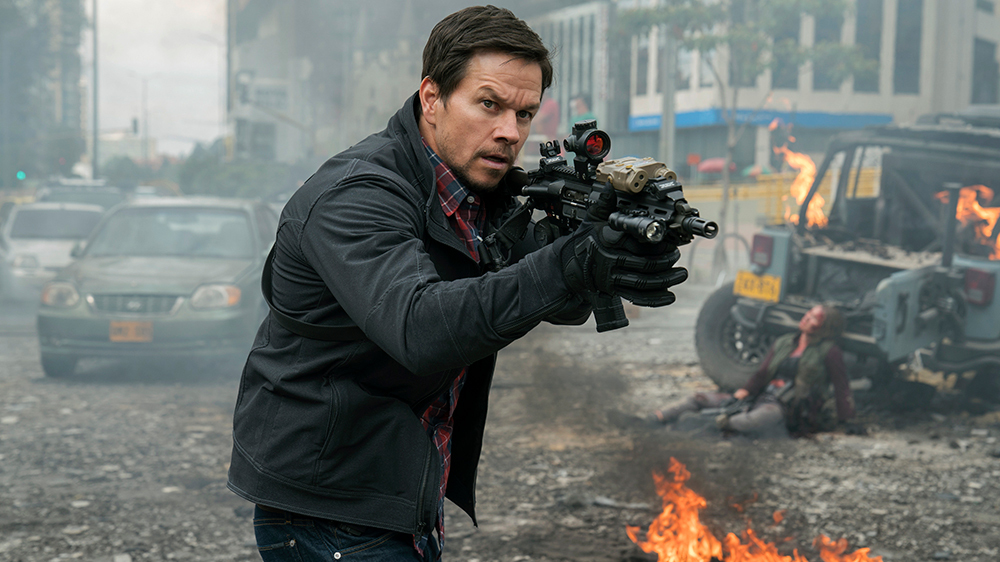
Mile 22 travels alongside James Silva, a CIA operative leading a classified tactical command unit. Aided by his team, Silva must retrieve and transport an asset in possession of sensitive information from an American embassy in Southeast Asia to an airfield twenty-two miles away for extraction. Silva and his squad soon find themselves in a race against time as the city's military, police, and street gangs close in to reclaim the asset.  
Mile 22 stars Mark Wahlberg and is directed by Peter Berg, marking the fourth time the actor and director have worked together (previous collaborations include Lone SurvivorDeepwater Horizon, and Patriots Day). I've jokingly referred to this team-up as "Berg & 'Berg" in the past, but a consistent quality can be gleaned from all three of their projects. I've liked some more than others, but Berg & 'Berg had yet to let me down... Till Thursday evening, Augst 16, 2018 that is... I didn't even know Mile 22 existed till about two weeks ago because I hadn't seen a single trailer for it. As someone who regularly keeps up with entertainment news, I found it fairly troubling that Mile 22 had flown almost completely under my radar. That should have probably been my first sign that Mile 22 would be the first Berg & 'Berg misfire...
The only cinematic situation more disappointing than a bad movie is a bad movie involving talent you trust. Peter Berg may not quite be one of my favorite directors working today, but he's certainly a skilled filmmaker whose work I eagerly anticipate to see. Sure, Berg may have directed Battleship in 2012, but he had a hot streak of releases soon after. Alas, the short-lived excellence of Berg & 'Berg had to sink eventually. Of the productions Berg & 'Berg have worked on together, this is the only one not to be based on true events. Maybe that was the lynchpin to their success or perhaps Mile 22 was merely an exemplary concept botched in execution. Whatever the case may be, Lea Carpenter and Graham Roland are credited with developing the story and Carpenter has the sole screenplay credit. 
A sloppy story foundation lies as the root of most of Mile 22's problems. After the opening scene, the subsequent thirty minutes or so are incredibly difficult to follow because hardly any noteworthy information is conveyed to the audience visually or through exposition. Viewers are thrust into a situation without an explanation of what's going on exactly. The audience is certainly shown a lot through jarring, excessive jump-cuts, but none of these images can be used to piece together a cohesive plot. The most you'll be able to gather is that you're watching a spec-ops team in some facility following a failed mission some years after the opening mission. The specifics are irritatingly vague, but things eventually fall into place and the story gets going. It just takes awhile and the path taken certainly isn't advisable. 
Compounding this confusion are several sequences of incomprehensible action. The actual combat itself could be quite thrilling, but the world and I will never know on account of the obnoxious shaky-cam and incoherent editing. You can hardly ever tell what's going on due to the sheer magnitude of rapid-fire cuts. Even the simple dialogue exchanges are snipped to shreds. Coupled with muted color grading, this made Mile 22 a tiresome experience when it could have easily been explosive and exciting. What makes this infinitely more annoying is the inclusion of renowned martial artist Iko Uwais as an actor and fight choreographer. If you've seen The Raid, you know Uwais is adept in this arena. There's absolutely no need to cut around this actor as though he were Liam Neeson, yet the editor persisted when the fights could have been shown in more drawn-out wide shots to be infinitely more effective. Additionally, there were some outlandish stunts which really felt out of place considering the film first established itself as a grounded action thriller.
Character-wise, everyone's flimsily written without an arc and the performances aren't much better. I don't think Mark Wahlberg's ever been worse, and I've seen him in two Michael Bay Transformers movies for crying out loud... Here, he spews a hundred words a minute in trademark Marky-Mark fashion and it didn't help that his character was especially unlikable either. As I've previously mentioned, Mile 22 squanders the abilities of Iko Uwais by over-editing his fight sequences and the actor isn't compensated with any worthwhile material. Otherwise, Ronda Rousey, Laura Cohan, and John Malkovich are alright, but hardly have anything to do and the remaining actors are even worse off in that regard. 
When writing negative reviews, I always make an intentional effort to desperately search the film I'm reviewing for any elements that could be considered redeeming qualities before bestowing a letter grade. I've now scanned a feature which runs ninety-five minutes long and plots itself out twenty-two miles wide, and there's nothing salvageable about any of it. Frankly, Mile 22 isn't even worth the walking distance to watch on your own couch whenever the film makes its way to home media, your favorite streaming service, or the desolate landscape of early morning cable. 

Film Assessment: F


'Crazy Rich Asians' Review

Crazy Rich Asians follows native New Yorker Rachel Chu as she accompanies her longtime boyfriend, Nick Young, to his best friend's wedding in Singapore. Excited about visiting Asia for the first time but also nervous about meeting Nick's family, Rachel is unprepared to learn that Nick has neglected to inform her of key details of his life. It turns out he is not only the heir to one of the country's wealthiest families, but also one of its most sought after bachelors. Thrust into the spotlight, Rachel must now contend with jealous socialites, quirky relatives and something far, far worse - Nick's disapproving mother. It soon becomes clear that while money can't buy love, it can definitely complicate things.
Based on Kevin Kwan's best-selling novel, Crazy Rich Asians is a romantic comedy directed by Jon Chu while Peter Chiarelli and Adele Lim were charged with adapting Kwan's novel into a feature length script. Kwan and Chu had two major distribution offers from Netflix and Warner Bros. The distribution deal with Netflix was enticing because it entailed artistic freedom, a green-lighted trilogy, and a seven figure payday. However, the two ultimately went with Warner Bros because it meant a major studio would be throwing its weight behind a theatrical release with an all Asian ensemble. While it may not seem like it at first glance, Crazy Rich Asians is going to probably mean a lot to most Asian audience members. The reason being that it's one of the first times they've probably felt fully represented in the cinema. 
It's no secret that Asians are perhaps the demographic most underserved by Hollywood. Oftentimes, Asia is seen by studio executives as little more than a market with substantial box office potential. In recent years, this has lead a number of major blockbusters to stage their big action set-pieces in Asian countries and star Asian talent, but more often than not, this feels like pandering rather than proactive inclusion. The reason being that these locations and actors are rarely given a meaningful purpose or chance to shine within the context of the story, instead simply there to sell tickets overseas. Well, times are changing, as Crazy Rich Asians is the first Hollywood studio movie since 1993 to feature an all Asian or Asian-American cast (Wayne Wang's Joy Luck Club being the most recent case). 
Recently, films depicting minority gender, sexuality, or race seem to harbor an inner desire to make bold statements about our current socio-political atmosphere. While there's absolutely nothing wrong with that provided the commentary is tastefully incorporated, rarely do these features make an effort to normalize diversity through the lens of a movie that's ordinary. Well, Crazy Rich Asians does just that. It's proud of its heritage and culture, but doesn't make a big deal of it and is sure not to shove it in your face. It's a conventional rom-com which just happens to be set in Singapore and star an entirely Asian cast. These elements are intentionally interwoven tightly into the story so that it couldn't really be made any other way, and I find it respectable that the studio didn't handicap the production by whitewashing any characters for the sake of the picture's commerciality. It's proud of its ensemble, but never boastful. 
Perpetuating the idea that it's normal to release a major Hollywood movie lead by Asians will only enable other films to follow suit. From that standpoint, Crazy Rich Asians is definitely a big deal, and you should totally support it if you'd like to see greater Asian representation in Hollywood. Before discussing the film's shortcomings, I'd like to say that cinematographer Vanja Cernjul had a nice eye for capturing the extravagant sets and lavish costumes. The production design and costumery were gorgeous and really accentuated the overabundance of wealth these characters possess. Otherwise, I honestly found it to be a by-the-books rom-com. Light-hearted and entertaining, but nothing too special.
Then again, I'm really not the target audience for this sort of thing... Though Crazy Rich Asians does definitely suffer from some sluggish pacing and an overabundance of formulaic storylines at times, I quite enjoyed the film overall. I won't rush to buy it on Blu-Ray or anything, but I certainly wouldn't complain if ever goaded into watching it on a date.
What most elevates Crazy Rich Asians above its cliché-ridden narrative though is its excellent ensemble. Constance Wu is smart, sweet, and down-to-earth as Rachel while Henry Golding exudes a pleasant personality and an abundance of charm in the role of Nick Young, and spark certainly were flying between the two. I've heard murmurings of Golding being a good fit for Bond (he's British-Malaysian so it wouldn't violate the rule of Bond being British), and will concede I'd absolutely be up for that after seeing his work here. Elsewhere, Michelle Yeoh excels in the space of Nick's protective, disapproving mother and the other members of the Young family are wonderfully played by Gemma Chan, Pierre Png, Nico Santos, Remy Hii, Ronny Chieng, Victoria Loke, Lisa Lu, and a host of other actors.
As supporting player, Awkwafina leaves perhaps the most memorable impression since a great deal of the comedic relief comes from her character Peik Lin Goh. Other members of her family similarly serve up some big laughs and are portrayed by Ken Jeong, Koh Cheng Mun, and Calvin Wong respectively. On the more serious side of things, Tan Kheng Hua plays Rachel's mother and she really relishes in every tender moments shared with Wu. 
Crazy Rich Asians is by no means groundbreaking in terms of storytelling, but it's certainly a significant step forward for Asian representation in Hollywood. Based on the box office projections, the film should soon recoup its budget and I imagine other studios will see that centering films around Asian ethnic groups can make them crazy rich as well!

Film Assessment: B

Monday, August 13, 2018

'Eighth Grade' Review

Eighth Grade follows an introverted teenage girl as she struggles in the last week of her disastrous eighth grade year.
Written and directed by first time filmmaker Bo Burnham, Eighth Grade chronicles a bona fide coming-of-age tale for the social media-crazed teens of today. Burnham's a twenty-seven year old comedian mostly known for his YouTube and television work, yet he manages to ideally encapsulate the struggles that middle-schoolers are facing now. I'm a twenty-one year old male, so I can't personally attest to the experiences of being a thirteen year old girl in 2018... Fortunately, my youngest sister is thirteen years old! Upon first seeing Eighth Grade about a week ago, I was reluctant to review the film without her perspective because I felt that her insight was invaluable. I asked if she'd be willing to watch it and she was more than happy to oblige, so here's an eighth grader's review of Eighth Grade for those curious:

As you might be able to surmise by the huge grin on her face, she loved it and felt it was really realistic in its portrayal of modern middle-school and teenagers today. She's brought the film up in conversation several times in the few days since we saw it, so I imagine she can't wait to see it again and I'm really glad that she enjoyed it as much as she did.
Anyways, despite setting Eighth Grade in the modern day, Burnham's made a feature which we can all relate to in some way or another (provided you're older than 13). The awkwardness of our teenage years is a fairly universal experience, and plenty of awkward social interactions ensue as Kayla goes about her day-to-day life. From beginning to end, Eighth Grade is incredibly authentic in its awkwardness. Nothing feels fake or manufactured for the purposes of dramatic tension. The kids act like kids and it's as if Burnham simply captured a few days of a teenage girl's typical life.
Social media and cell phones certainly play a large role in the proceedings, but Burnham never treats the devices as an unhealthy obsession. He certainly gets into the good and bad of today's tech, but for the most part, Burnham depicts the devices as teens see them: a way of life. There's even a conversation in which Burnham directly acknowledges the significant lifestyle differences between the childhood of an eighth grader and a high school junior/senior. Technology's progressed, and in this day-and-age, kids often receive their first cell phone or activate their first social media account comparatively much earlier than their elders did. With three younger sisters, I've even witnessed it firsthand. 
Thematically, Eighth Grade is remarkably genuine on so many levels that most coming-of-age stories just aren't these days... Though there are certainly exceptions to that, Bo Burnham understands today's youth or was at least willing to hear them out and gather feedback on his own interpretation of adolescents. Stylistically, the filmmaking approach is very personable, so overall, Eighth Grade is an intimate experience that's hilarious and heartfelt. There are some neat flourishes in regards to the editing and cinematography while Anna Meredith's synth-driven keyboard score establishes an atmosphere that can be both inviting and nerve-wracking (an ideal summation of what 8th grade is really like). 
Holding it all together is Elsie Fisher's wonderfully sincere performance. You may know Fisher best from the first two Despicable Me movies where she adorably voiced Agnus, but this will surely be a defining moment in her career. Fisher is onscreen for just about the entire hour and a half, but not a single second of it feels forced or fake. You forget you're even watching an actress because Fisher's anxiety, innocence, and vulnerability all feels so heart-breakingly genuine. Matching her beat-for-beat every step of the way, Josh Hamilton portrays a kind, loving, and supportive dad. Like any good parent, his character only wants what's best for his little girl, and Hamilton conveys his caring nature beautifully. A heart-to-heart conversation between the two of them had me on the verge of waterworks. Filling out the supporting cast, Emily Robinson and Jake Ryan are well-deserving of a mention for their roles as high school mentor Olivia and the hilariously dorkish Gabe (the chicken nuggets scene is the comedic peak of 2018 thus far). 
After some reflection and a second viewing, I feel confident enough to declare Eighth Grade as not only one of the best films I've seen all year, but my new favorite A24 feature, and I'd certainly place it among the very best coming-of-age films. If you're an adult who's considering taking a teen to see Eighth Grade, please don't be discouraged by the R-rating. It's overblown on account of a few F-bombs and some slightly mature content, but I can guarantee that the child has seen and heard far worse. To put it simply, films this sincere and sentimental don't come around that often. Eighth Grade is a film for everyone who has ever been through eighth grade and for those who have just begun the rollercoaster of their teenage years. An exceptionally authentic coming-of-age story for the social media generation.

Film Assessment: A+

'BlacKkKlansman' Review

Nominated For: Best Picture, Best Director; Spike Lee, Best Supporting Actor; Adam Driver, Best Adapted Screenplay, Best Film Editing, and Best Original Score. 
Won: Best Adapted Screenplay.

The year is 1979 and Ron Stallworth has recently become the first black police officer in the Colorado Springs Police Department. Determined to make a name a name for himself, Stallworth bravely sets out on a dangerous mission: infiltrate and expose the Ku Klux Klan. The detective soon recruited a more seasoned colleague named Flip Zimmerman into the undercover investigation of a lifetime. Together, they team up to take down the extremist hate group as the organization aims to sanitize its violent rhetoric to appeal to the mainstream. 
BlacKkKlansman is the latest "joint" from writer-director Spike Lee (his films are often referred to as such), and lending Lee a helping hand in regards to scripting, Charlie Wachtel, David Rabinowitz, and Kevin Willmott are all credited co-writers on this crazy enterprise. Oh, and by the way, it's all actually based on a true story with the real Ron Stallworth's memoir serving as the film's primary source of inspiration, as the title card reading "dis joint is based on some fo' real, fo' real s---" hilariously informs the audience. While the film's subject matter is certainly serious, BlacKkKlansman is equally comedic as it is dramatic. Humor is often employed as a means of disempowering racism, and it's remarkably effective. You laugh at the Klan members not for their disgusting comments and hateful attitudes, but because the film rightfully portrayed them as clueless dolts with a distasteful and ridiculous ideology. It's quite brilliant actually. 
In all honesty, I've never seen any of Lee's films before, but I quickly got the gist that he's not a man for subtlety. I could really care less what your political leanings are, but I can see some on-the-nose dialogue about Trump and the film's epilogue upsetting a certain sect, and I imagine there will be plenty of boycotts and things of that nature once white supremacists get wind of it. Otherwise, I find it hard to believe anything presented will be construed as offensive to anyone else. Regardless, it's going to get people talking and already has in a lot of ways. Whether it be the Oscar buzz and critical acclaim it's garnering or a serious conversation about racial relations in America, people are talking about it.
Best of all, is the fair, balanced take on many of the socio-political issues Lee chose to tackle. When it comes to those relevant topics, BlacKkKlansman never feels lopsided in the slightest. Though the film rightfully doesn't excuse abhorrent racist behavior either... In that regard, Lee expresses his anger at our situation today not only within the context of his narrative, but also in the film's epilogue which stitches together footage from the rallies and riots that occurred a year ago in Charlottesville. Sure to leave an impression on audiences, the video is infuriating and repulsive to watch. A harsh reminder that the problems plaguing these characters are real ones people have to face everyday.
As for production value, BlacKkKlansman is made in the style of a '70s blaxploitation flick and the film's atmosphere reflects that. The cinematography, costuming, production design, and score are all especially authentic to the era and exceptionally executed. Admittedly, a love-interest sub-plot could have been better integrated and on-the-nose political commentary seems out place in the context of the ongoing story, but these grievances are ultimately insubstantial. 
Performance-wise, BlacKkKlansman has it's fair share of all-stars. It should really come as no surprise that Denzel's son, John David Washington, would display a knack for dramatic acting as well as sharp comedic sensibilities, but Washington steps out of his father's shadow to prove himself just as capable of excelling in a leading role. Opposite Washington, Laura Harrier shines as an outspoken activist while Adam Driver is exceptional as per usual playing an undercover cop. In recent years, Driver has quickly become a favorite supporting actor of mine and is easily one of the most consistent actors working today. In the role of Zimmerman, he once again proves to be at home playing characters with a conflicted nature. Though his screen-time is fleeting, Harry Belafonte's recollection to an obscene act of violence is no less impactful, proving to be one of the film's most powerful scenes when all is said-and-done.
Meanwhile, to fill out the Klan, Lee needed actors who could qualify as both buffoons and ferocious psychopaths. By falling for Stallworth's ruse, a degree of incompetence was necessary, but the Klansmen needed to be a credible threat for the purposes of a realistic portrayal as well. Walking that fine line, Topher Grace depicts David Duke as a mild-mannered racist, Jasper Pääkkönen's Felix is about as despicable as they get, and Paul Walter Hauser, the breakout star of I, Tonyacontinues to inspire bouts of laughter with excellent comedic timing as an inept Klansman.
To sum things up, BlacKkKlansman is not only one of the year's best films, but also one of 2018's most important. The Birth of a Nation is brought up as a 1915 blockbuster that inspired violence against black communities, but here's hoping Lee's latest joint is able to do the opposite and put racists back where they belong: out of sight and out of mind. 

Film Assessment: A-

Saturday, August 11, 2018

'The Meg' Review

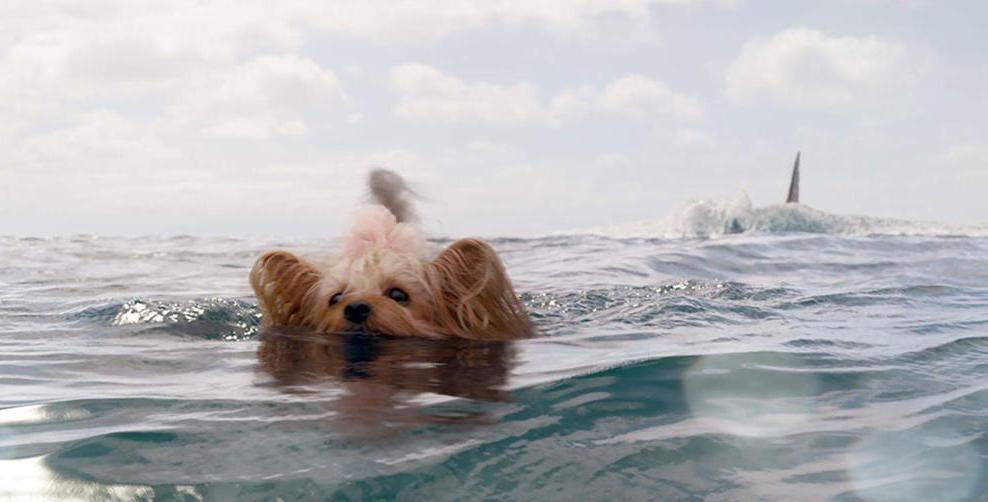
The Meg dives into the depths of the Pacific Ocean to wade alongside a team of researchers employed at an underwater facility as they discover an untouched area beneath the Mariana Trench and seek to explore all the unknown sea-life it has to offer. Much to their simultaneous delight and dismay, the scientists find a 75-foot-long prehistoric shark known as the Megalodon. The enormous sea creature was thought to be extinct, but it has survived all these years underneath a rift in the Mariana Trench and has a hankering for human flesh...
Helmed by Jon Turteltaub, a director best known for the two National Treasure installments, The Meg features a script written by brothers Jon and Erich Hoeber along with Dean Georgaris and is based on Steve Alien's best-selling novel Meg: A Novel of Deep Terror. With this year's summer moviegoing season coming to a close, it only seems right to conclude with a cheesy shark movie, and that's precisely what The Meg is. Nothing more, nothing less. I'm sure the absurd advertisements have suggested as much to you, but I was surprised that The Meg was not nearly as braindead of a blockbuster as I expected it to be. Since the release of Jaws in 1975, there has been slew of shark-themed entertainment, but none of those dorsal fins have lived up to the terror of Spielberg's classic shark flick... None of this shark-related media was meant to surpass Jaws though, but rather, they were made to capitalize on it. 
The Meg is just the latest in a tidal wave of aquatic offerings to be made in the wake of Jaws' success. A few weeks ago when I reviewed Skyscraper, I addressed its startling similarities to beloved action classics and alluded to the idea I might do something similar upon reviewing The Meg. Well, Jaws was clearly influential in the making of The Meg because a poster paying tribute to Spielberg's toothy blockbuster was released and I observed plenty of Jaws homages while watching the movie. However, in direct contrast to SkyscraperThe Meg never tries to BE Jaws. It respectfully honors the iconic film, but doesn't dare to rip it off. It's well aware that it couldn't possibly be as significant of a pop-culture touchstone and knows that it's little more than a schlocky shark flick. 
Where Jaws was afraid to show the titular creature, The Meg takes a different approach and is actually quite proud of its immense monstrosity. The toothy star is front-and-center amidst all the action because the shark special effects aren't half-bad. While certainly not awards-worthy, they're convincing enough for The Meg's purposes. It looks like a giant shark and that's what matters. However, I will say I was underwhelmed by the carnage on display. For a movie about a enormous shark, the Meg's kill-count is surprisingly low and the gore feels toothless due to the PG-13 rating. 
Otherwise, I wish The Meg had been even more absurdly over-the-top with a stronger commitment to the silliness. The film was at its best when it showed a degree of self-awareness after all (the closing title card is brilliant by the way). While understanding of its own absurdity, The Meg takes itself far too seriously and tries to be two things at once, resulting in a tonally-conflicted identity crisis. As a B-movie, The Meg isn't ridiculous enough. Whenever casting the spotlight on the characters, it's simply too shallow to garner any sympathy for the Meg's victims.
Upon reviewing this film, I had two alternatives, but was unsure as to what would be the best approach. On one hand, I could savagely devour The Meg from an objective standpoint and unfairly compare it to Jaws. My other option being for my brain to abandon ship and all thought processes as well. That way I could at least admit to being entertained from time-to-time. Ultimately, I chose to swim to the middle of those extreme whirlpools and acknowledge that audiences are meant to chomp down on their popcorn while watching The Meg. In fact, that's pretty much its sole purpose.
From a filmmaking standpoint, The Meg is woefully generic and could have used a little more bite to differentiate itself from the shark-programming found on the Syfy channel. The plot's predictable, the characters are expendable, one-dimensional stereotypes, the acting is fairly awful across the board, the rapid jump-cut editing is a joke, Harry Gregson-Williams' score is sadly by-the-numbers, and the set-pieces are ludicrous, but also lacking in creativity. Every once in a while though, something stupid happens to provoke cheers and laughter from the audience. Whether that sounds enticing or not is up to you to decide, but I suspect that Sharknado fans will be very pleased come the third act. 
To further elaborate on my gripes, I get that audiences didn't come to see The Meg for high-caliber acting or revolutionary writing, but there was absolutely no chemistry between any of the actors and that was excruciating to watch at times. Jason Statham plays the same character which you've already seen Jason Statham headlining other blockbusters as. Bingbing Li is the wistful love interest who's also capable, but sometimes a damsel in destress, and I must say that her scenes with Statham were dreadful to watch... Running down the rest of the supporting cast, Cliff Curtis is a supportive friend, Winston Chao is a mentor and father figure, Page Kennedy is related to the role of "the black guy who's just there to make quips," Ruby Rose is the tough hacker chick and you know she's tough because she has a bunch of tattoos and her name's Jaxx, Ólafur Darri Ólafsson plays the sentimental team member, Masi Oka pops in for maybe five minutes, and Jessica McNamee plays Jonas Taylor's ex-wife and hardly has any other defining traits or personality attributes. Of course, with that longwinded blanket statement comes a few exceptions though...
Jason Statham is hardly a "great" actor, but he's absolutely ideal for a film like this. His line delivery is spoken with a grizzled seriousness for him to maintain his prowess as a stoic action-hero and come across as cool whenever he gets to ride a giant shark and plunge his harpoon into it. If not for his stoicism, that sort of thing might not work as well. 
Meanwhile, Shuya Sophia Cai functions as an effective source of cuteness and comedic relief. You may ask yourself why a little girl is present in these dangerous scenarios like I did, but The Meg doesn't really bother with a worthwhile explanation. It would greatly prefer you to indulge in the adorableness, as that's a major source of the film's charm.
Elsewhere, The Office's Rainn Wilson is one of the few members of the ensemble who gets what sort of film he's in, and acts accordingly. Wilson's eccentric billionaire is a jerk, and he hams it up to an over-exaggerated extent so that you'l rightfully root for the shark to take him out because that's what kind of film this is. For those wondering, his Dwight personality doesn't seep into the character so it's not like watching The Office At Sea or anything like that. 
The Meg was poised to end this season of summer blockbusters with a huge splash, but the shlocky shark flick is held back from its cheesy B-movie destiny due to a reluctance to embrace its inherent ridiculousness and the restrained violence accompanying its PG-13 rating. To get through this, you're gonna need a bigger popcorn bucket.

Film Assessment: C

Friday, August 10, 2018

Throwback Thursday Review: 'Jaws'

With this weekend's release of The Meg, I knew I couldn't pass up the chance to review Jaws. It's a little late, but that's because I watched both Jaws and The Meg on Thursday night. I've also seen Eighth Grade and BlacKkKlansman in the last week, but haven't reviewed either yet because I was focused on preparing my 500th Blog Post. Also, since my youngest sister will be entering the eighth grade this year, I'd like to take her to see Eighth Grade before writing my review on it. Therefore, that review may not come till the tail-end of the weekend or early into next week depending on when I publish the other aforementioned reviews. Anyways, I'd also like to give my readers a heads-up that this may be my last Throwback Thursday Review for awhile. The reason being that the fall semester is about to start and I've decided to cut back on these types of reviews since I'll be even busier in the coming weeks.

'Jaws' Review


Nominated For: Best Picture, Best Film Editing, Best Sound, and Best Original Score.
Won: Best Film Editing, Best Sound, and Best Original Score.

In Jaws, an epic battle of man vs. nature ensues as a local sheriff, a marine biologist, and an old seafarer team up to hunt down a great white shark which is attacking beachgoers along the coast of Amity Island.
Based on Peter Benchley's 1974 novel of the same name, Jaws was steered by a rookie director named Steven Spielberg and written by Benchley and Carl Gottlieb. Believe it or not, but Spielberg had only directed a few features at the time of release. Back then, he mostly dabbled in the realms of shorts and television... But Jaws was the film where he truly made a name for himself, and rightfully so! Jaws was unprecedented in more ways than one, but it essentially invented the "summer blockbuster." Twenty three years later, and the summer's stacked with these event-type films. It's crazy to think that Steven Spielberg revolutionized the movie-going business at only twenty-seven years old... 
Beyond changing the landscape of Hollywood though, Jaws has remained an iconic touchstone of pop culture. Regardless of whether you've seen the film or not, you're likely familiar with the classic line "you're gonna need a bigger boat" as well as John Williams' sensational score. Upon hearing "Da-dum... Da-dum... Da-dum-Da-dum-Da-dum," you may get even a little uneasy because you know danger is imminent. Well, you can send all your appreciation towards the music maestro John Williams for that! Music is an essential component of any film, and that's certainly the case with Jaws. While the entire score is masterful, it is perhaps Williams' shark theme which most effectively eases audiences into the ebb and flow of the film. As the shark gets nearer, the music intensifies. This is a constant throughout, so the viewer unconsciously begins to associate the ominous two-note theme with the imminent arrival of the great white. From that point on, you're involuntarily anxious anytime you hear the shark's specific score. 
I'm pointing this out because the music makes up for the shark's conspicuous hour and a half long absence. Why, you ask? I'll get there, but hold your seahorses. Jaws infamously had a troubled production, with the three malfunctioning mechanical shark models chief among the problems that faced Spielberg. This lead to frequent rewrites in the midst of shooting at sea and a disgruntled morale amongst the cast and crew. The shark was named Bruce after Spielberg's lawyer, and it was ultimately decided the star shark would have minimal screen-time. It may seem like sacrilege, but it was a brilliant move in the long run for further drawing out the suspense. Spielberg instead relied on William's score, the technical filmmaking, and expressive reactions from the actors to sell Bruce's brutality. It's not till about an hour and twenty minutes in that the shark even emerges for a first full appearance. The reason this entrance is incredibly effective though is that there's absolutely no music leading up to it. Since viewers grew used to the preceding build-up of William's score, Bruce sneaks up on the audience just as he does to Brody. It's the ultimate earned jump-scare. 
Another element which I adore about Jaws is Chief Brody's reasonable caution in determining a solution to the shark problem plaguing Amity Island. He reads up on Great Whites, enlists an expert, and all the while, critical exposition is conveyed through a mixture of visual means and dialogue. He doesn't rush into the deep waters to face the problem right away, but rather, ensures he has a rock-solid plan before committing to a confrontation. There are also additional layers of his dedication to his family rational fear of the sea which further ground him as a relatable protagonist.
Perhaps one of the best scenes in the film though is one in which the characters are simply sitting around talking about scars onboard the Orca. It's interesting conversation which further fleshes out the three individuals while adding a nice touch of humanity to ground the action at sea. It's also in the scene's best interest to have such talented performers as Roy Schneider, Robert Shaw, and Richard Dreyfuss at its disposal. As Brody, Hooper, and Quint, the three have a buoyant, lighthearted camaraderie with one another which perfectly tows the line between being believed as a newly formed friendship or footage of the actors simply hanging out with one another. Their performances coupled with the sharp script make it incredibly easy to become invested in the survival of these characters during the thrilling third act. 
I'm sure you've heard it a million times before, but Jaws is just as gripping today as I'm sure it was forty-three years ago. It's an exercise in tension that's masterfully made and incredibly effective in every respect. Through Jaws, Steven Spielberg pioneered the "summer blockbuster" and jump-started his career as a filmmaker for the masses. All these years later, it's really no surprise that Jaws would still be floating around as one of Spielberg's finest films.

Film Assessment: A+