Showing posts with label Al Pacino. Show all posts

Wednesday, November 27, 2019

'The Irishman' Review

Nominated For: Best Picture, Best Director; Martin Scorsese, Best Supporting Actor; Al Pacino, Best Supporting Actor; Joe Pesci, Best Adapted Screenplay, Best Film Editing, Best Cinematography, Best Costume Design, Best Production Design, and Best Visual Effects.

Synopsis: A mob hitman recalls his possible involvement with the slaying of Jimmy Hoffa.

Runtime: 209 minutes

MPAA Rating: R (for pervasive language and strong violence)

Who should see it? Adult fans of Martin Scorsese films.
Based on Charles Brandt's novel I Heard You Paint HousesThe Irishman is directed by Martin Scorsese and features a screenplay from Steven Zaillian. Scorsese began developing The Irishman at Paramount till the studio hesitated at the substantial budget of over $150 million required to fully realize Scorsese's vision. Netflix, however, had no objections. The streaming giant's keen on being a filmmaker-friendly space, so the service may attract high profile talent and add a robust slate of original content to their library. Last year, Netflix found great awards success with Roma, receiving their first Best Picture nomination. And the studio is primed to be a significant player this awards season as well with at least four major contenders up their sleeves headed up by The Irishman and Marriage Story.
At three and a half hours long, The Irishman may seem like a daunting watch. I thought so, too, but didn't find that to be the case in my viewing. Scorsese's latest mobster picture moves at a leisurely pace, but never feels its length on behalf of Scorsese's dependable editor Thelma Schoonmaker. Though I'd recommend seeking it out in theaters for those willing and able, the power to pause The Irishman from the comfort of your own home may be more enticing and alleviate those concerns. The semantics of preferred viewing methods aside, The Irishman is a robust motion picture. As one comes to expect from a distinguished auteur, the craftsmanship is impeccable and will be dissected for years to come. In many ways, this is the culmination of Scorsese's career as a pensive meditation on life's inevitabilities.
Regarding the film's thoroughly-discussed digital de-aging effects, I'm unsure whether they'll hold up to the scrutiny of streaming. When watching The Irishman uninterrupted, as intended, I didn't notice any glaring effects that fell into the uncanny valley. However, when a viewer can pause, the flaws may be much more noticeable. It did take me a while to adjust to De Niro's blue eyes. Still, I don't know if that was due to my familiarity with the actor or the quality of the effect (whether it be colored contact lenses or a digital adjustment). Nevertheless, the de-aging effects were very convincing.
While given far less attention in the film's promotional material, the makeup and vfx used to age up the actors are equally effective. Other noteworthy technical elements include Bob Shaw's intricate production design, era-appropriate costuming from Christopher Peterson and Sandy Powell, and captivating cinematography by Rodrigo Prieto. A curated soundtrack of pop and rock hits and Robbie Robertson's transfixing main theme propel things forward nicely.
As for the ensemble, Scorsese's got Robert De Niro, Al Pacino, and Joe Pesci at his disposal, need I say more? Par the course, this trio of legendary actors turn in exceptional performances. De Niro's the most subdued of the bunch while Pacino's got the showiest role, and Pesci effortlessly wavers between friendly and menacing. Otherwise, I was pleasantly surprised to discover Ray Romano, Jesse Plemons, and Bobby Cannavale amongst the supporting cast. 
Regarding the controversy about the lack of female characters with prominent speaking roles, it is true that women are mostly sidelined. Be that as it may, there's more nuance to this debate than detractors would have you believe. The amount of lines given to an actor doesn't determine the value of their performance. Dialogue isn't necessary for a character to leave an impression, and I thought Anna Paquin's solemn silence spoke more volumes than any words possibly could. It's a deliberate choice, but reducing the controversy to declare Scorsese sexist is an absurd notion.
More Silence than Goodfellas, Scorsese's hushed contemplation of morality and mortality may seem at odds with the general perception of mobster movies. Yet Scorsese still manages to reinvent himself at 77-years-old, traversing familiar ground with a fresh perspective. The Irishman finds an acclaimed filmmaker still at the top of his game in spite of age. Only age is not actually the detractor, but rather the driving force behind this changed point of view. 

Film Assessment: A+

Saturday, July 27, 2019

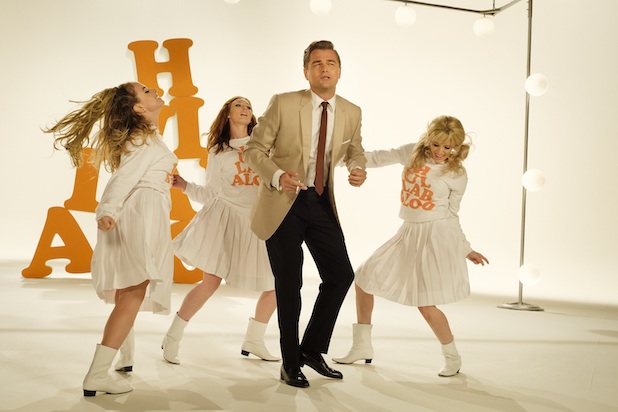
'Once Upon A Time... In Hollywood' Review

Nominated For: Best Picture, Best Director; Quentin Tarantino, Best Actor; Leonardo DiCaprioBest Supporting Actor; Brad Pitt, Best Original Screenplay, Best Cinematography, Best Costume Design, Best Production Design, Best Sound Editing, and Best Sound Mixing.
Won: Best Supporting Actor; Brad Pitt and Best Production Design.

Synopsis: A faded television actor and his stunt double strive to achieve fame and success in the film industry during the final years of Hollywood's Golden Age in 1969 Los Angeles.

Runtime: 161 minutes

MPAA Rating: R (for language throughout, some strong graphic violence, drug use, and sexual references)

Who should see it? Adult fans of Tarantino's filmography.
Once Upon A Time... In Hollywood is the ninth film to be written and directed by Quentin Tarantino. Tarantino's been vocal about calling it quits after his tenth, so Once Upon A Time In Hollywood may perhaps be his penultimate feature. Regardless, Once Upon A Time In Hollywood is a unique entry in his robust filmography. Though distinctly Tarantino on account of extended dialogue and peculiar, prominent emphasis on feet, Once Upon A Time In Hollywood differs considerably from the rest of his work. Morally ambiguous protagonists are absent while brutality is reserved for choice moments. Instead, Tarantino reminisces on a bygone era of Hollywood with a lighthearted, sentimental love letter.
Contrary to most contemporary releases, Once Upon A Time In Hollywood takes the time to immerse the audience in a pseudo-1969 Hollywood and the routine lives of its fictional and factual subjects. Tarantino's careful approach will risk being labeled as tedious and inconsequential by many viewers. Patient audience members will no doubt be rewarded as lunacy ensues in the form of a gloriously insane third act. However, the meticulous journey is meant to expand our understanding of these characters and establish the geography and atmosphere of Los Angeles fifty years ago. There's painstaking attention to detail in Los Angeles' significant '60s landmark recreations as well as the ensemble's wardrobe and hairstyling. Not to mention, everything is magnificently captured by Tarantino's frequent cinematographer Robert Richardson, and the film features a groovy soundtrack of curated '60s hits. Nobody makes movies quite like Tarantino.
Though Tarantino's body of work is often tinged with dark humor, Once Upon A Time In Hollywood is the closest Tarantino's come to making a full-blown comedy... And it's hysterical, but also profound. The auteur remains wholeheartedly committed to crafting elaborate scenes depicting DiCaprio's Rick Dalton acting in television serials solely dedicated to underscoring a punch-line or emotional beat. As viewers are treated to a taste of Dalton's waning fictional film and television career, they also get a glimpse of real-life actress Sharon Tate on the rise. A bittersweet notion considering her actual fate, and one that lingers over the proceedings as audiences wonder whether Tarantino will rewrite history where the Manson Family is concerned ala Inglorious Basterds. A question I dare not answer here.
Leading Tarantino's star-studded cast, Leonardo DiCaprio and Brad Pitt share sacred chemistry that will surely go down as one of the best all-time onscreen bromances. In his first performance following his long-deserved Oscar win for The Revenant, DiCaprio lends a multifaceted portrayal of an insecure actor struggling with the bumpy road of stardom. This vulnerability is a side of DiCaprio audiences have hardly seen before, and he's tremendous in the role of course. On the other hand, Pitt exudes a cool bravado as Dalton's laidback stuntman, driver, and best friend, Cliff Booth. A pantheon of movie stars, crew members, and free-spirited hippies are brought to life by the likes of Al Pacino, Kurt Russell, Bruce Dern, Mike Moh, Timothy Olyphant, Margaret Qualley, Dakota Fanning, and Austin Butler. 
As Sharon Tate, Margot Robbie secured prominent billing in the marketing. However, the character's ultimately unrelated to the primary plot. Robbie imbues Tate with warmth, kindness, and a jubilant spirit that was a joy to watch, but she had less screen time and dialogue than I expected. When the film premiered at the Cannes Film Festival, a journalist asked Robbie and Tarantino why Robbie didn't have more speaking lines. Though I understand the intent behind the question, I think the question was a bit inappropriate and presumptuous considering the story's not really about Sharon Tate and additional dialogue wasn't really necessary. It was evident to me that Tarantino was interested in honoring the lesser-known qualities of Sharon Tate that are overshadowed by the tragic circumstances of her death.
Unexpected scene-stealers included Cliff Booth's pit bull and the young Julia Butters. Portraying a precocious method actor (the character deems the word "actress" restrictive) named Trudi, Butters held her own sharing the screen with DiCaprio. A commendable feat in-of-itself and Butters' mature demeanor made the scene all the more amusing.
If the marquee names associated with Tarantino's latest flick weren't enough to tell you Once Upon A Time... In Hollywood is a must-see motion-picture, I'll happily oblige in further supporting that notion. It's entertaining, original, remarkably well-crafted, and harkens back to simpler times. How often does a film like that come around?

Film Assessment: A